A train trip across a roasting Europe

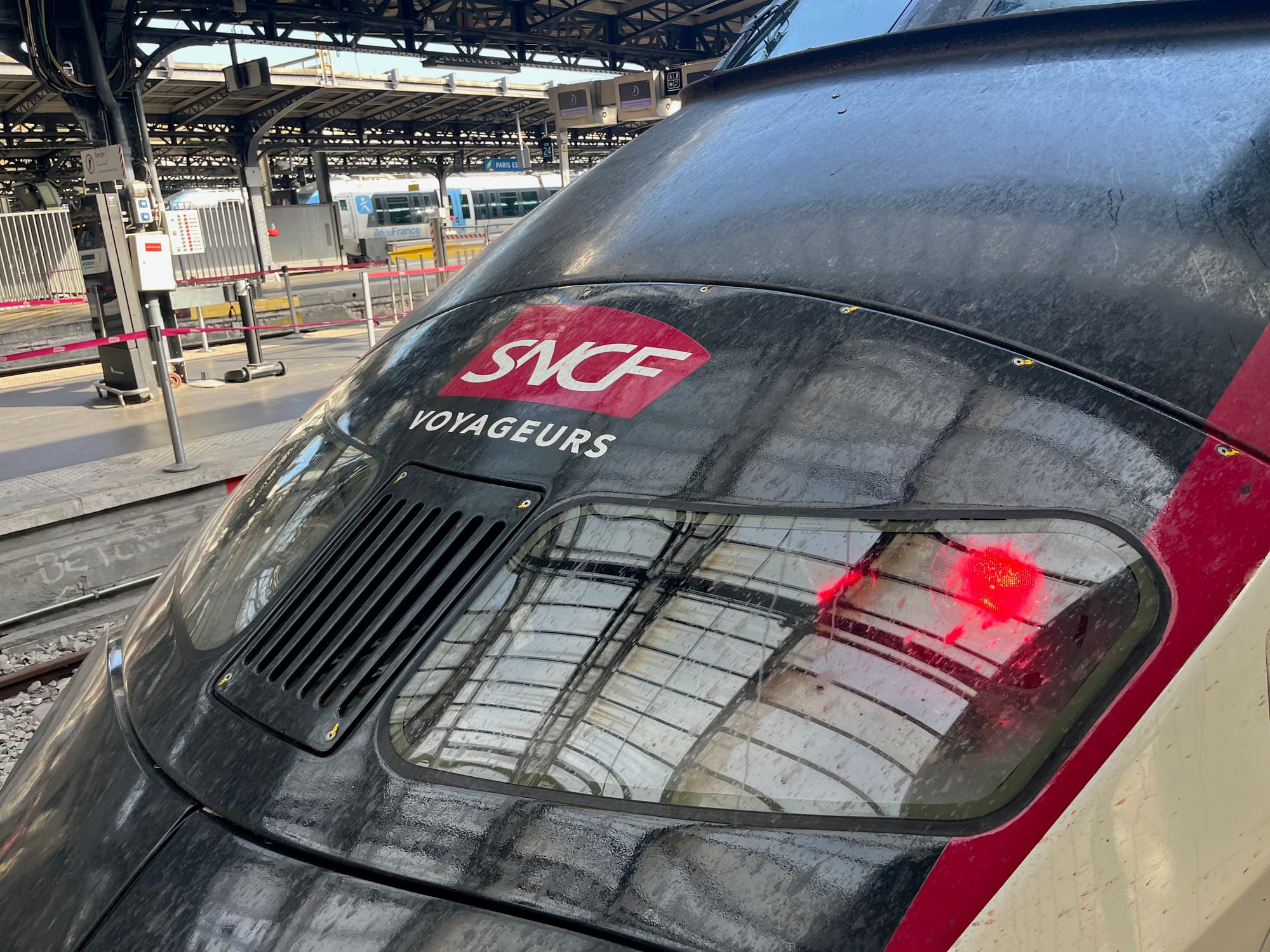
In the Newsletter this week
Analysis: A train trip across a roasting Europe
Bullshit Meter: Kyiv-Chișinău train to run every day from end of June onwards
Good week: Delivery of new 200km/h IC trains for Italy
Good week, possibly: Talgo has a record backlog, and Le Train persists
Narrow escape of the week: Car a few seconds away from being hit by a train
Shrug this week: GSM-R system stops all trains in Germany for a couple of hours
Bad week: DB stock photo of a French station, currently deprived of trains due to the heatwave
Very bad week: Rail Baltica bridge dispute
Elsewhere this week: Interview with Het Financieele Dagblad
Photo of the week: Green shoots in Bihać
Calendar: Tornio - Haparanda opening confirmed for 10th August
Newsletter 022, Friday 26th June 2026.
Subscriber-only newsletter, sent every Friday at 14:00 CET.
A train trip across a roasting Europe
Under what circumstances should a passenger attempt a rail journey? And when should a railway company straight up prevent them from doing so?
That is the conundrum I faced yesterday on a rail trip Ravières - Berlin, via Frankfurt (Main) for a meeting.
As June temperature records have been shattered in France, SNCF has been pre-emptively cancelling trains, in particular Intercités that use Corail carriages that date from the 1970s and 1980s and where the air conditioning might fail. Not not will fail, but might fail.
But this then leads to situations like on Thursday where it is simply impossible to complete trips like Paris to Clermont Ferrand by train at all. Most Intercités are cancelled, and the routes with a change using other trains are all full:

In Nouvelle Aquitaine in the south west they have gone even further, cancelling all regional (TER) trains between 10:00 and 18:00 until the end of this week. While the cynic might of course say France never runs many regional trains in the middle of the day anyway, cancelling trains (and these are modern air conditioned ones!) points to a further issue, namely the state of the infrastructure - where the tracks are in danger of buckling and overhead wires sagging.
Given speed restrictions and cancellations due to heat have already happened in 2019, 2022 and 2025 (and in that latter case with precisely the same trains impacted as now) it is obvious France does not have a grip on this problem, although the 2027 introduction of new CAF built Oxygène trains might help somewhat.
Luckily my own trip as far as Frankfurt (Main) ran smoothly enough early this morning - Bourgogne was not as severely impacted as Nouvelle Aquitaine, and the other trains were TGVs on modern infrastructure.
But then having got to Germany, a different problem arose.
Deutsche Bahn has been warning passengers to not travel due to the heatwave if they can avoid doing so, and will even reimburse tickets that are normally impossible to cancel. Probably a sensible policy, for as the day has worn on, so the problems mounted. My scheduled Frankfurt - Berlin train was cancelled at short notice, with no reason given (heat connected, I presume?) and plenty of other ICEs on routes north and east from Frankfurt were either heavily delayed or cancelled, and the ones that were not cancelled were very overcrowded. Add the heat impacts on top of regular DB dysfunction of staff shortages and broken level crossings and you have a big mess.
Which leads me back to the core question: how should railways behave in situations like this? Despite it all I know that, one way or another, Deutsche Bahn will get me there, somehow - and that has to be preferable to the French situation where some passengers have no option to get to their destination at all by rail. But what both railways have in common is an obvious shortage of investment to cope with the challenges of ever more frequent and more severe heat waves.
But why, you might be thinking, am I even trying this trip? It is to attend an event in Berlin about the new Praha - Berlin - København ComfortJet service (the event is right at the time this newsletter will reach your inboxes), and then after that I head to Bruxelles for a further event.
One of the strongest points of the ComfortJet? Excellent air conditioning. It is going to need it.
Bullshit Meter: Kyiv-Chișinău train to run every day from end of June onwards
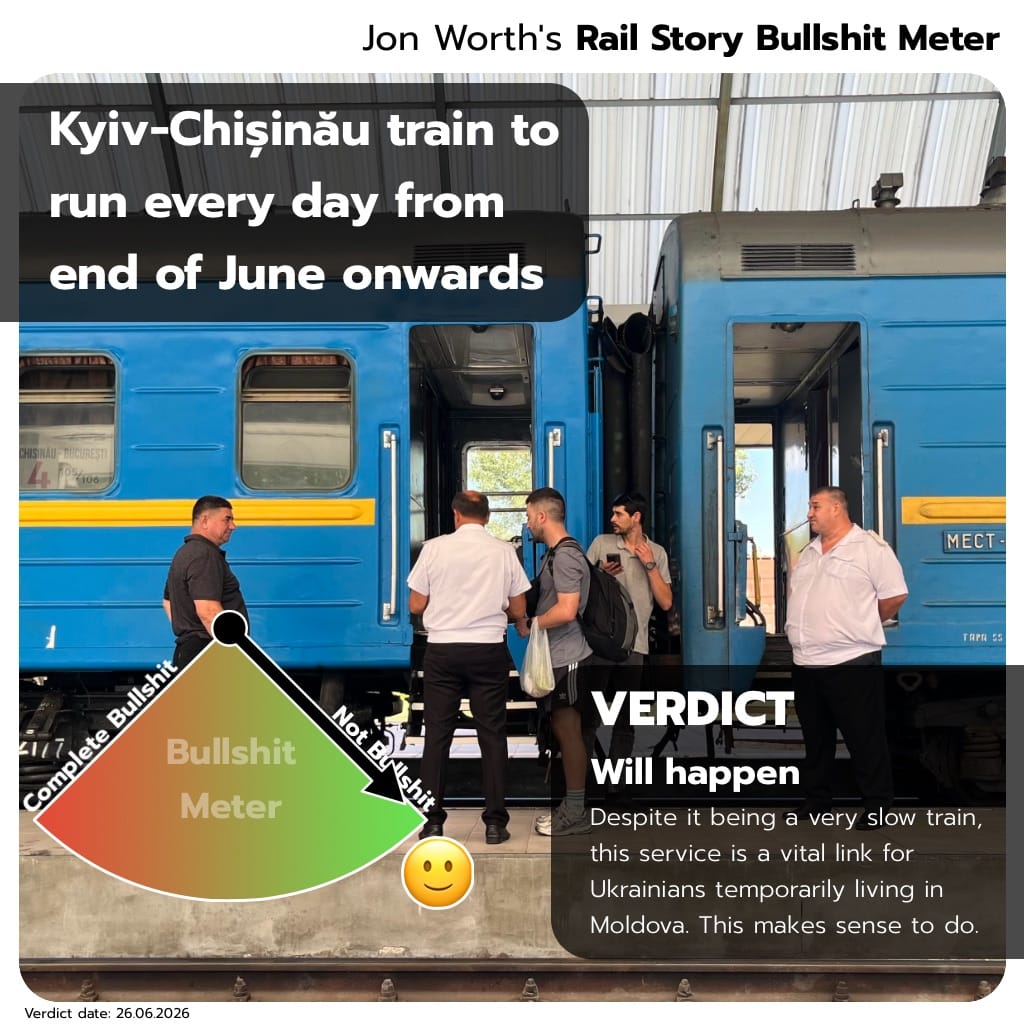
When I took the Kyiv - Chișinău train last summer, I must admit it was not my best journey. Having boarded it just a few kilometres into Ukraine at Mohyliv-Podilskyi, it then crawled its way across Moldova, on a circuitous and slow route via Ungheni to Moldova's capital, scarcely reaching more than 40km/h even on the "main" line. But despite this every berth was full, and as my fellow passengers told me, it always is - Ukrainians going to visit their families who have escaped the conflict to the comparative peace in Moldova. So making the train run every day makes a lot of sense, rather than every other day as of now, and UZ is capable of doing it.
All previous Bullshit Meter posts can be found here.
Good week: Delivery of new 200km/h IC trains for Italy
It is not only in France that IC trains are the rather forgotten part of the rail network, stuck somewhere between regional and high speed services. The remaining IC services in Italy are comfortable, but the carriages used on these services date from the 1980s and 1990s, and are getting long in the tooth.
But now change is afoot - the first of a new generation of 8 carriage 200km/h Coradia EMUs has been delivered, as reported by Ferrovie. Some of the other trains in this family - Alstom's Coradia EMU line - are not great (a topic I explored in an earlier newsletter), but there is one thing that does work well in all of them: the air conditioning works well, even in very hot conditions!
Good week, possibly: Talgo has a record backlog, and Le Train persists
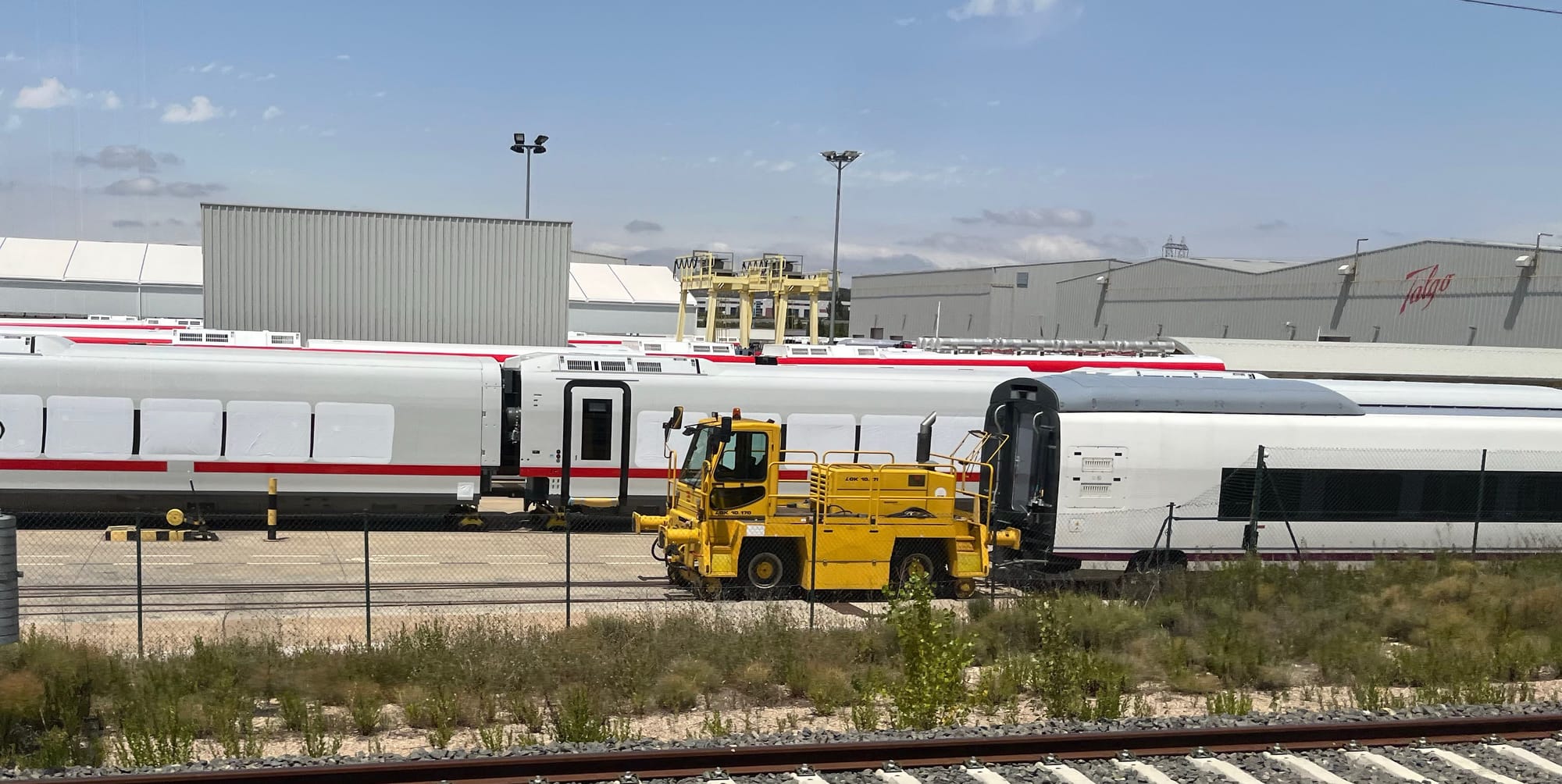
By now I am perplexed by what is going on at Spanish manufacturer Talgo. The Rail Agenda reports that the order backlog for the firm is so long they are considering opening new facilities, and Trenvista reports that - despite headaches until now - Le Train still wants Talgo trains for its French operations, with the aim of starting in 2030.
However DB, that ordered 100 230km/h trains and Talgo locomotives, has reportedly sought to reduce its order from 100 to 60 trains, or possibly even fewer, and there is no timetable for the entry into service of the Talgo locomotives yet - and many locomotives have already been built.
Meanwhile in Denmark DSB has nightmares getting its Talgo trains running reliably. And Flixtrain and Trafikverket must both be looking at this wondering what sort of quality they are ever going to get from the manufacturer. In Spain, Talgo's traditional market, it looks like Hitachi and Siemens are better positioned to win the tender for new high speed trains there than Talgo is. And lastly in Poland, Talgo is likely the outsider in the four-way battle to build the country's first high speed trains.
So ultimately I struggle to work out what is happening here - it is as if at the same time that the order book is full, a bunch of people are starting to have buyers' remorse.
Narrow escape of the week: Car a few seconds away from being hit by a train
There have been plenty of bad level crossing stories in this newsletter, but here is a sort of positive one - a near miss. But what the hell was the driver doing here, not paying any attention at all? Video via Rynek Kolejowy.
Shrug this week: GSM-R system stops all trains in Germany for a couple of hours
Rely on IT systems without adequate redundancy, and starve your rail network of investment, and things go wrong. As this week with a GSM-R outage in Germany causing all trains in the country to be stopped for a couple of hours. By the next day everything was back to normal. And no one was put in danger, as protocol was followed and every train was brought to stations at low speed.
This sort of thing is not that unusual - Netherlands suffered similar in 2022, and a slightly milder version in 2025.
France by contrast is in an advantageous position: only 80% of its network would be impacted in such a situation, as the remaining 20% is so old fashioned it has no GSM-R at all.
So I am not shocked by this one. IT systems, and especially centralised ones with old technology and lacking redundancy, fail.
Bad week: DB stock photo of a French station, currently deprived of trains due to the heatwave
"Hang on, that picture isn't Germany, that is obviously France" I thought as I checked the DB website this week:

A quick reverse image lookup using the original JPG file reveals this is part of a series, and is filmed at Angoulême (OpenRailwayMap).

The regular oddity is that they're greeting each other in an empty station (maybe they came by covoiturage?) but the train you can see there is a Régiolis of Nouvelle Aquitaine - the very train you cannot take this week as they're cancelled daytimes due to the heatwave, including to/from Angoulême.
Very bad week: Rail Baltica bridge dispute
It is the most important engineering works on the Lithuanian section of Rail Baltica: the 1.5km bridge over the River Neris. But now LTG Infra wants to terminate the contract with the Italian firm building it, citing delays and outstanding bills (more from The Rail Agenda and RailTech).
The core question of course is this: will this make any difference to the completion date for Rail Baltica? It's hard to say, as the project is so beset with difficulties and headaches that who knows what bit will be done well.
I was last in the Baltics to check the route in 2024, and will be back again this summer. For now this old blog post gives some background about this nightmare of a project.
Elsewhere this week: Interview with Het Financieele Dagblad
On my way to Maastricht a few weeks ago I sat down with Daan Ballegeer and Erik van Rein from FD to talk about European railways, and what is and is not working well, and the forthcoming EU rail ticketing reform. You can read the whole interview in Dutch here - likely paywalled, but one article is free with a signup. And yes, the photographer did get the permission of all the other people shown in the photographs in the rather crowded Liège - Maastricht Drielandentrein we took.
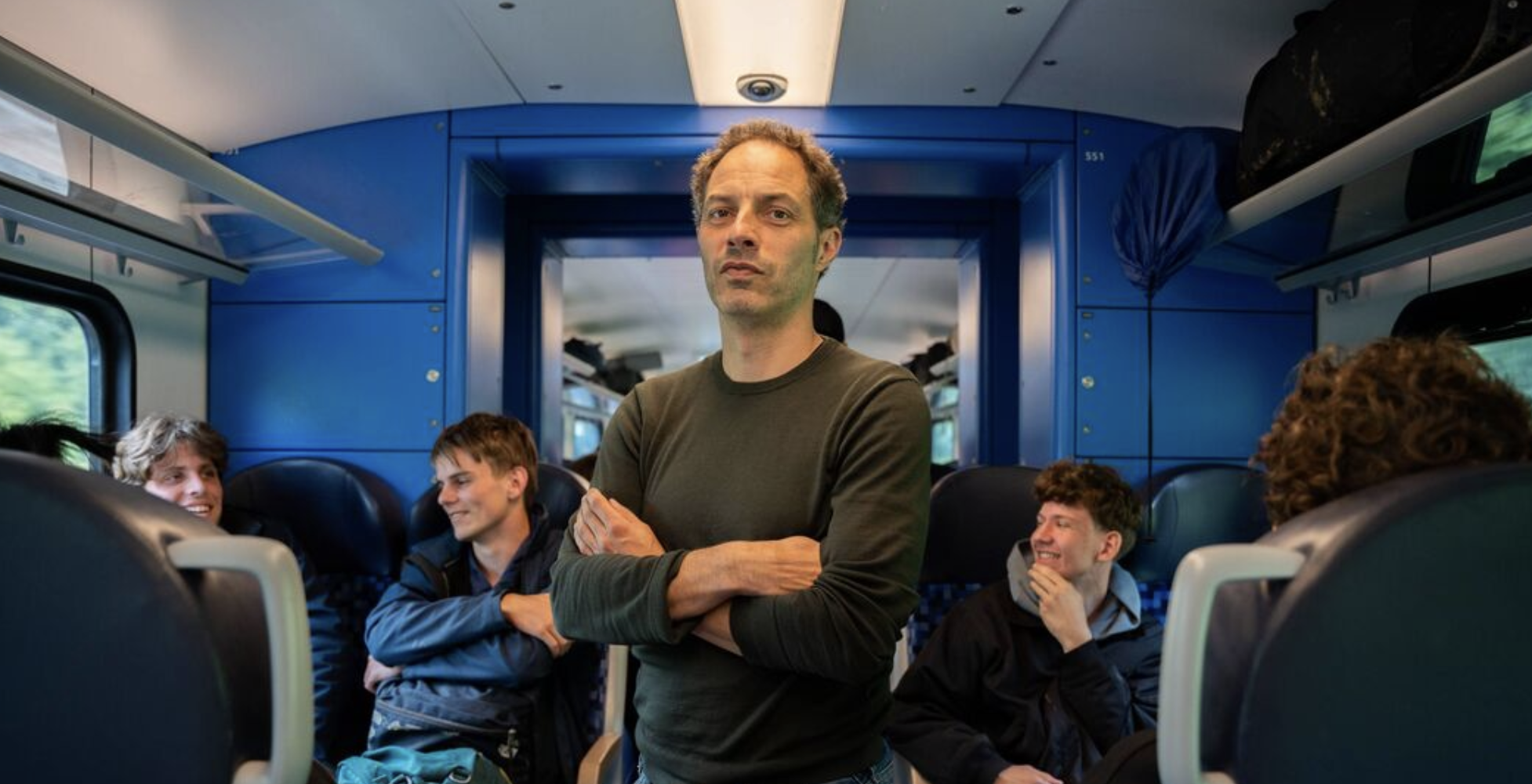
Photo of the week: Green shoots in Bihać

The Una line south of Bihać, Bosnia was one of the most incredible places I visited in all of my #CrossBorderRail work - the album from that day is here.
But now there are green shoots of progress north of Bihać, with the restoration of train services on the line - albeit weekends only, and only Bihać - Bosanska Otoka (OpenRailwayMap). Reaching Novi Grad would of course be preferable, but that is in Republika Srpska, hence ŽRS and not ŽFBH territory.

Calendar: Tornio - Haparanda opening confirmed for 10th August
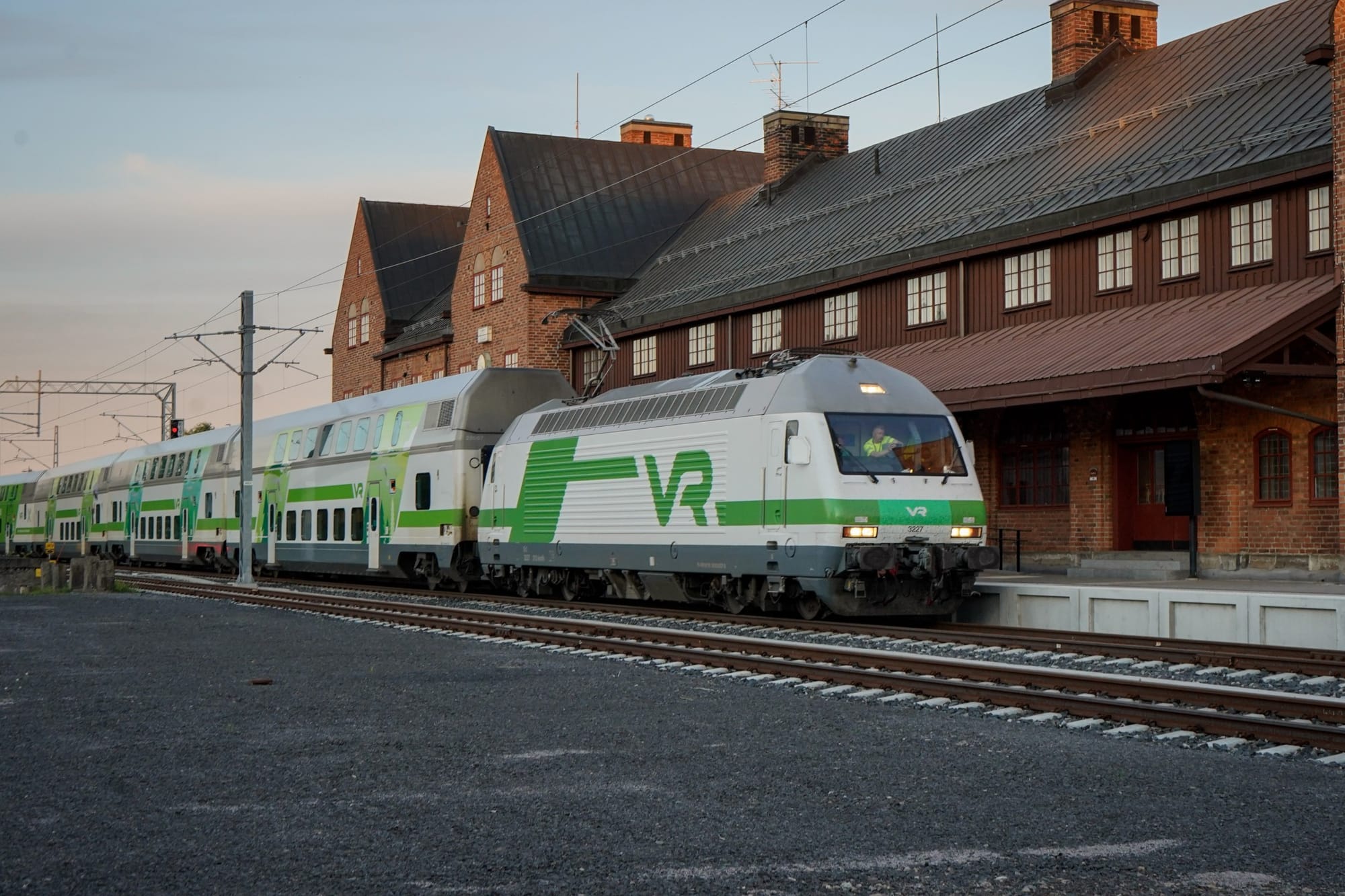
A story I have had my eye on for a long time might now, finally, reach its conclusion - passenger trains will finally cross the border bridge between Finland and Sweden, Tornio - Haparanda, from 10th August. Tickets will be available for purchase from 30th June.
The timetable will be as follows (in local time):
- IC 401, Mon–Sat, Oulu 05:08 → Haaparanta 05:45
- IC 403, Sun, Oulu, 06:50 → Haaparanta 07:45
- IC 407, Mon–Sun, Oulu 19:50 → Haaparanta 20:30
- IC 402, Mon-Sat, Haaparanta 06:20 → Oulu 09:00
- IC 404, Sun, Haaparanta 08:54 → Oulu 11:32
- IC 408, Mon–Sun, Haaparanta 20:45 → Oulu 23:00
Stops: Oulu, Kemi, Tornio-Itäinen, Tornio, Haaparanta (Sweden)
Honestly though, just 2 trains a day each way is quite lousy though. But it is a start.
Photo Rights
VR train in Haparanda by Joel Savilaakso, used with permission.
Pic of Jon in the Drielandentrein by Gianni Alessi for FD.
All other photos by Jon Worth.
Bullshit Meter images always have photo rights listed directly on the image.