Trains to London from Gleis 5 at Köln Hbf? It's bold

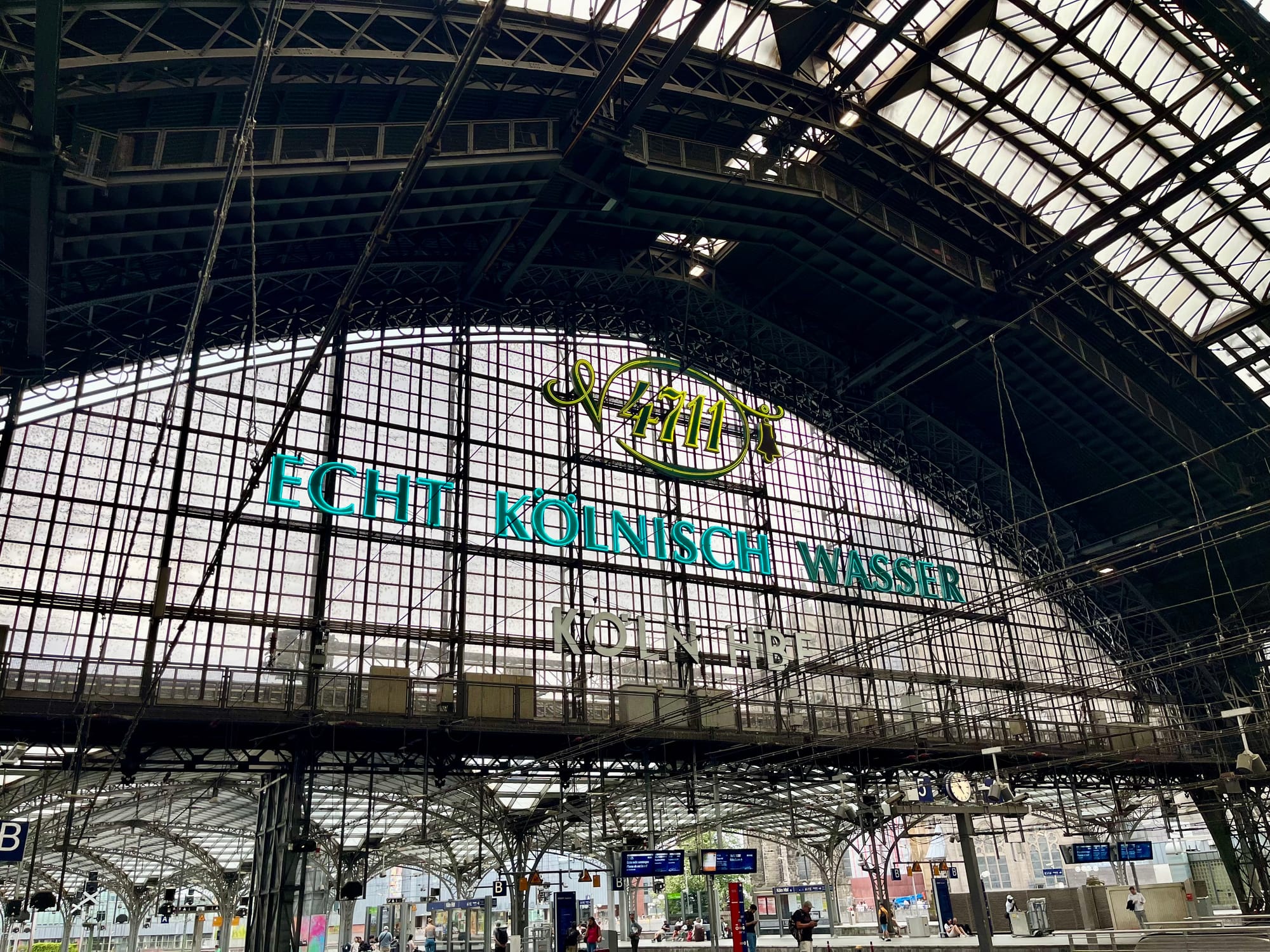
The Kölner Stadt-Anzeiger put out an intriguing article yesterday, stating that four trains a day could depart Köln Hbf for London in the 2030s, and this will be done from Gleis 5 (Platform 5) at the station, and passengers will get to the platform from a terminal building on a new bridge.
This idea is bold and it is interesting, and it is not a way to solve the Köln Hbf - London headaches I had previously thought of. When I wrote my #CrossChannelRail report late last year, I concluded Köln Hbf was just too complicated to solve, and that building a London terminal at Köln/Bonn Flughafen station, or even Horrem, would make more sense.
I would also encourage anyone not deep into the technicalities of all of this to read my report, as it explains in some depth some of the other aspects of the Channel Tunnel conundrums that this article will only briefly touch with regard to Köln Hbf.
The most important is the need to conduct both bag scans and border controls before a passenger boards a train heading towards the UK. Argue all you like whether those rules make sense, but everything I write about this topic takes them as given.
Having the map of Köln Hbf from OpenRailwayMap open might also help make some of this make sense.
Anyway to the core issue: what problem does Gleis 5 solve?
The direction of the tracks. The only platform - Gleis 1 - that anyone had considered in Köln Hbf has a track that heads east, while a train departing towards London needs to go west. No one had any workable solutions for this (crossing the Rhein three times is not sensible, but I did look at the idea!) and crossing half a dozen live tracks at a chronically overloaded station to exit Gleis 1 the wrong way is a non starter. Gleis 5 does not have this problem - you can exit from there directly towards Aachen and Bruxelles.
But that then brings other headaches. On the other side of Gleis 5 is Gleis 4:
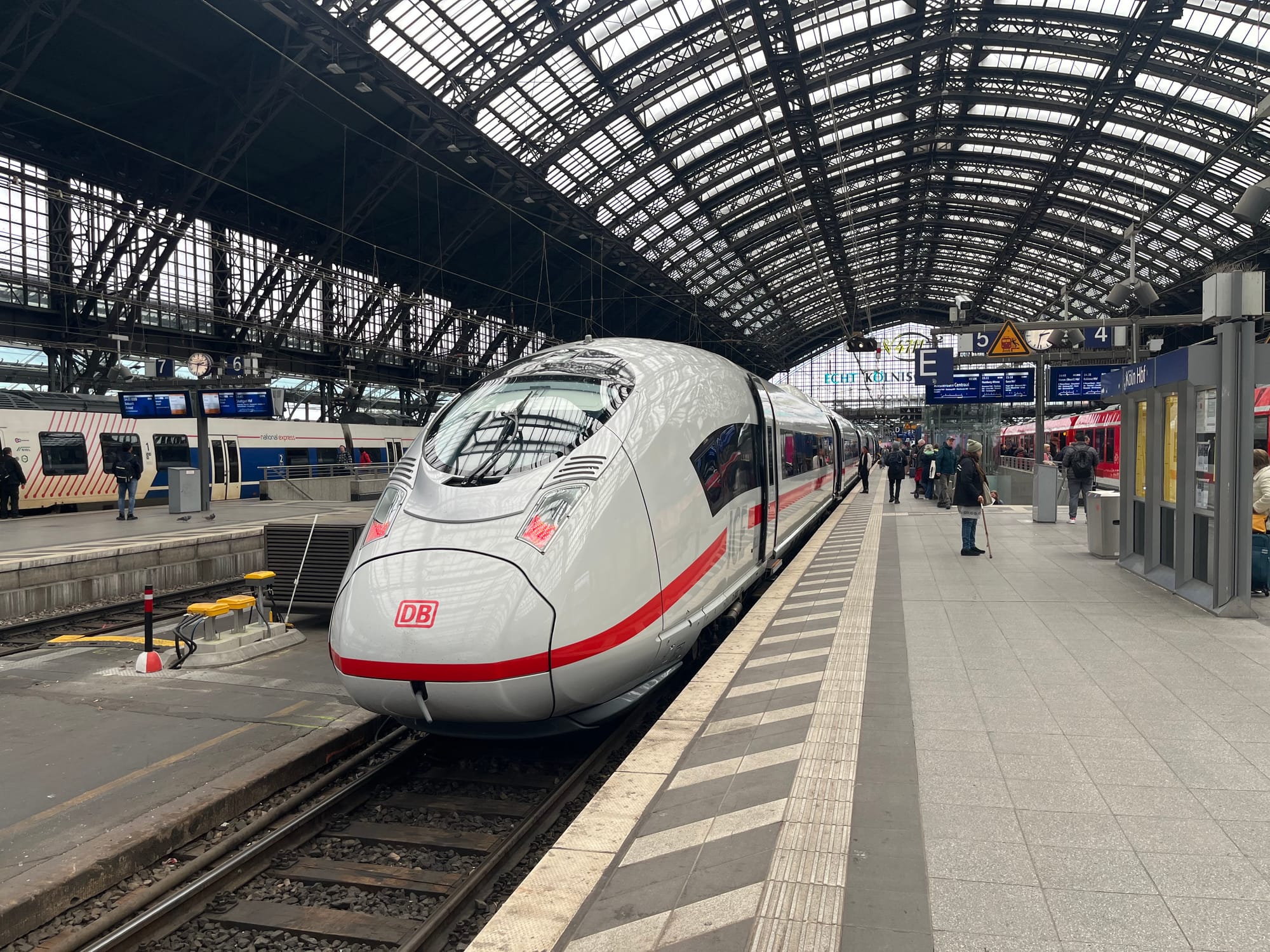
The way to solve this is to somehow split the platform into two halves, with some sort of glass dividing wall - to prevent passengers from each part mixing.
Sadly I seem to never have photographed it properly, but Bruxelles Midi has a system like this between platforms 3 and 4, that can just about be seen to the left of this picture:
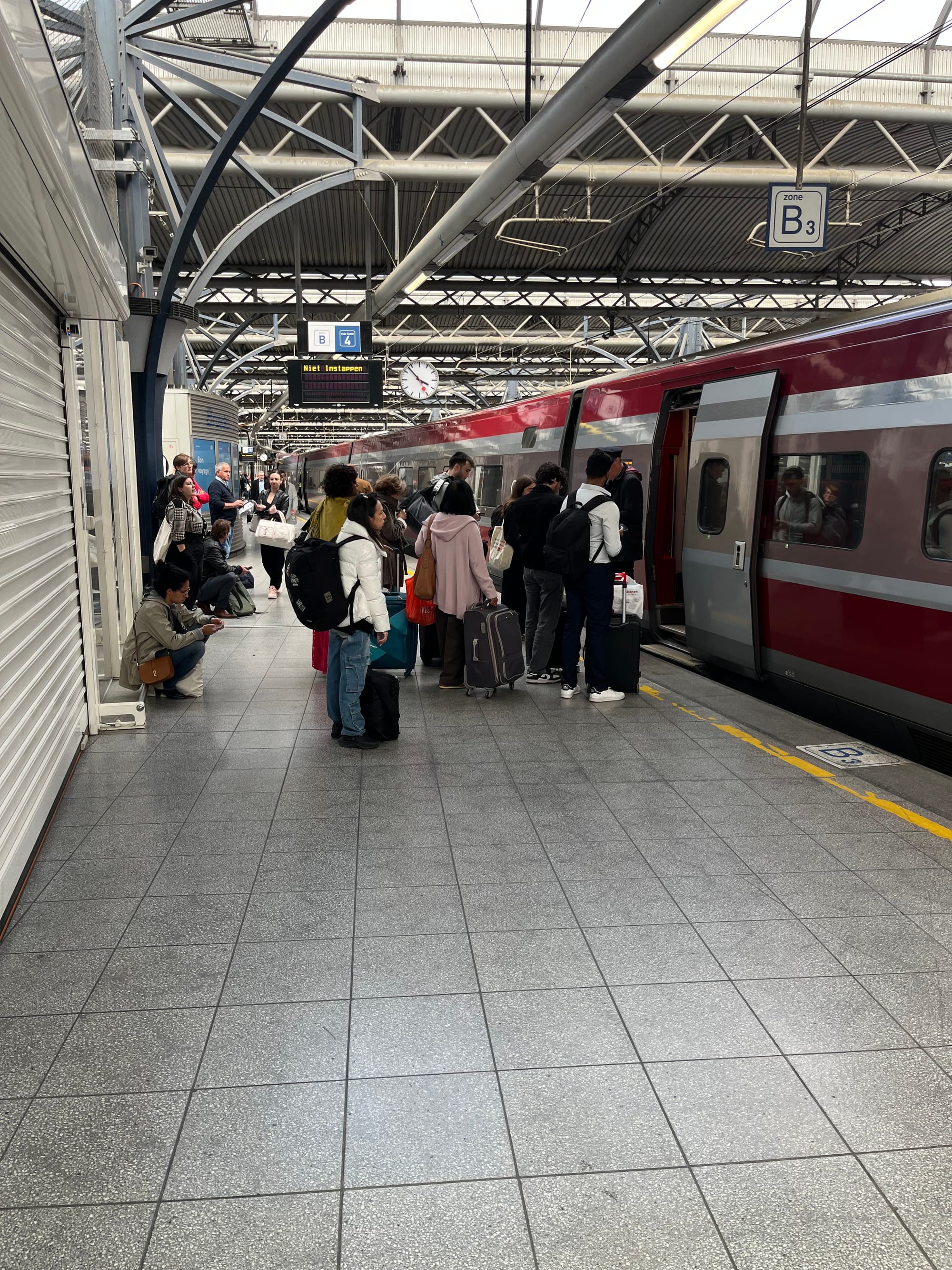
This system means that Platform 3 can be secured to allow passengers to board an Amsterdam to London train here, in the same way passengers could board a Frankfurt - London service at Köln Hbf.
But there is a further issue at Köln Hbf: the stairs and the escalators. The main ones are towards the south east end of the platforms, and the space for passengers to pass them is extremely restricted, as you can see here:
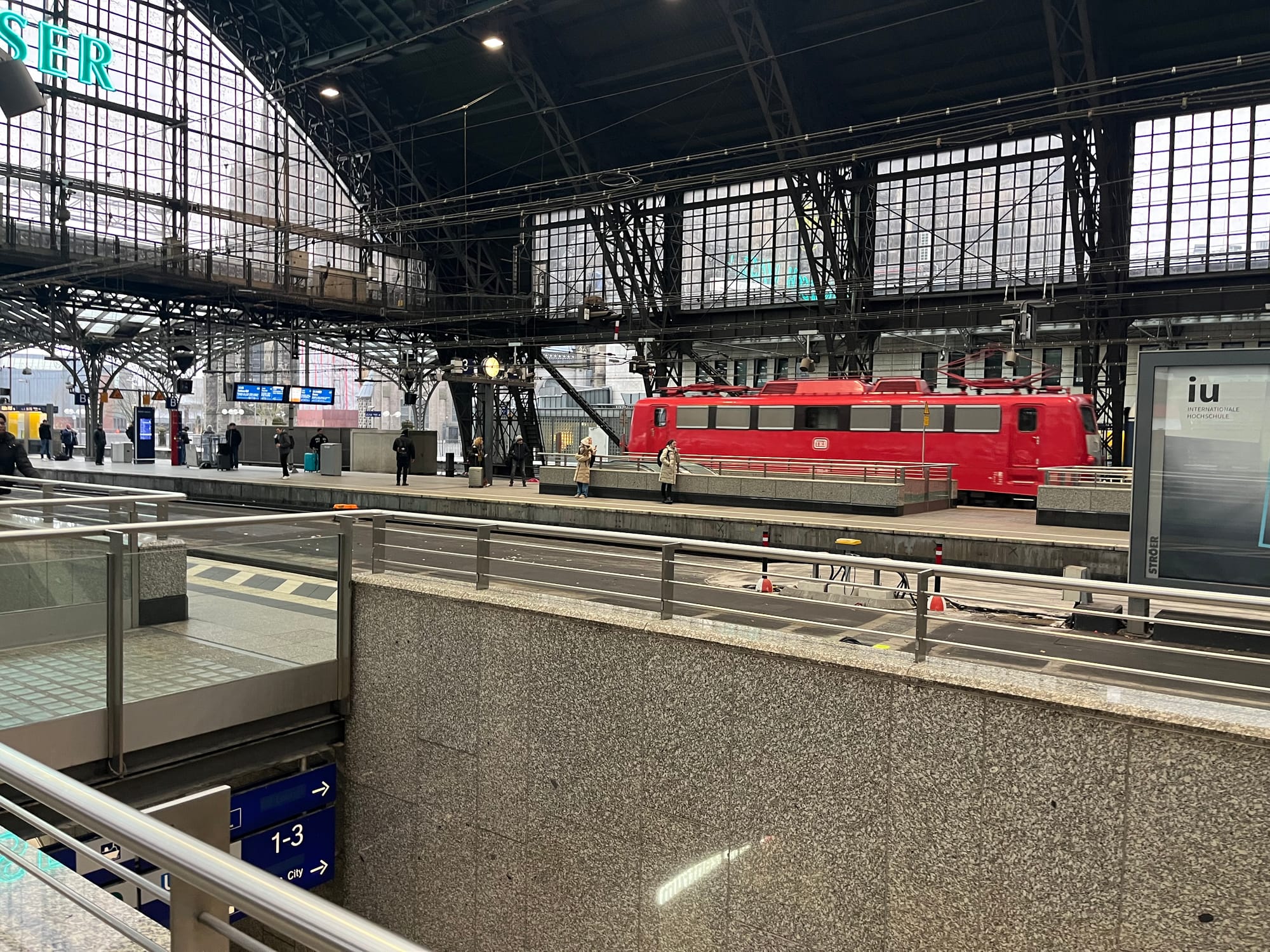
So building some sort of dividing barriers here is not going to work as they are going to cause even more congestion at the times when the platforms are not to be used by London trains.
A complex and expensive solution (that would make sense anyway, regardless of London trains) would be the make all the passenger platforms wider, eliminating the service platform used to supply dining cars - that you can see here:
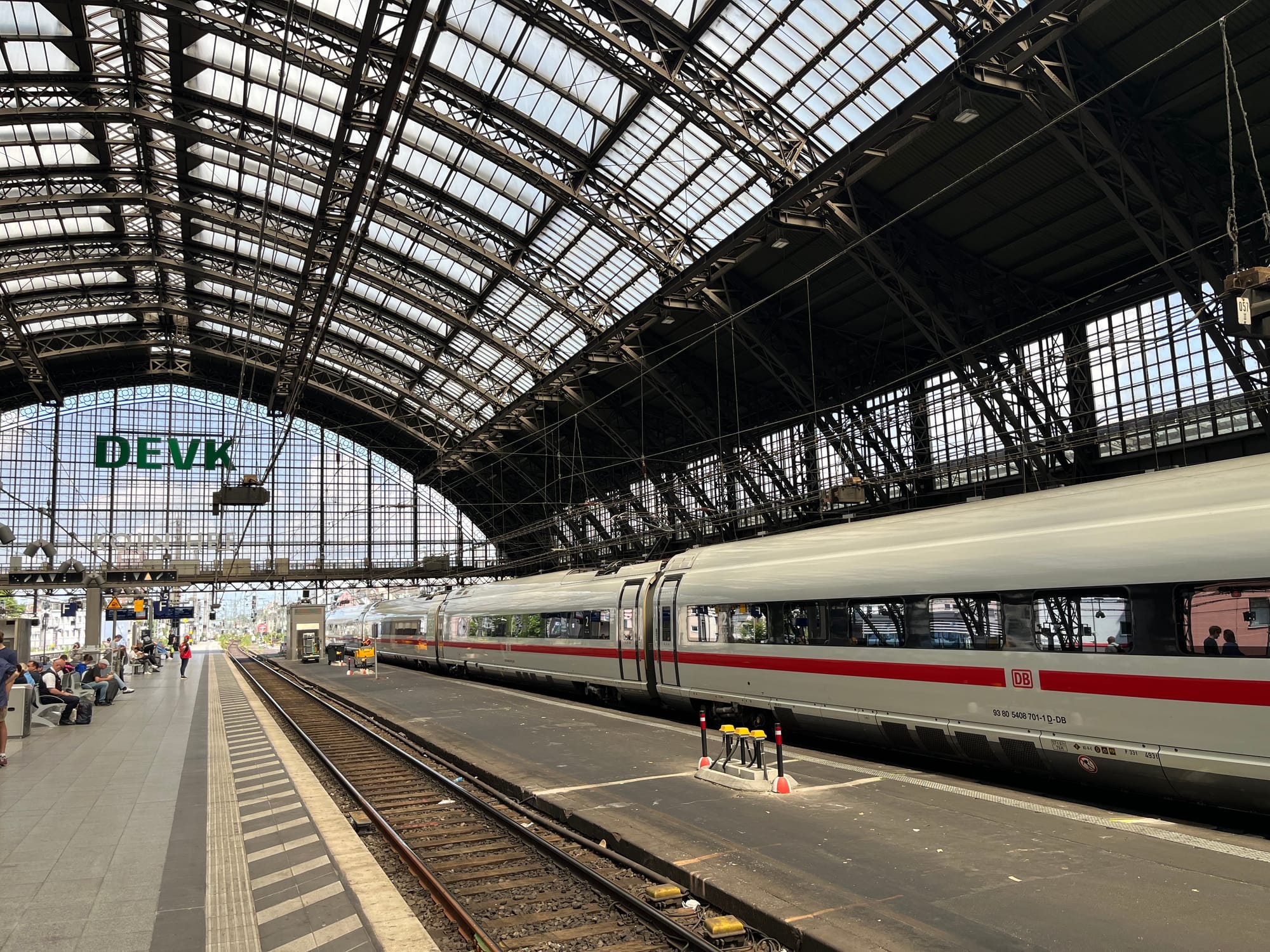
But to do this you would have to shift the running tracks closer together, and I do not even know if metal sort of bridge structure below the tracks can even bear the change in weight to enable that. So this way forward is neat, but probably out of the question.
But the picture above does provide a different way to solve the problem: how about securing only half of Gleis 5?
According to DB InfraGo data, Gleis 5 is 485m long (data here). And for one train set, you need just 200m. So you could secure only the part of the platform shown in green here:
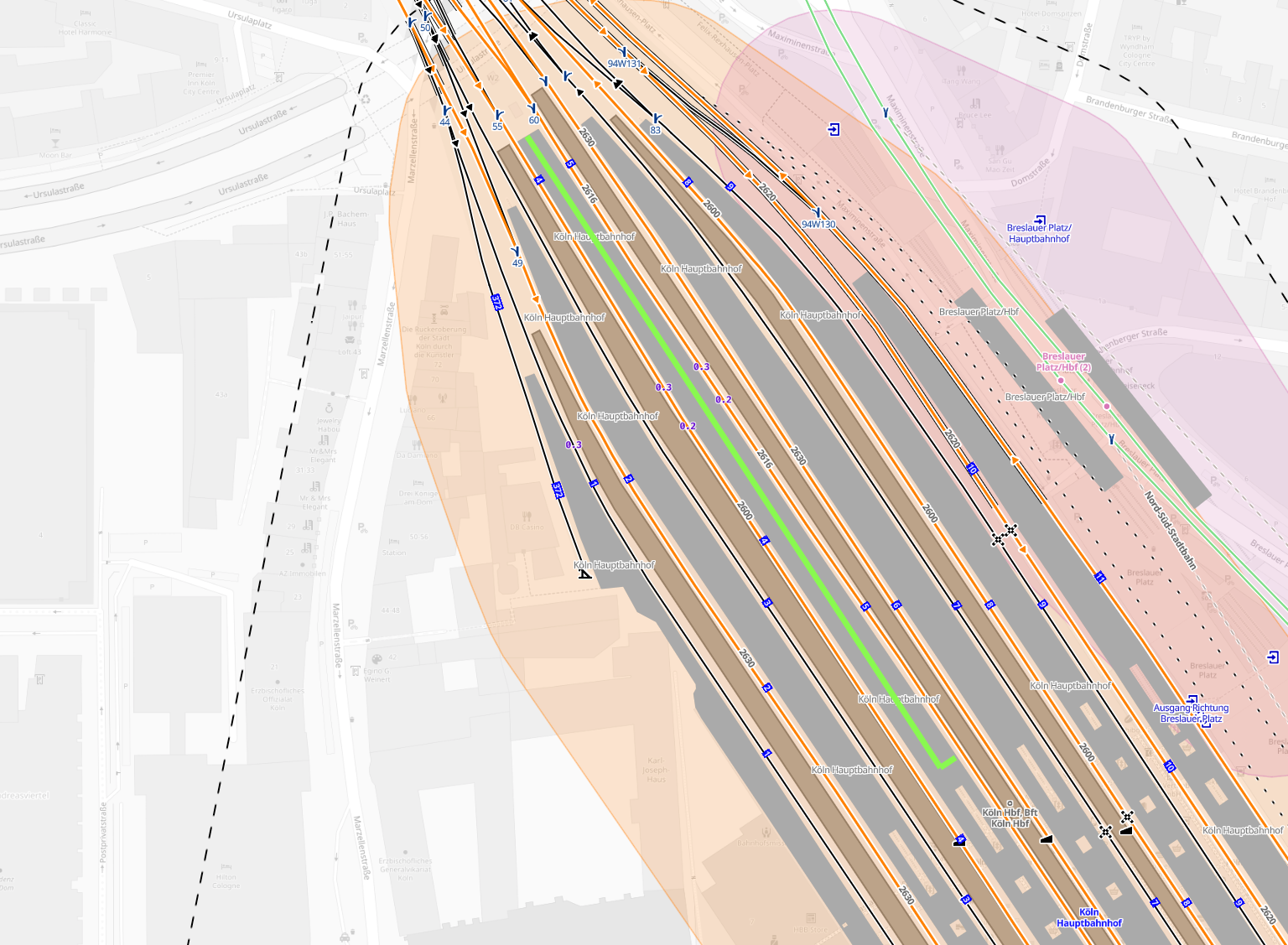
The Kölner Stadt-Anzeiger article implies a part of the platform solution, but says the south eastern part, but I cannot see how that can work given the issues with the staircases I outline above, but the north western part would, at a push work - so I am pursuing that in more depth here.
Bear in mind that trains having to be changed to other platforms at Köln Hbf is a common occurrence, so perhaps a solution to use Gleis 4 as well as a backup for Gleis 5 might make sense. And that - even with the S-Bahn expansion plans - Köln Hbf is going to be a horribly congested station, both for passengers confronted with narrow platforms and passageways, and operators who struggle to secure adequate paths through the station, make any plans for London tricky.
But by now you're probably thinking: this only deals with platforms. What about the terminal where border controls and bag scans would happen?
Supposedly these would happen in a separate building somewhere, and passengers would then reach Gleis 5 on a new bridge. Somewhere here I presume?
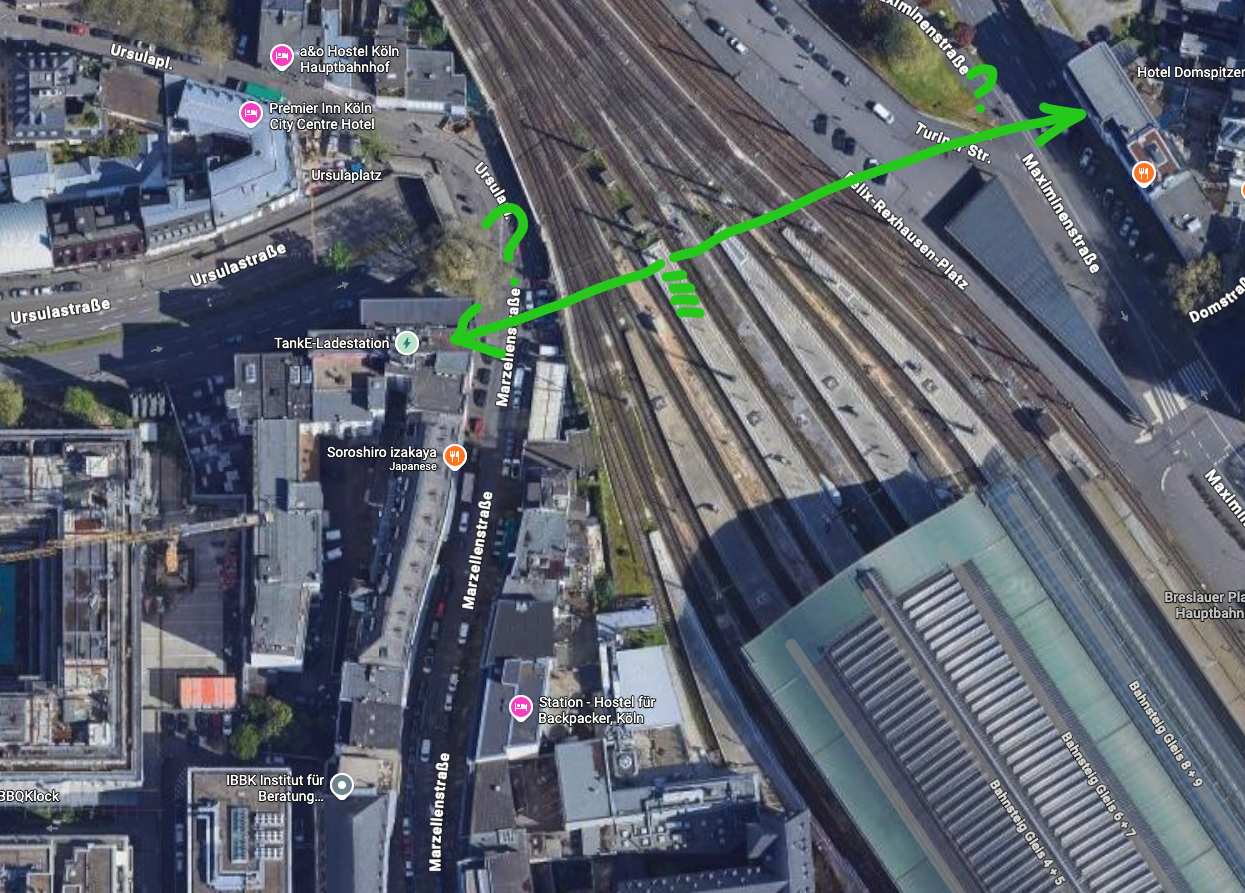
We know a solution like this - all the check in procedures in a building, then passengers descend to a temporarily secured platform - does work, as Eurostar does this at Rotterdam Centraal already (more about this in my #CrossChannelRail report).
The headache of course is you are going to want a lot more passengers boarding in Köln (likely up to 550 per train) than in Rotterdam (currently limited to 165 per train), and especially if Eurostar ends up running slow to board double deck trains on this route, that is going to take a while. Stadt-Anzeiger talks of occupying a platform for 30 minutes, but that strikes me rather on the high side!
Operationally though, if any company gets anywhere near actually doing all of this, we know two things: they will operate 200m long trains (either single trains, or a 2x200m formation), and will want to serve Frankfurt am Main as well as Köln.
Securing the north western end of Gleis 5 at Köln Hbf opens up an interesting operational model. One 200m train would wait there, and passengers board. And then a second 200m train would arrive from Frankfurt (Main) Hbf at the south eastern end of the platform and doors would remain closed, and then once the units are coupled they depart together towards Aachen and onwards to the Channel Tunnel.
Would all of this work?
I am not at all convinced. Torsten, a follower of mine on social media, sums it all up best: "That seems both like the only practical way to do this and a horrible mistake at the same time." I could not put it any better!
But the idea is new, and it is bold, and it deserves some consideration. This article is my contribution, and as and when more facts emerge I will update this accordingly.