There is a solution to connect Saarbrücken and Luxembourg by train. But France has to play its part too.

In the Newsletter this week
Analysis: There is a solution to connect Saarbrücken and Luxembourg by train. But France has to play its part too.
Bullshit Meter: Direct Eindhoven - Bruxelles Train
Not a 1st April joke, sadly: Sweden orders Talgo night trains
Good week: New trains and metros for Beograd (maybe)
Bad week: Not enough funding for a proper and complete upgrade of Berlin - Szczecin
Very bad week: Orbán doesn't get his shiny new train line before the elections (but that's likely good for everyone else!)
Photo of the week: Quiévrain station
Calendar: European Commission to publish SDBTR Regulation
Newsletter 011, Friday 3rd April 2026.
Subscriber-only newsletter, sent every Friday at 14:00 CET.
There is a solution to connect Saarbrücken and Luxembourg by train. But France has to play its part too.
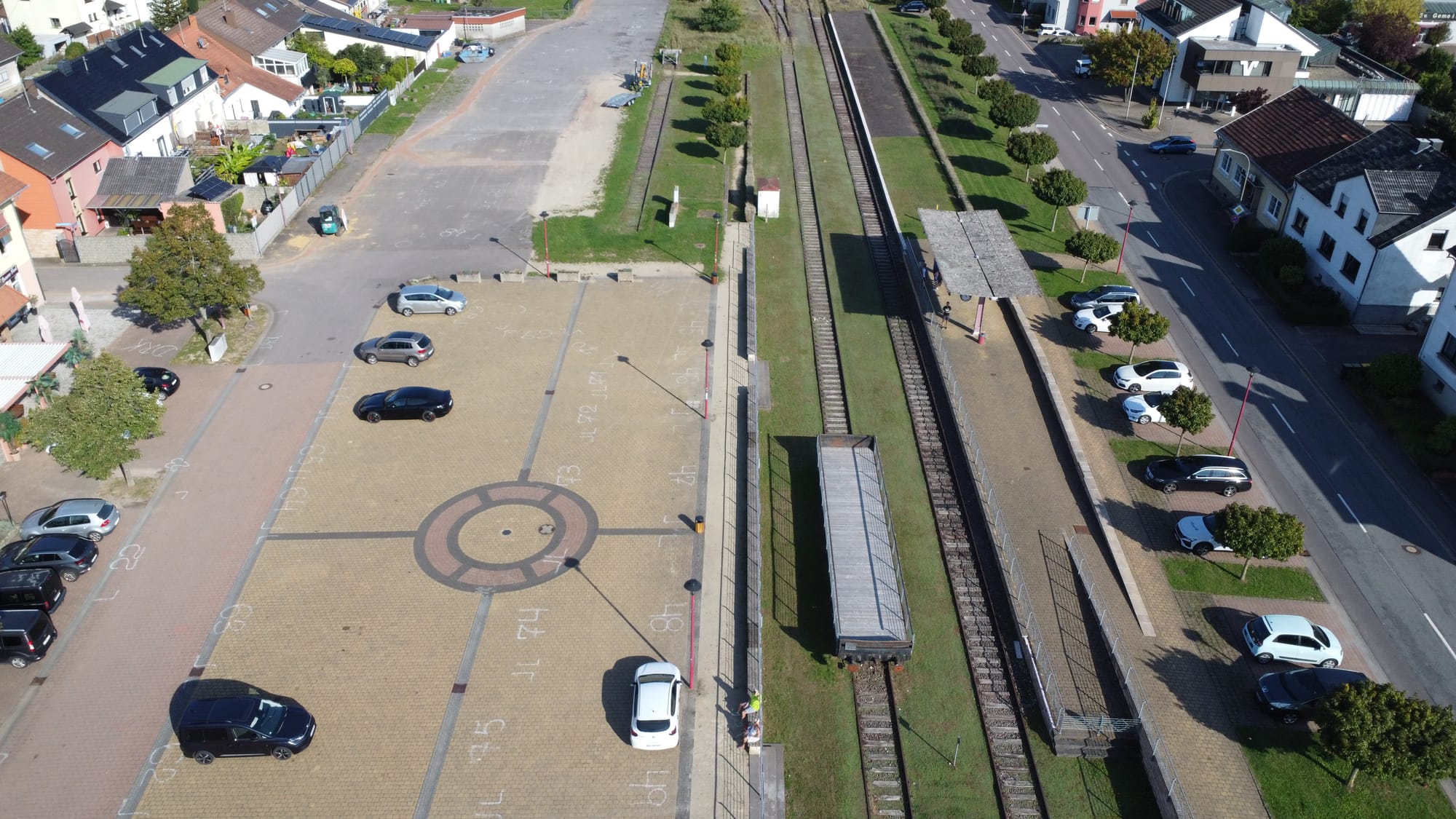
At the time this newsletter arrives in your Inbox, I will be sitting in Bouzonville, France (OpenRailwayMap) having taken a train there from Saarlouis in Germany. Once a year, on Good Friday, special trains runs to Bouzonville on a line via the border crossing at Guerstling that normally has no cross border passenger traffic. The line celebrates its 125 year anniversary this year.
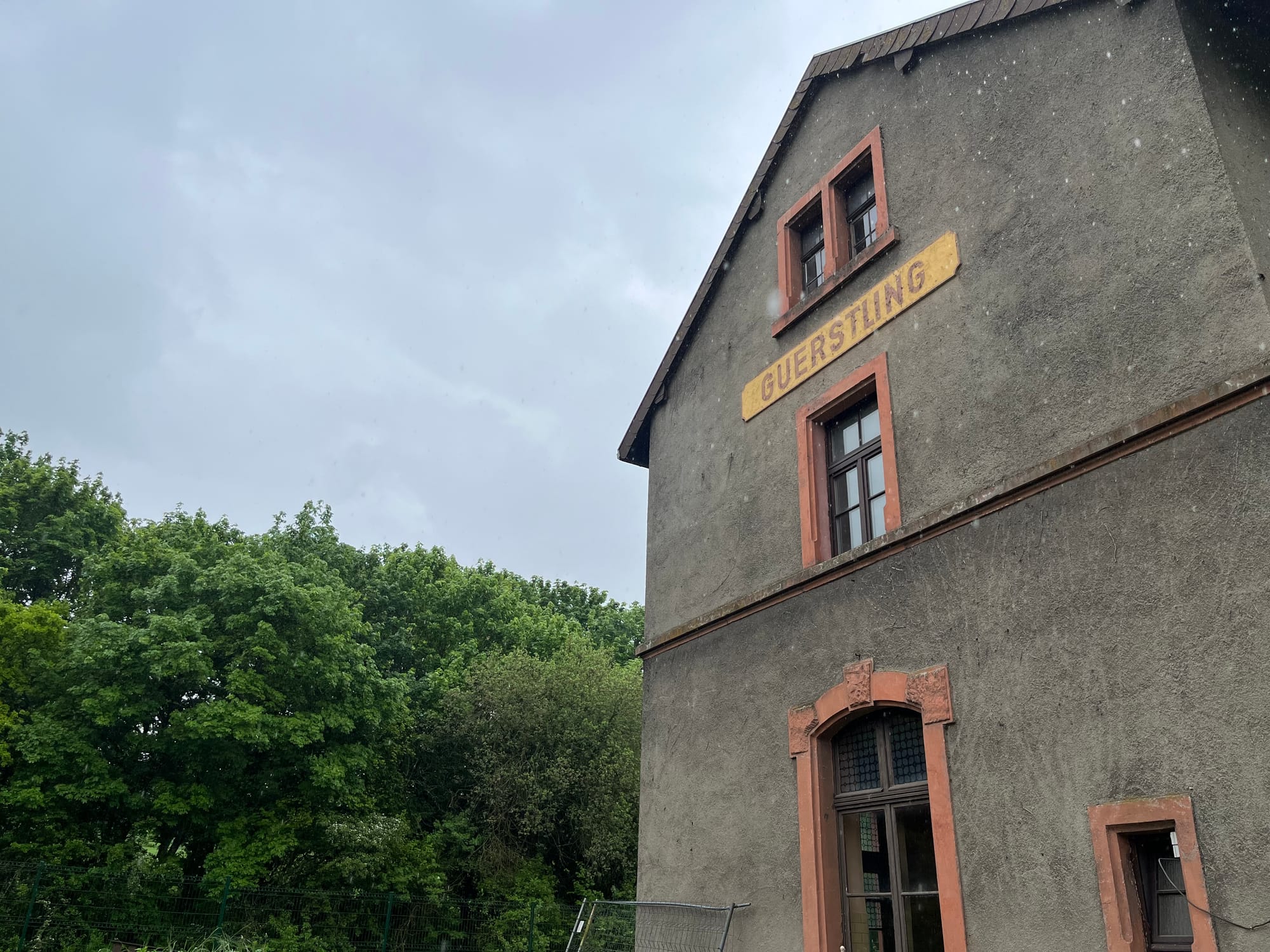
Yet while some passengers might indeed want a train Dillingen - Bouzonville, it is a connection between the region's two major cities - Saarbrücken and Luxembourg that is really the one that would ideally be fixed.
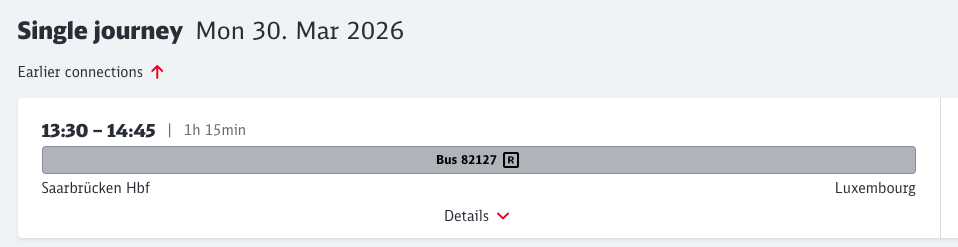
Try looking for that in DB Navigator and you get... a compulsory reservation bus. The bus route is about 92km:
So how should you do this by train?
The fastest way on railways with existing passenger services is to run via Metz - like this (141km). But no way is that time competitive with the bus. Using the Béning - Thionville line instead, electrified but freight only currently, routing like this, shortens it to 120km, but you need to reverse in Thionville. You can get it down to 116.5km, routing like this, if you run via Guerstling, also needing a reversal in Thionville. But there the Völklingen - Bouzonville section the special train on Good Friday takes, 19km in length, is single track and not electrified (OpenRailwayMap).
The solution instead is to look a little further south.
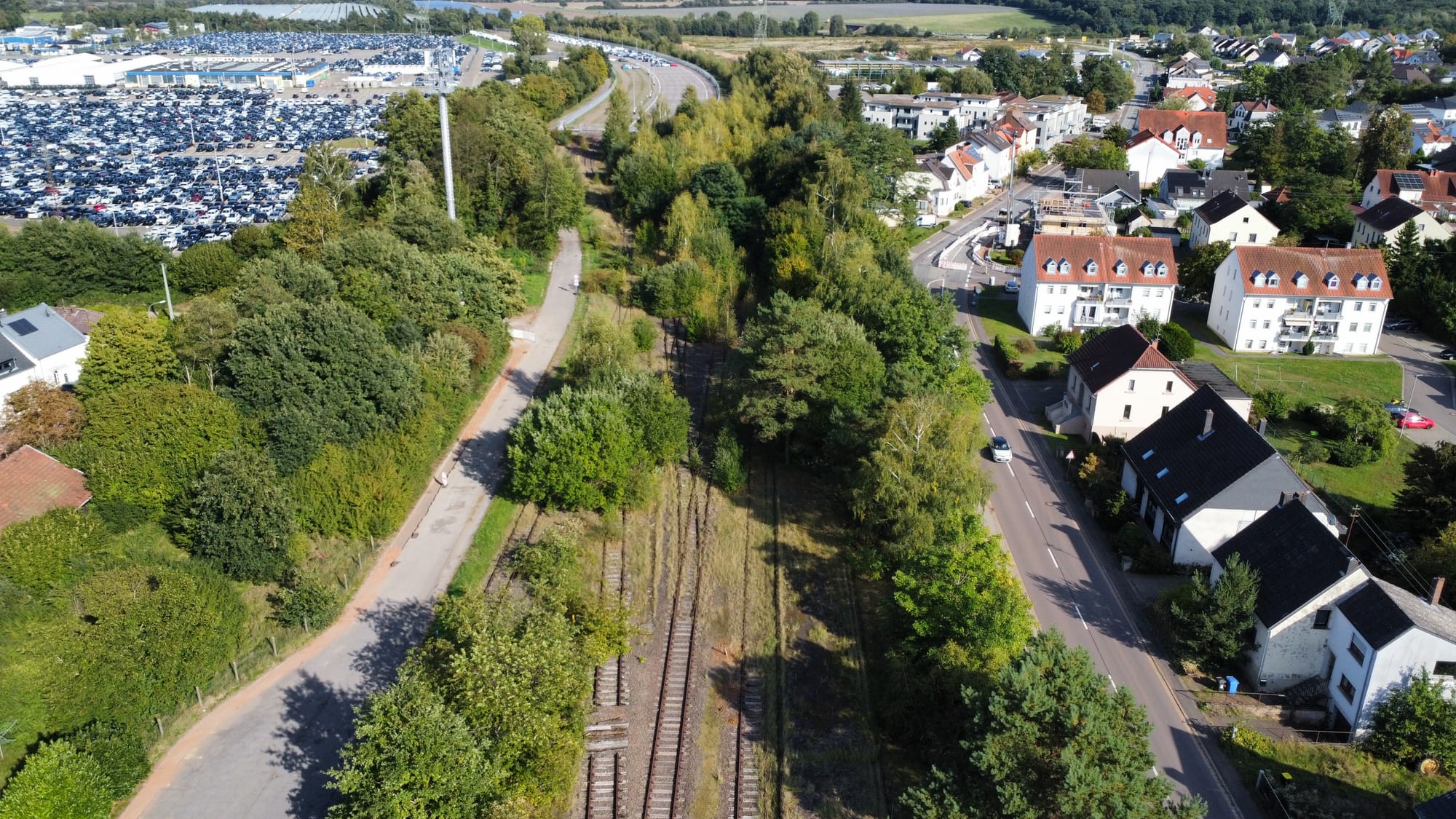
There is an abandoned railway line Völklingen - Überherrn - Falck (known as Bisttalbahn), about 18km in length (route here, OpenRailwayMap here). As well as Überherrn being a significant enough place to justify having its railway back, it would also be the fastest way from Saarbrücken to Luxembourg - 112.9km by my estimation.
The Völklingen - Überherrn section was electrified until the mid-1990s, and was only formally closed in the early 2000s (background in German here). Saarland has ideas to re-activate it, but only on the German section as far as Überherrn, but there is no mention of the Überherrn - Falck cross border section.
Meanwhile Grand Est wants to re-open the currently freight only Béning - Falck - Bouzonville - Thionville line for passenger trains by 2031, but there is no mention of the Überherrn - Falck cross border section.
This whole area is part of a greater region SaarLorLux. There is an Interreg project for it, and governance for it.
So why not put your heads together, everyone, and agree to re-activate the whole of the Bisttalbahn (including the section Überherrn - Falck), and put passenger trains back on the Béning - Thionville line? Then everyone in this three country region can benefit, including Luxembourg!
Want to know more about everything about railways in this cross border region? Follow the indefatigable work of Erhard Pitzius and his organisation Plattform Mobilität Saar-Lor-Lux e.V.
Bullshit Meter: Direct Eindhoven - Bruxelles Train
There is definitely a more positive spirit around cross border rail between Netherlands and Belgium. But could there be a direct Eindhoven - Bruxelles train, as Thierry Aartsen suggests?
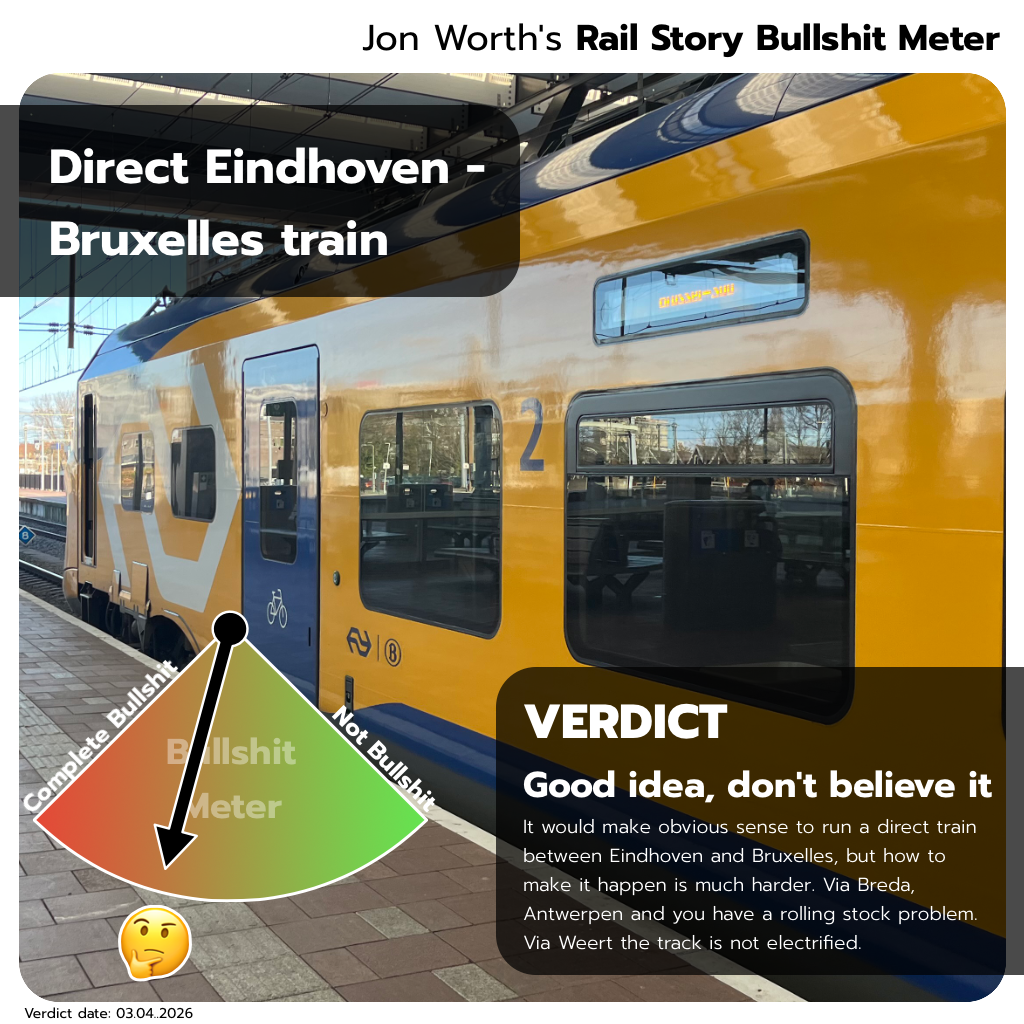
Don't get me wrong: this is a good idea.
The question is how you do it, and indeed if you can.
This is the area on OpenRailwayMap.
The easiest route would be via Breda and Antwerpen, like this. 163km, all electrified. But there are problems.
The line through Antwerpen Centraal is at capacity, so no more paths there. You would have to combine this train with another one. How about you add a Eindhoven - Breda service to the Rotterdam - Breda - Bruxelles EuroCity at Breda station?
Problem. The EuroCity is a locomotive hauled train, using SNCB (so Belgian) stock, and you cannot couple and uncouple those trains easily.
You could theoretically use NS (so Dutch) ICNG units instead, and run 1 half to Eindhoven - Breda - Bruxelles, and the other half Rotterdam - Breda - Bruxelles. But NS only has 22 cross border ICNG trains, maybe at a stretch enough (given these trains also run Bruxelles - Amsterdam Zuid, not via Breda), but even if no new trains would be need that would mean only NS units used for the cross border services, meaning the Belgians are going to have to dip into their pockets to cross subsidise their Dutch counterparts. Politically tricky.
Dutch public transport association Rover suggests a simple but radical solution, but one that will surely gain little favour in Rotterdam - simply turn the EuroCity Bruxelles - Rotterdam into a Bruxelles - Eindhoven, but I cannot see that working.
Or they could try another route - go via Weert instead. Like this, 159km.
But here there is a different problem: the cross border section, about 7km from Hamont to Weert, is not electrified (see OpenRailwayMap here). And even were you to fix that, you would still need some trains to operate the service. But at least you would avoid the Antwerpen Centraal bottleneck.
So that explains it. Good idea, but I do not believe it, because I do not see the decisions being taken to actually make the service a reality.
All previous Bullshit Meter posts can be found here.
Not a 1st April joke, sadly: Sweden orders Talgo night trains
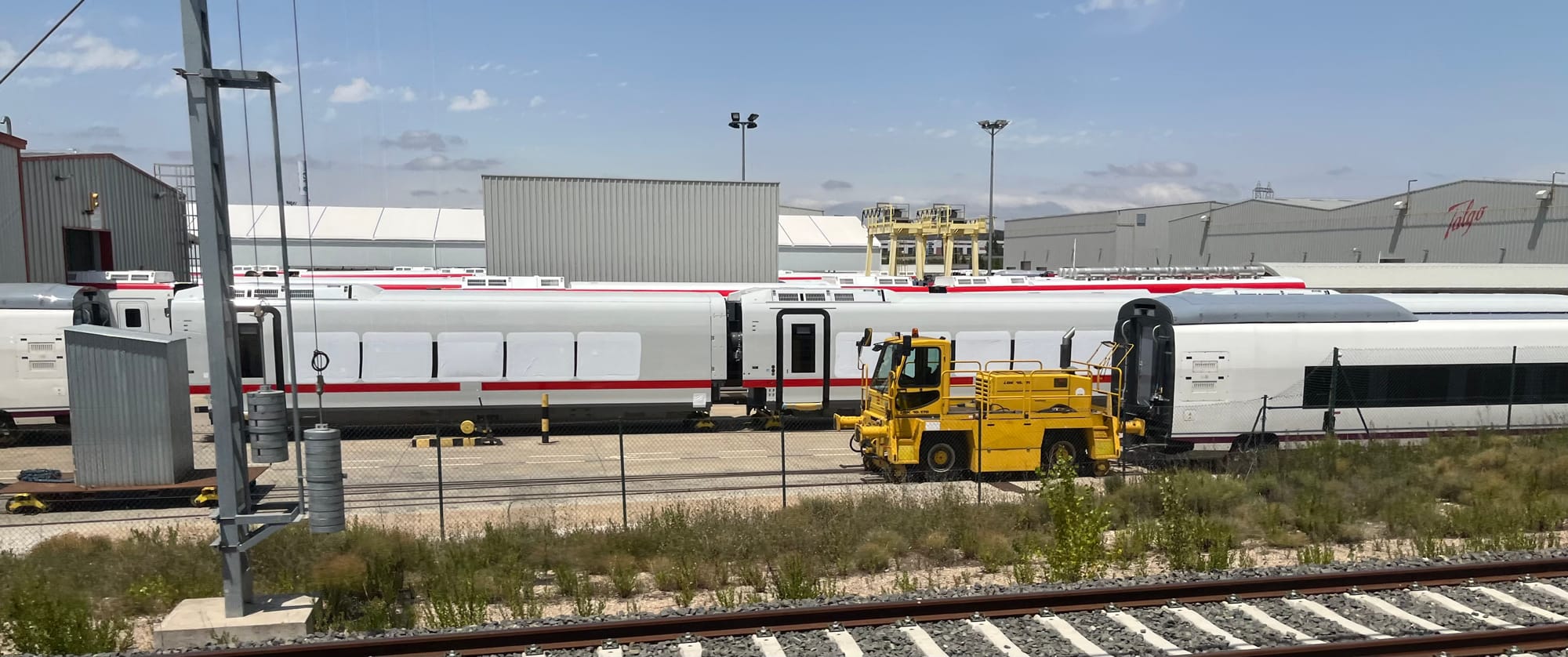
When I was sent this story that Sweden is buying Talgo night trains on 1st April, I really hoped it was a joke. Turns out it is not - Sweden really is doing this, although thankfully the locomotives will come from Siemens and only the carriages from Talgo.
You can just about argue the problems Renfe has been having with the Talgo 106 series as not relevant here - those are high speed trains. What the Swedes are ordering is more similar to what Germany and Denmark have ordered - something in the 200-230km/h range, locomotive hauled. While both DB and DSB have formally managed to get their Talgo trains running, just about, the reliability remains terrible - there is only one daily timetabled return journey with the fleet so far each day in Germany (and DB might even scale back its order), and cancellations and problems are common with the Danish ones.
You can, just about, forgive DB and DSB for ordering from Talgo. They did not fully know what they were letting themselves in for. But I cannot forgive Trafikverket at all - all they need do is glance across the Öresund. But their were either too tight fisted, or too insular to do that, and now they are going to have a problem on their hands. And all they would have needed to do to stop this issue would have been to stipulate the requirement for regular two axle bogies in the tender, thereby eliminating Talgo's single axle design.
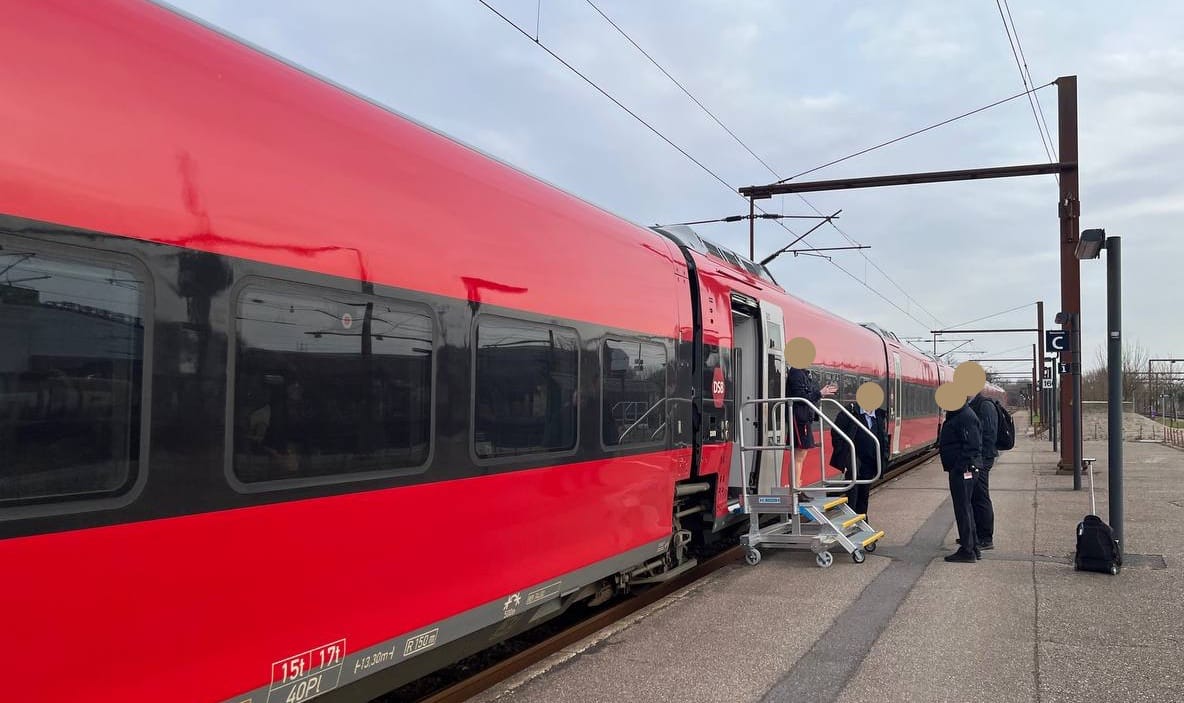
As if those are not problems enough, there is a very specific one regarding the remote routes in northern Sweden - the platforms or, more specifically, the absence of them. This picture shows the arrangement in place for the Talgo at Padborg (OpenRailwayMap) in Denmark:
But stations these Swedish night trains are going to have to serve are places like Låktatjåkka (OpenRailwayMap - thanks Tor Lillqvist for reminding me of this) - that look like this:
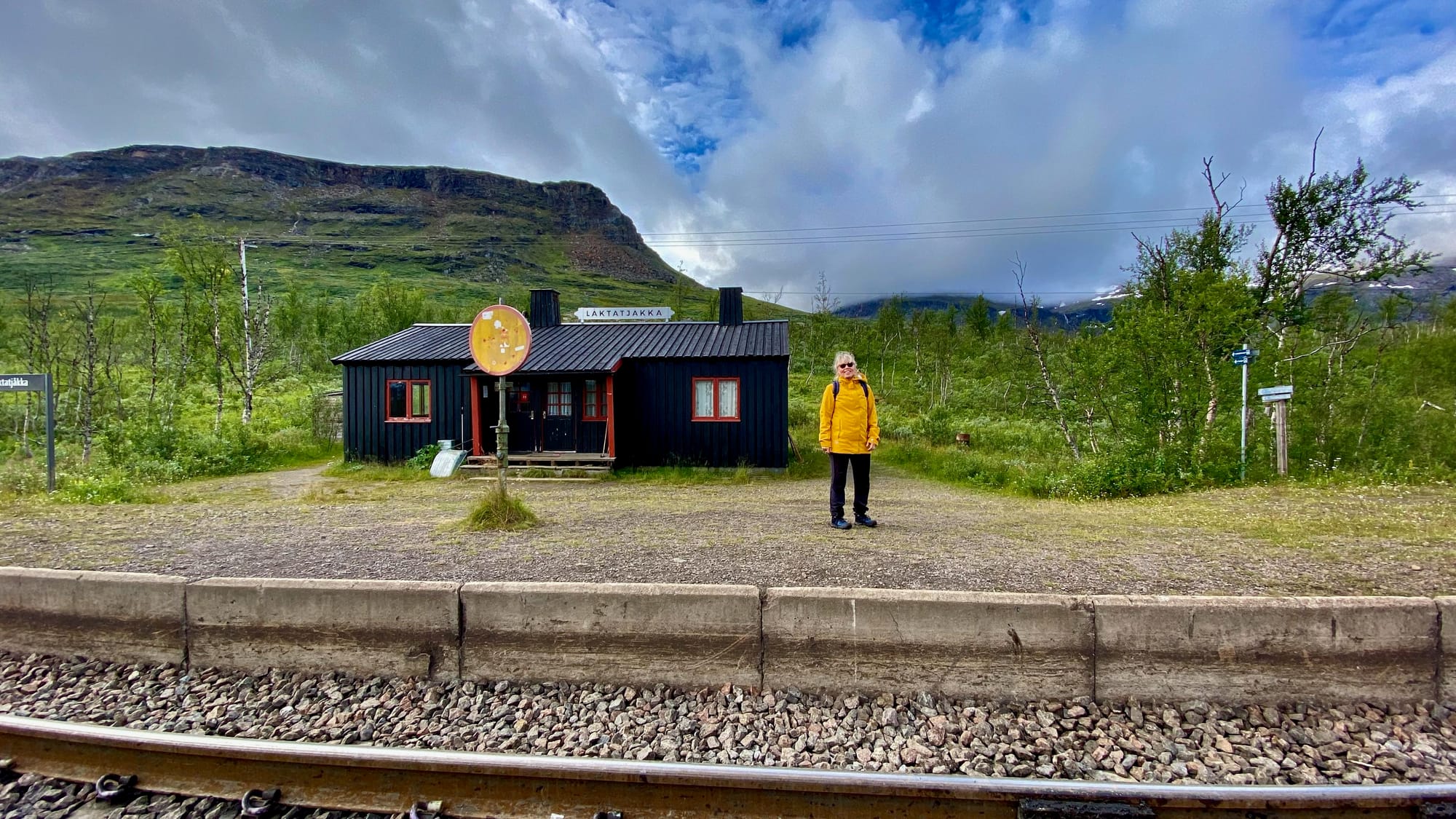
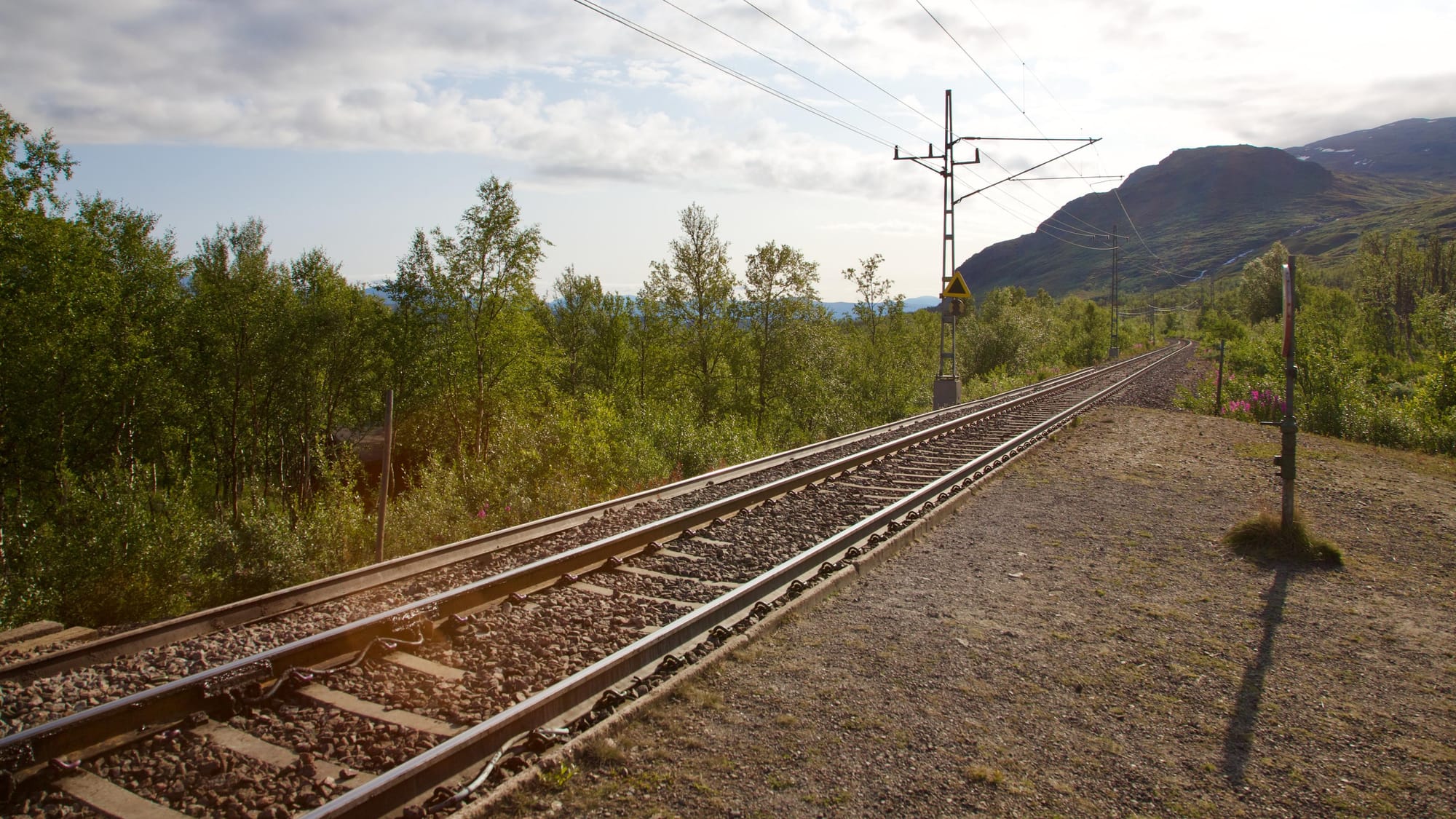
The main selling point of Talgo's design is the low floor - if a platform is 76cm above the height of the rail the trains are step free throughout.
However unlike any other trains, there are no steps on the train itself. So you end up with a massive step up, as in Padborg. How are passengers going to clamber out in Låktatjåkka or Abisko I wonder? And did Trafikverket even think of this?
Good week: New trains and metros for Beograd (maybe)
You never know quite whether to believe anything announced about railways in Serbia until you finally see it running, but this week it looks like there are two major steps forward.
First, financing has been secured and a contract agreed with Alstom to build the first metro line in the Serbian capital (Alstom will build the trains in France, and supply signalling systems).
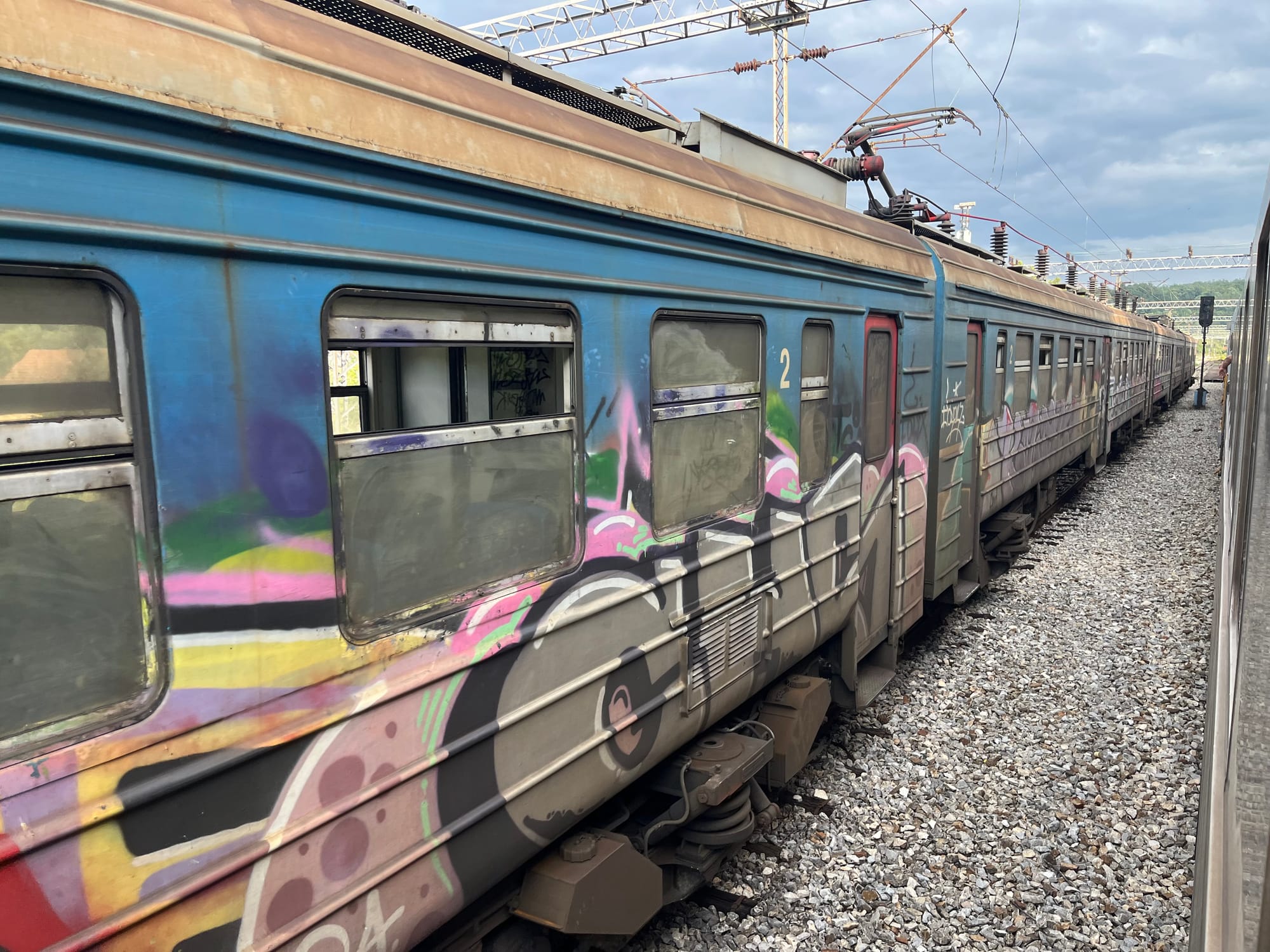
Second, a deal has been made with Spanish manufacturer CAF for 30 EMUs to be used on BG Voz suburban routes around Beograd. Given the dreadful state of existing 1980s RVR EMUs used on BG Voz services, the entry into service of the new fleet cannot come too soon.
The choices made here are nevertheless interesting.
Given Chinese companies have built the railway line from Beograd via Novi Sad to Subotica and onwards towards Hungary, and some Chinese built EMUs are eventually supposed to run there, the choice of European companies for both contracts is interesting. And given another European manufacturer - Škoda - just signed a memorandum of understanding to setup a works in Serbia, they will likewise be annoyed that the contract went to CAF.
I assume there is some method to all of this?
Bad week: Not enough funding for a proper and complete upgrade of Berlin - Szczecin
It feels like the upgrade of the cross border Berlin - Szczecin line (OpenRailwayMap) has been just around the corner for many years now. First Germany started to re-build the section north of Angermünde as far as Schönow but without a plan for the Schönow to the border section - that is now finally starting to get built.
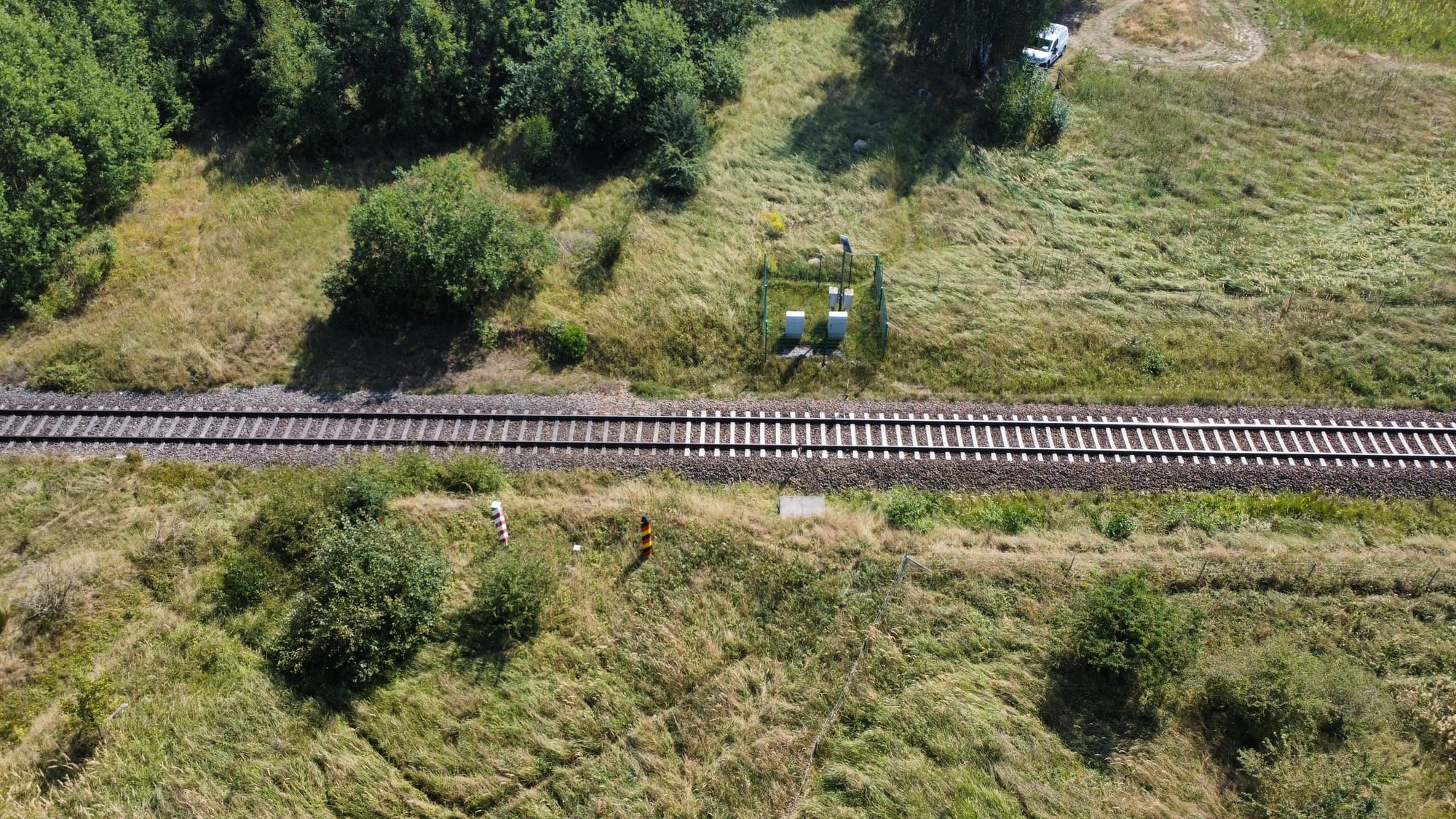
Now Poland has issued the tender for its section of the line, but there is not enough money to do the upgrade fully and completely, meaning - at least initially - there will be a double track electrified line from the border to Szczecin Gumieńce, but from Gumieńce to Główny (main station) it will still be single track. Poland's President vetoed the extra funds for this section. All the background from Rynek Kolejowy here.
As a result of the lack of coordination, and the poor planning, the whole route will have been closed to trains for much longer than it would have needed to have been.
Very bad week: Orbán doesn't get his shiny new train line before the elections (but that's likely good for everyone else!)
In last week's newsletter there was a provisional timetable for Budapest - Beograd trains. This week: it is confirmed the trains will not start before the parliamentary election in Hungary on 12th April, as reported by telex.hu
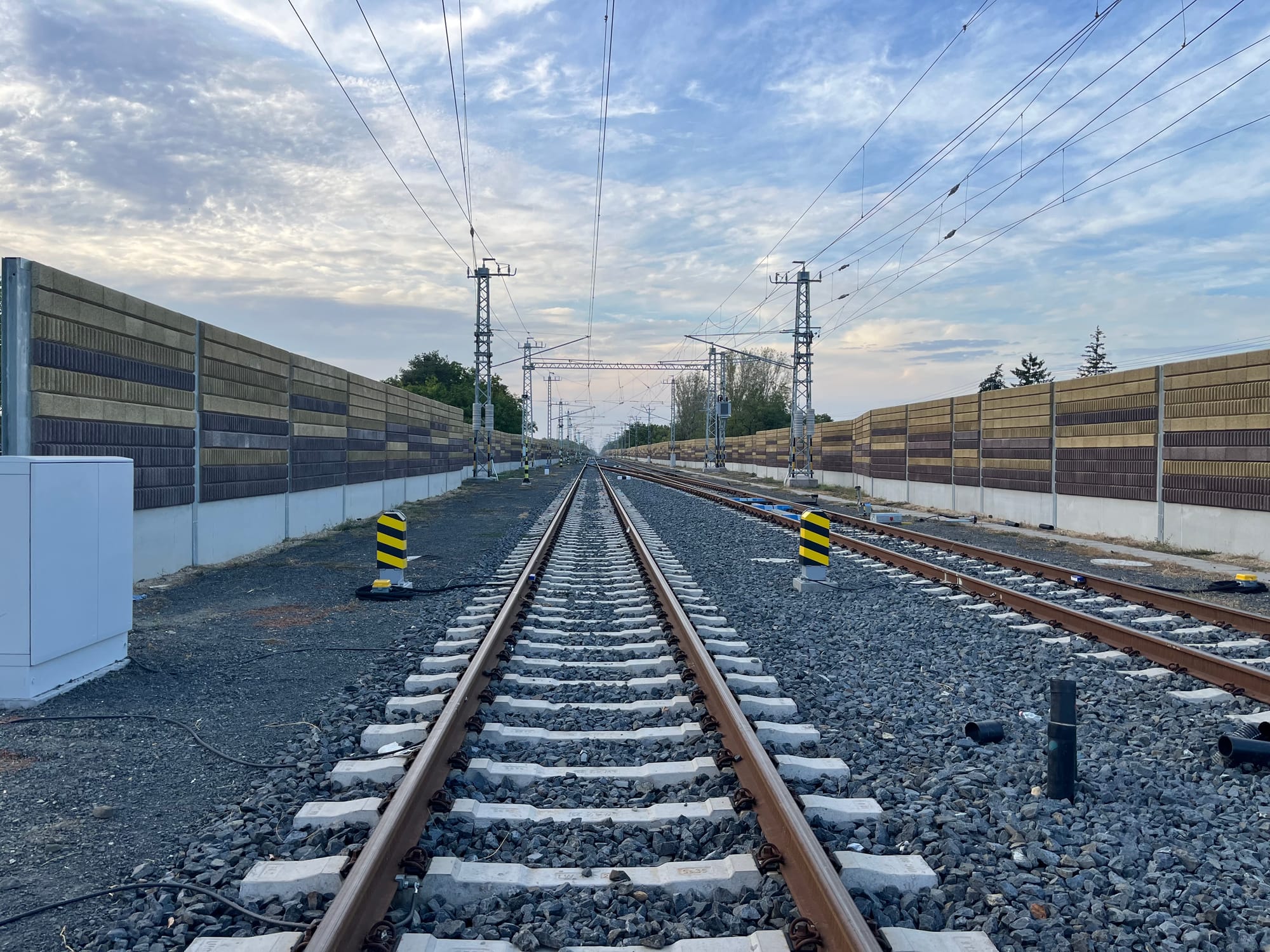
The problem is that the ETCS safety system had some software bugs, and needed to be patched and re-tested. Two of MÁV's ETCS experts have also resigned. And rather than put passengers in danger, they have - sensibly! - decided to postpone the opening of the line for passenger trains. So it's a very bad week for under pressure Hungarian Prime Minister Viktor Orbán that wanted his new line opened, but probably a good week for everyone else.
And given the switch to summer time has posed a problem for MÁV's IT systems this week, would you necessarily trust them to rush something more fundamental?
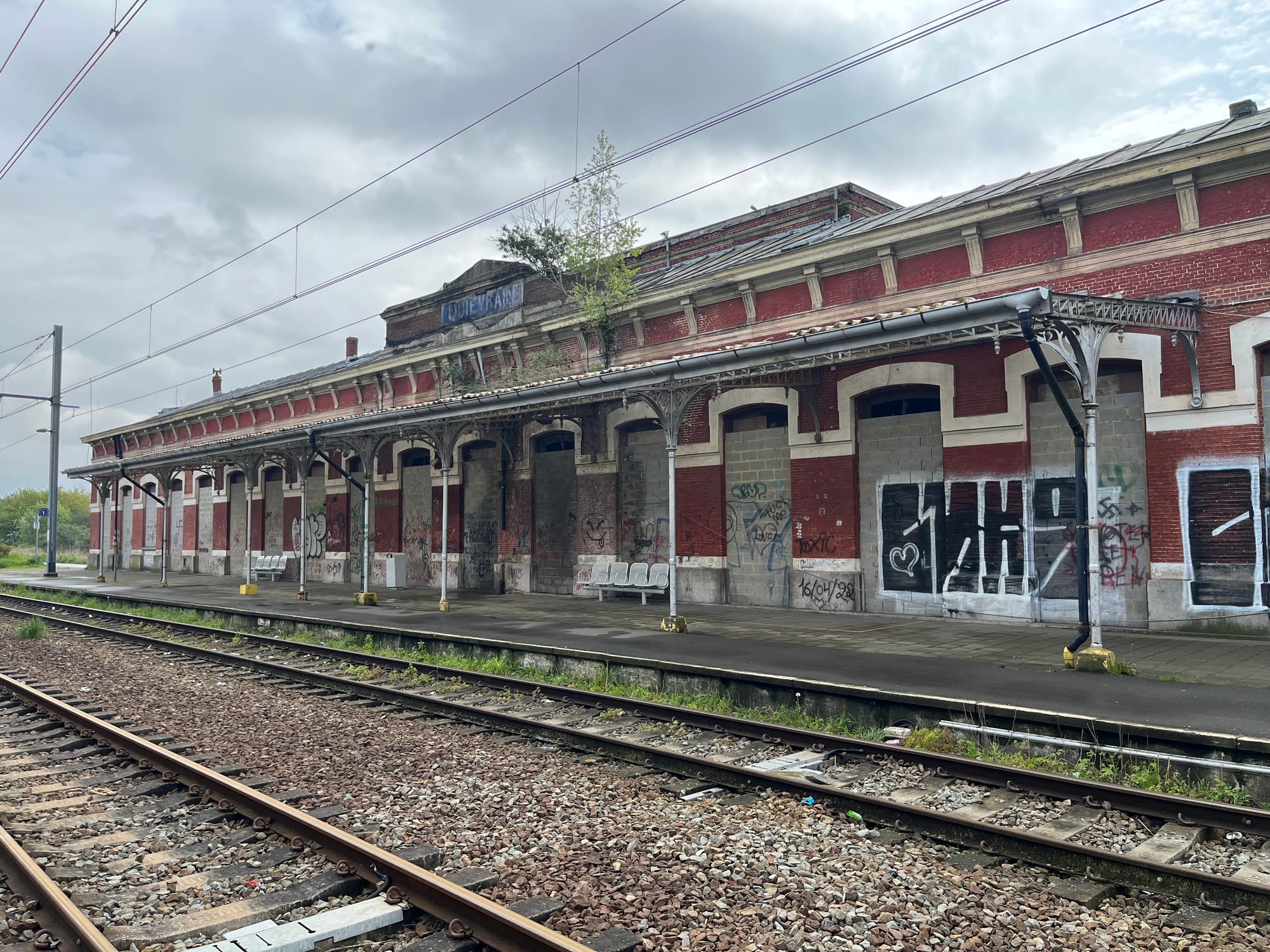
Photo of the week: Quiévrain station
"outre-Quiévrain" is a phrase you can use in French to mean "in Belgium" - basically beyond Quiévrain (OpenRailwayMap) - further explanation here. The reason is this was where the first cross border railway between the two countries was, so once you are beyond Quiévrain you are on the other side.
The only problem?
There are no passenger trains at all these days from Valenciennes to Crespin on the French side, and the cross border section of line between Crespin and Quiévrain has fallen into disrepair. From Quiévrain there is at least a train, although the station building itself sure has seen better days! I crossed the border by bike.
Calendar: European Commission to publish SDBTR Regulation
It has been the subject of numerous articles on my website, and the topic of last week's newsletter, but now we have a date - 13th May the European Commission is supposed to be publishing the SDBTR Regulation, at least according to T&E. Fingers crossed it does happen this time!
If you would like to stay up to date with what I am doing, there are public calendars to which you can subscribe: Jon Worth - Speeches and Events ICS | Jon Worth - Travel ICS | Jon Worth - Other Rail Dates ICS And if you'd like me to speak at an event or run a workshop, contact me about that.
Photo Rights
All photos in this edition are taken by Jon Worth, except Padborg and Låktatjåkka - those pictures are from Arian Berndt and Tor Lillqvist respectively, used here with permission. Bullshit Meter images always have photo rights listed directly on the image.