Solar panels between the tracks on an active railway line: a dreadful idea

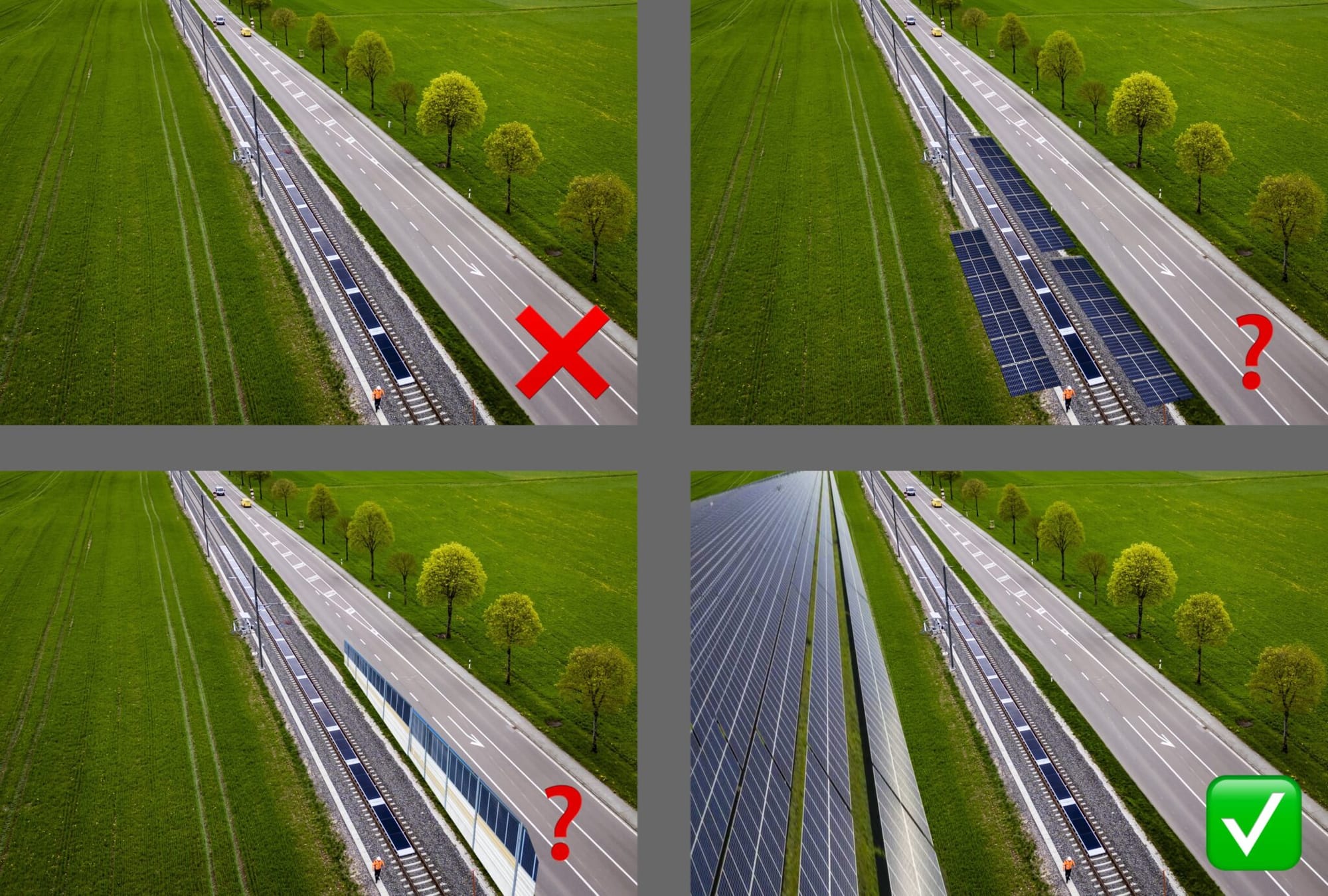
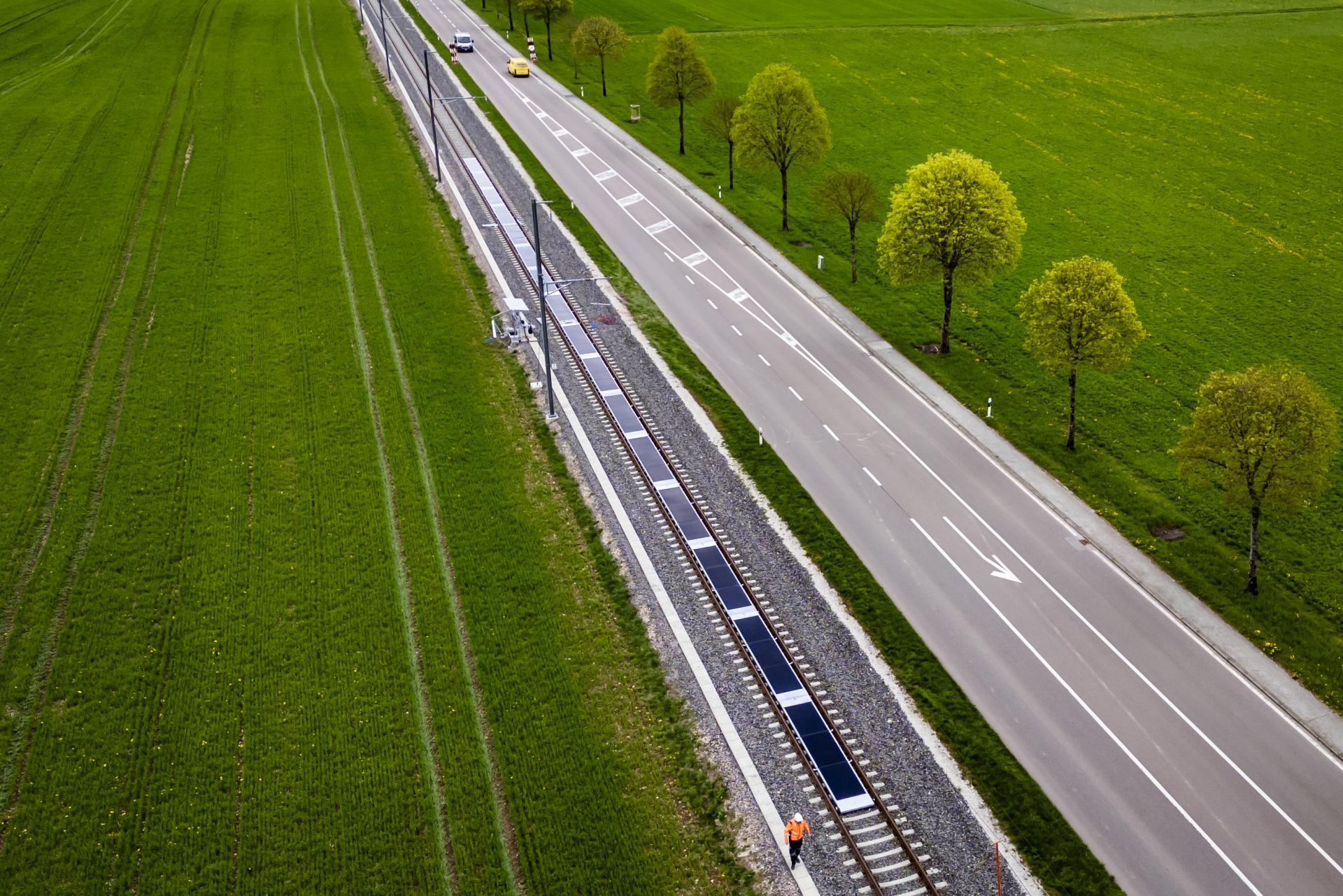
In Switzerland, as a test, 48 solar panels have been laid between the tracks on an active railway line between Neuchâtel and Buttes. News about it here, and cue all the feel-good-but-don't-think-twice influencers crowing about it.
But let's think twice about this.
First, should you install solar panels in a place that:
- gets covered in brake dust and other muck
- is subject to vibrations every time a train passes
- is liable to have things falling onto the panels (such as part melted ice in winter time, that drops off trains)
- have to be moved every time you need to do any sort of track maintenance
That doesn't look ideal to me!
There is some idea that the trains themselves - fitted with some sort of brushes - could clean the panels. That might just about work on this isolated branch line that has one sort of rolling stock, but on a mainline this is going to be fraught with problems. Any train that is approved to run in France or Belgium, and in Switzerland, is going to have very much the wrong sort of brush on it for a start - a metal one that will scratch the panels!
But let's have that second thought, and take a closer look at the photo of the installation from RTS - you can see the panels between the tracks here:
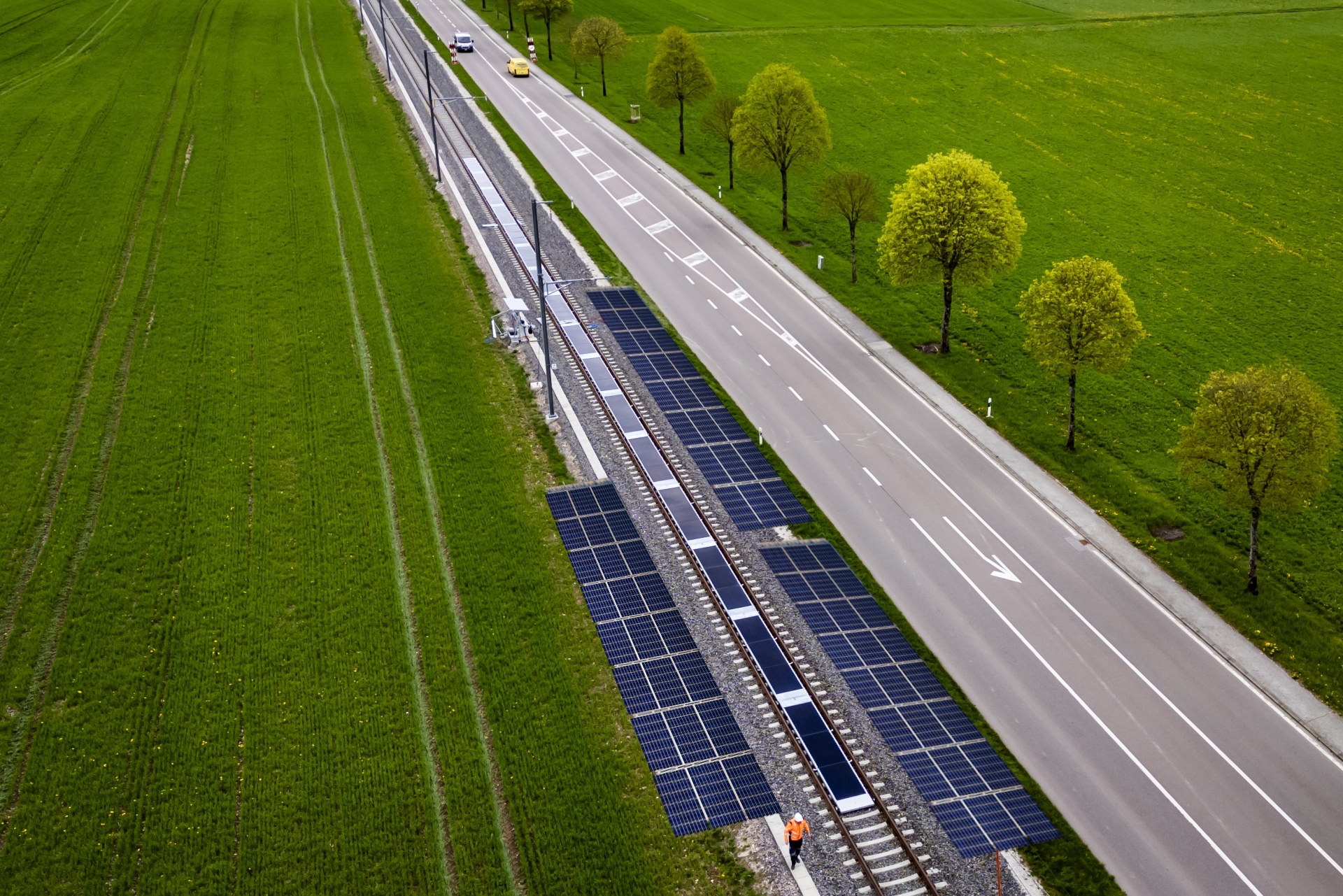
Is there anywhere else we could put solar panels here?
Maybe alongside the track, where less muck will fall on the panels?
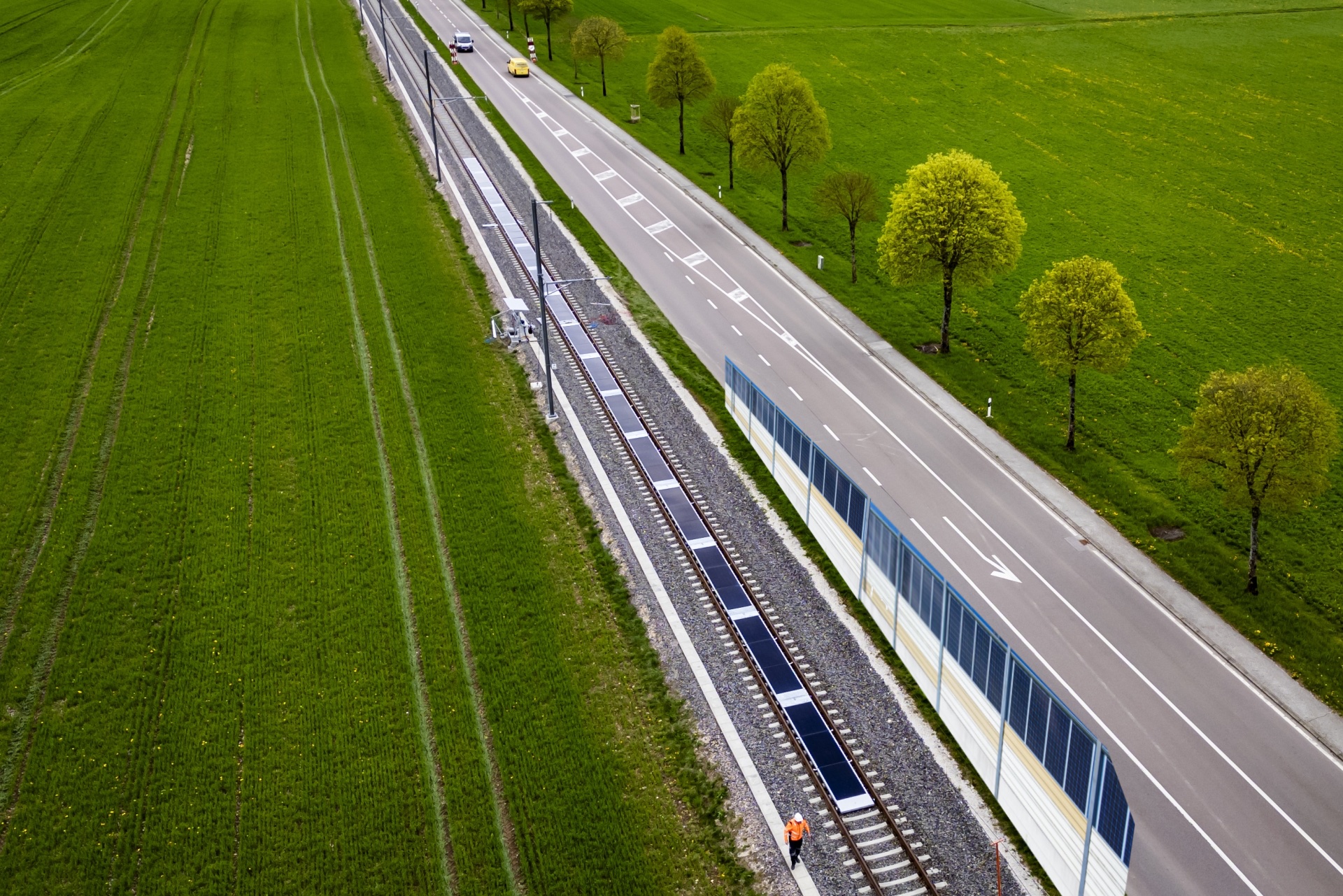
Or as part of a sound protection wall alongside tracks, as is being trialled in Lithuania? Keeps the panels clean, and also reduces the sound impact of the train line:
Or - I'm dreaming here - solar panels can be mounted on posts. You have posts - for the overhead wires - so what about combining them? The panels then also have the right inclination:
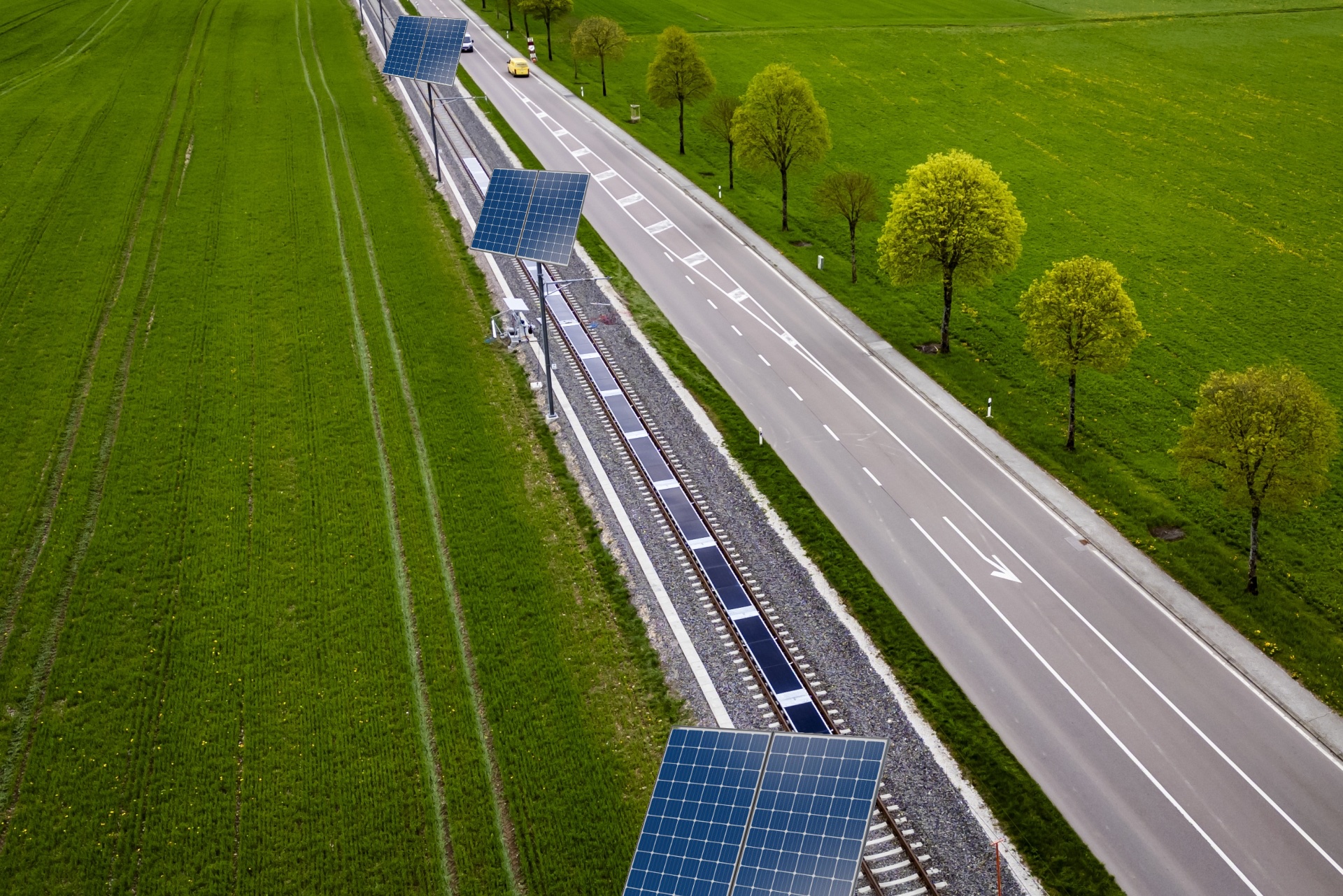
Best of all: beside the track there is a massive field. Put the solar panels there - and it could even be good for biodiversity. Like this:
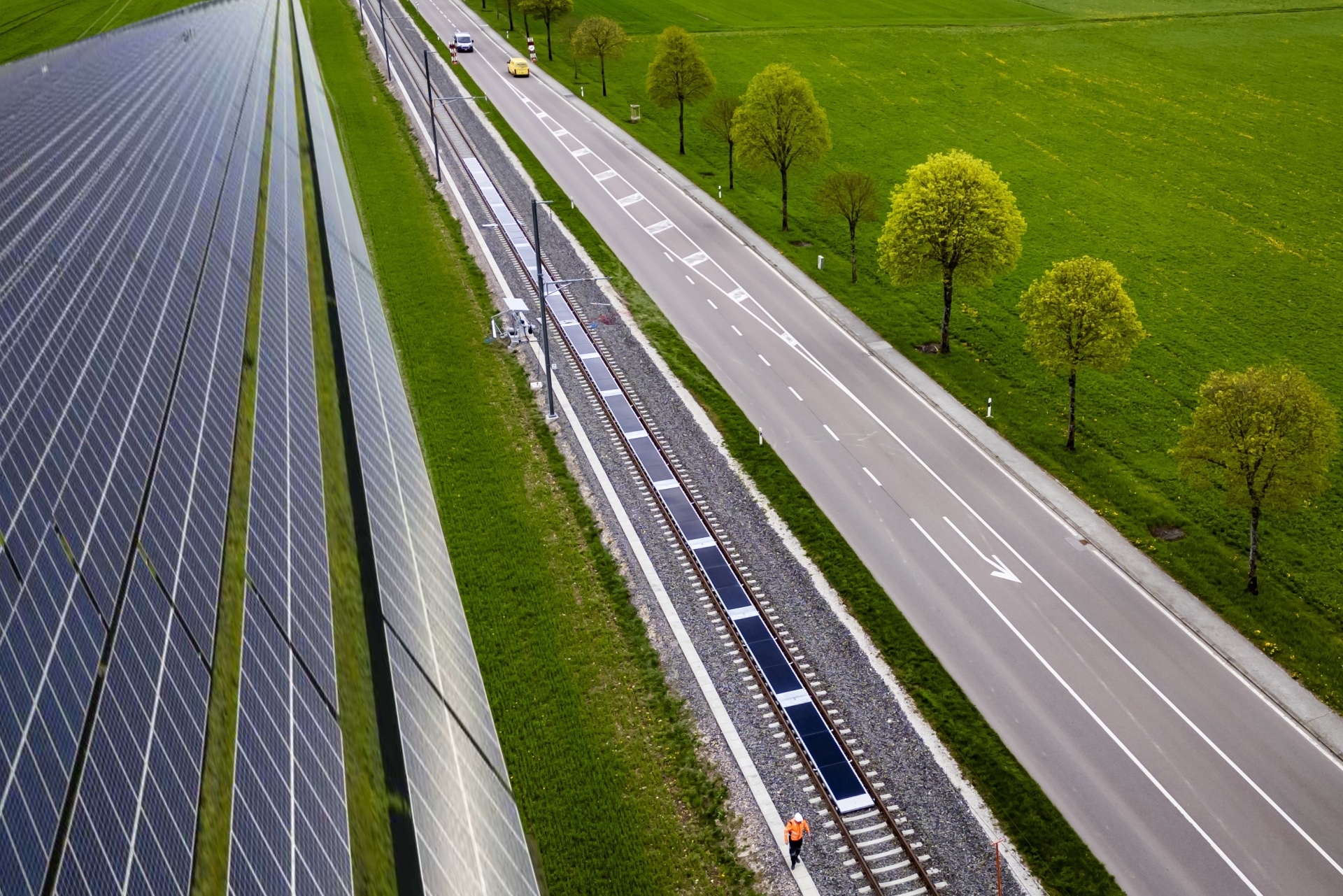
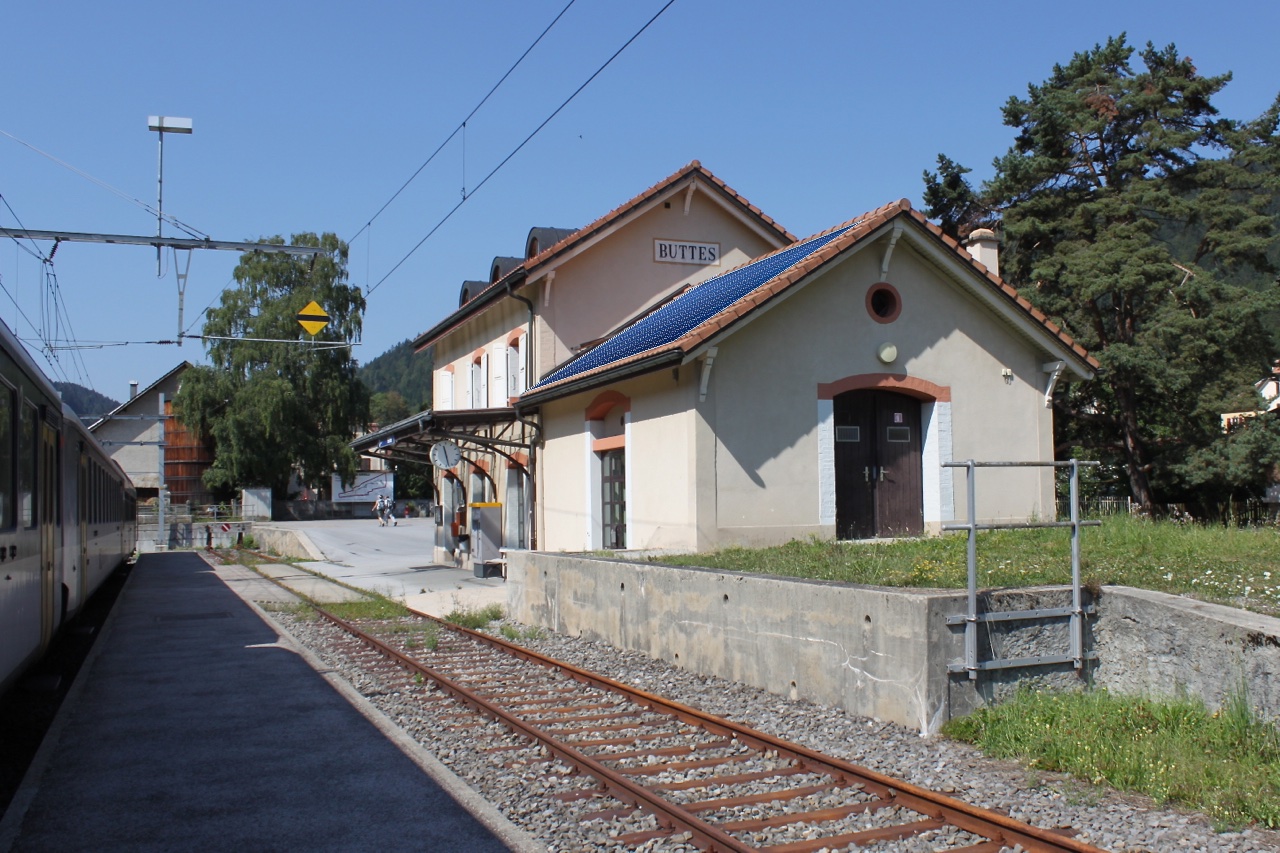
Looking a little further, the track shown serves the station Buttes. It's a small station, and there are not many pictures of it, but I will do my best to assess it as well.
Why not put panels on the station roof, like this:
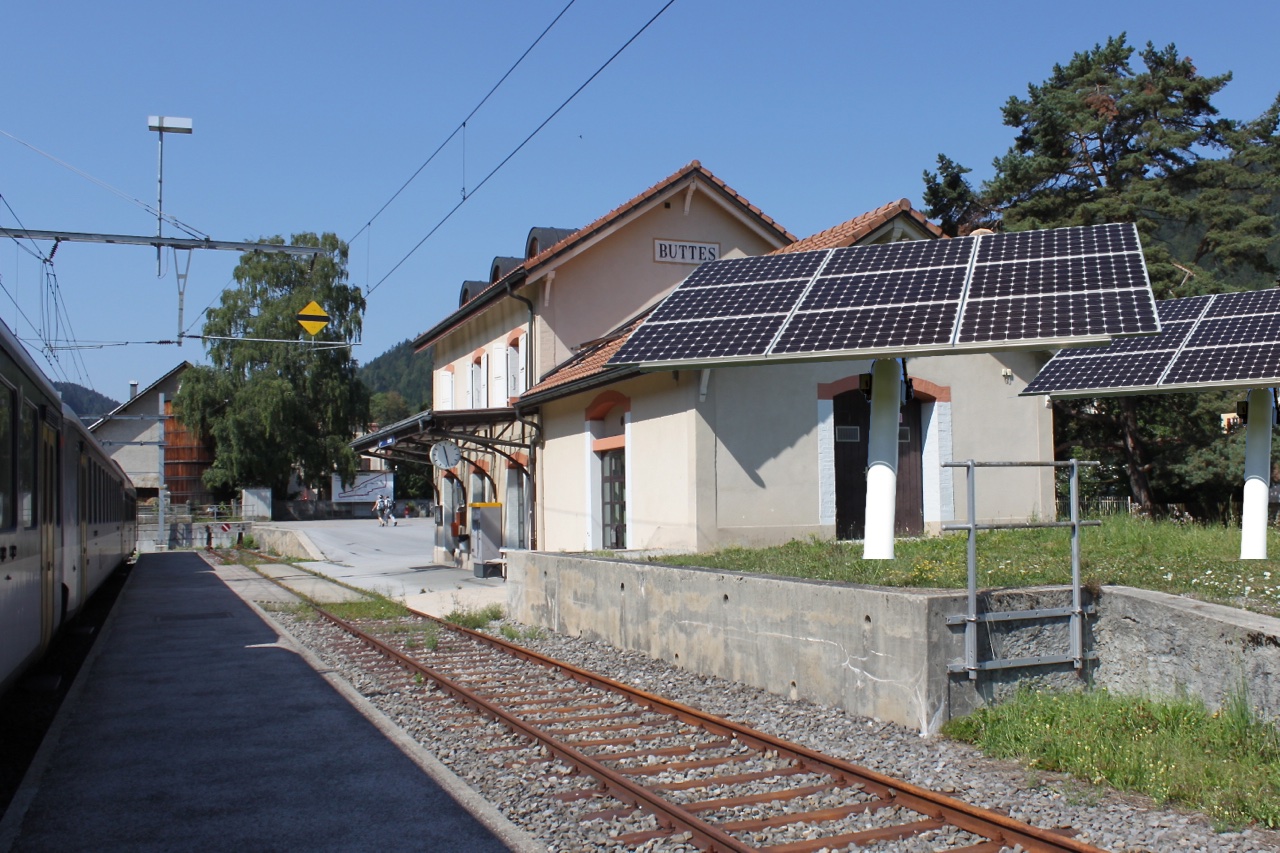
Or put some larger panels beside the station building, something like this:
So - in summary - solar panels in between the tracks of an active railway line are fraught with difficulties. And there are many better places - alongside railway lines and at stations - where panels would be better mounted.
But that doesn't make a nice story if you're an influencer, does it.
Sometimes what works is... well... a little bit boring.
[Update: 5.5.2025, 18:30]
EEVblog has now done a whole Youtube rant about this project - thanks Roland Rides for pointing me towards this!