How to avoid using inappropriate stock photos of trains

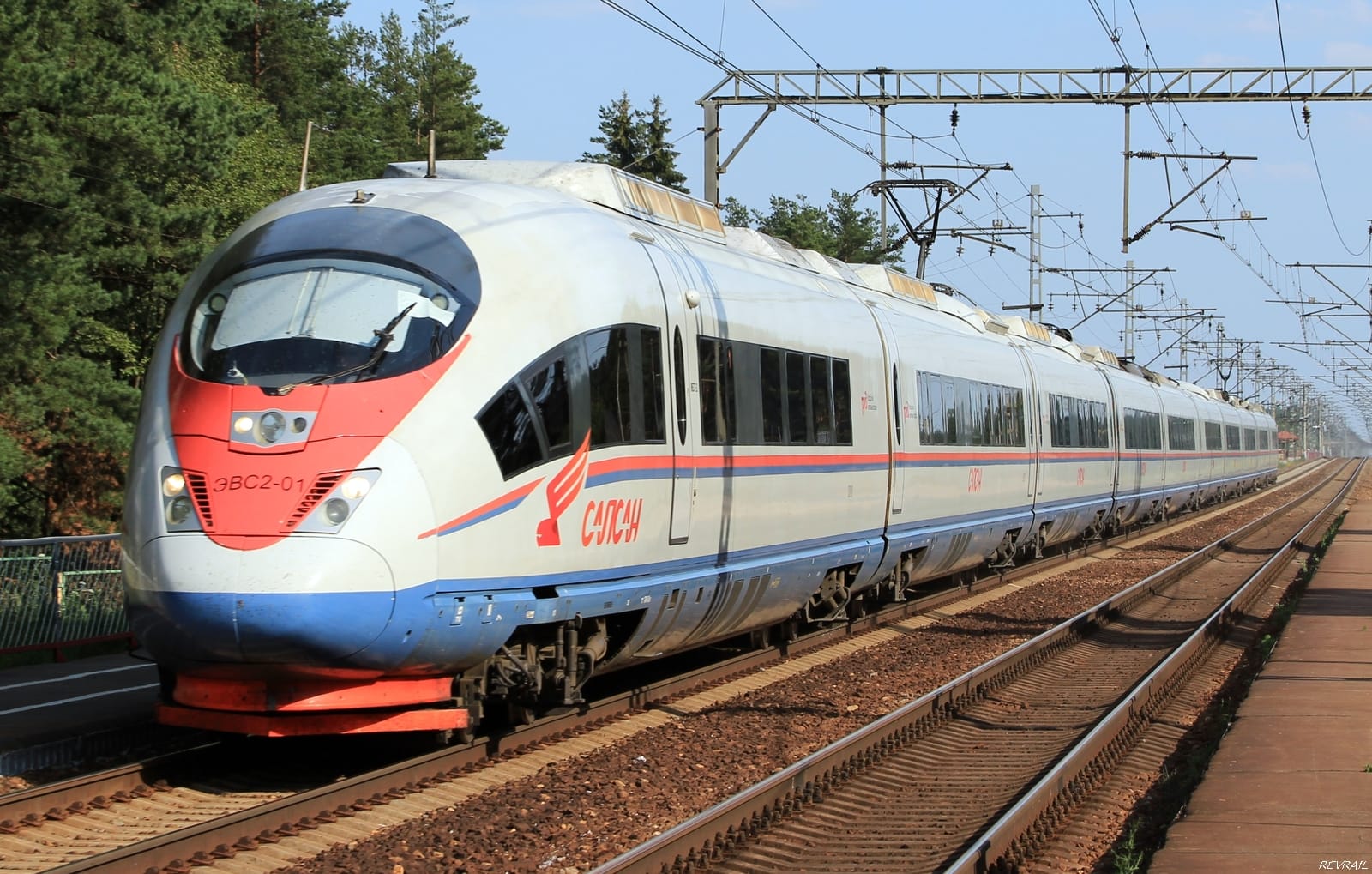
This week I stumbled across a story in the Bruxelles EU publication Rapporteur, arguing for a "rail revolution in Poland", illustrated using a Russian Railways RZD Sapsan train:
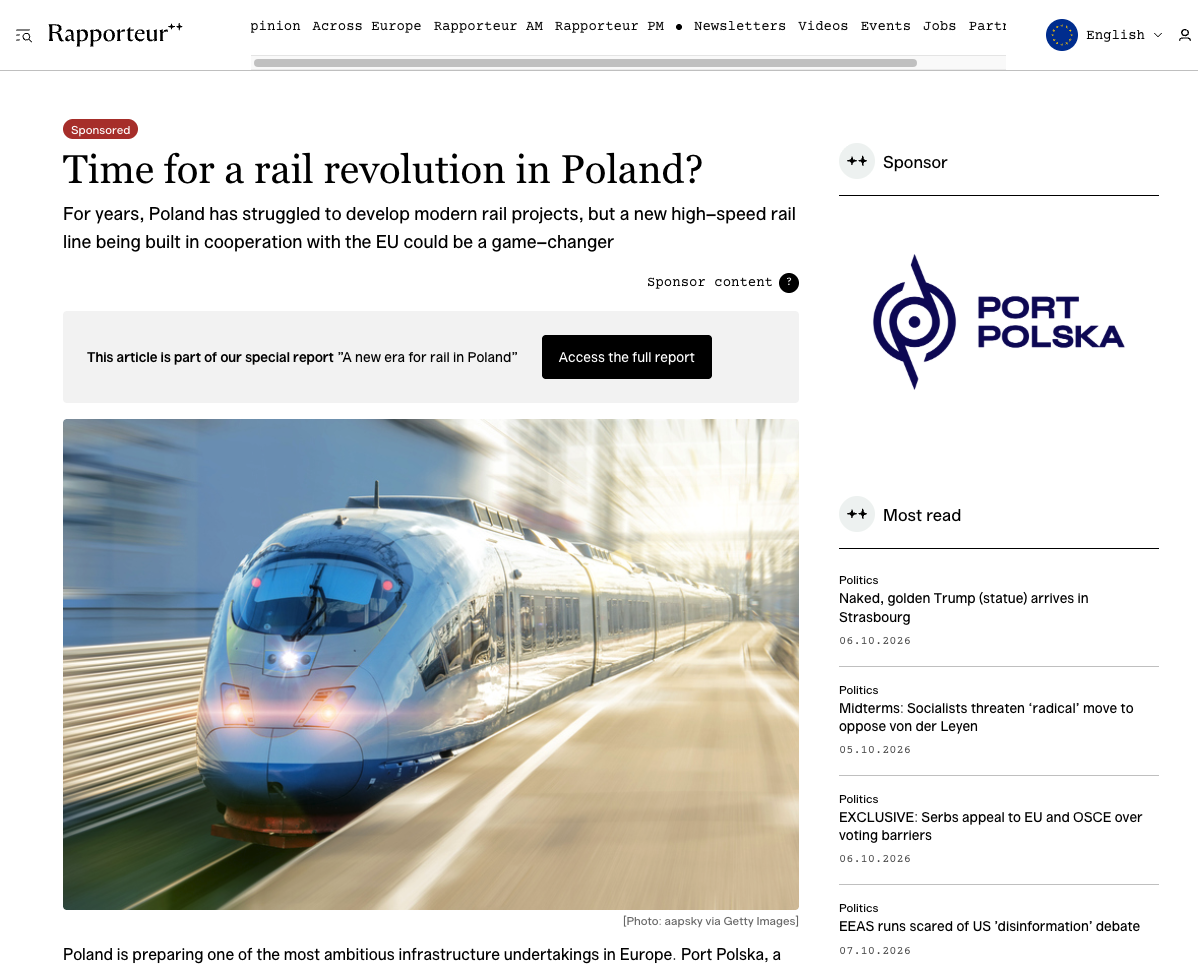
I am pretty sure, politically, you do not want RZD as part of your revolution!
Earlier this week the TRAN Committee of the European Parliament likewise had used a picture of a Sapsan train, although at least that one was corrected swiftly. And even leaflets and banners at trade fair Innotrans featured Russian trains.
Does this matter, maybe you're asking?
If you are the author of an article, and use an inappropriate photo - and especially a politically inappropriate one - then I am going to doubt everything else in the entire piece, and at the very least doubt the thoroughness of everything else in the piece.
'But not everyone will notice!' might be the response. Yes. But do we say the same about factual errors in the text? 'Not everyone will notice your fact is wrong' is not a defence for making factual errors, so should not be a defence for using inappropriate or incorrect images.
And if we answer this the other way around, finding an appropriate image is so simple there is really no excuse for not doing the basics.
So here is a guide to avoid the most common errors, most connected to Russian trains that - given the invasion of Ukraine - should not be used to illustrate anything in the European Union.
First, be aware of Russian Railways RZD's colours.
While many railways use red, RZD usually uses the red together with two tones of grey, like this:
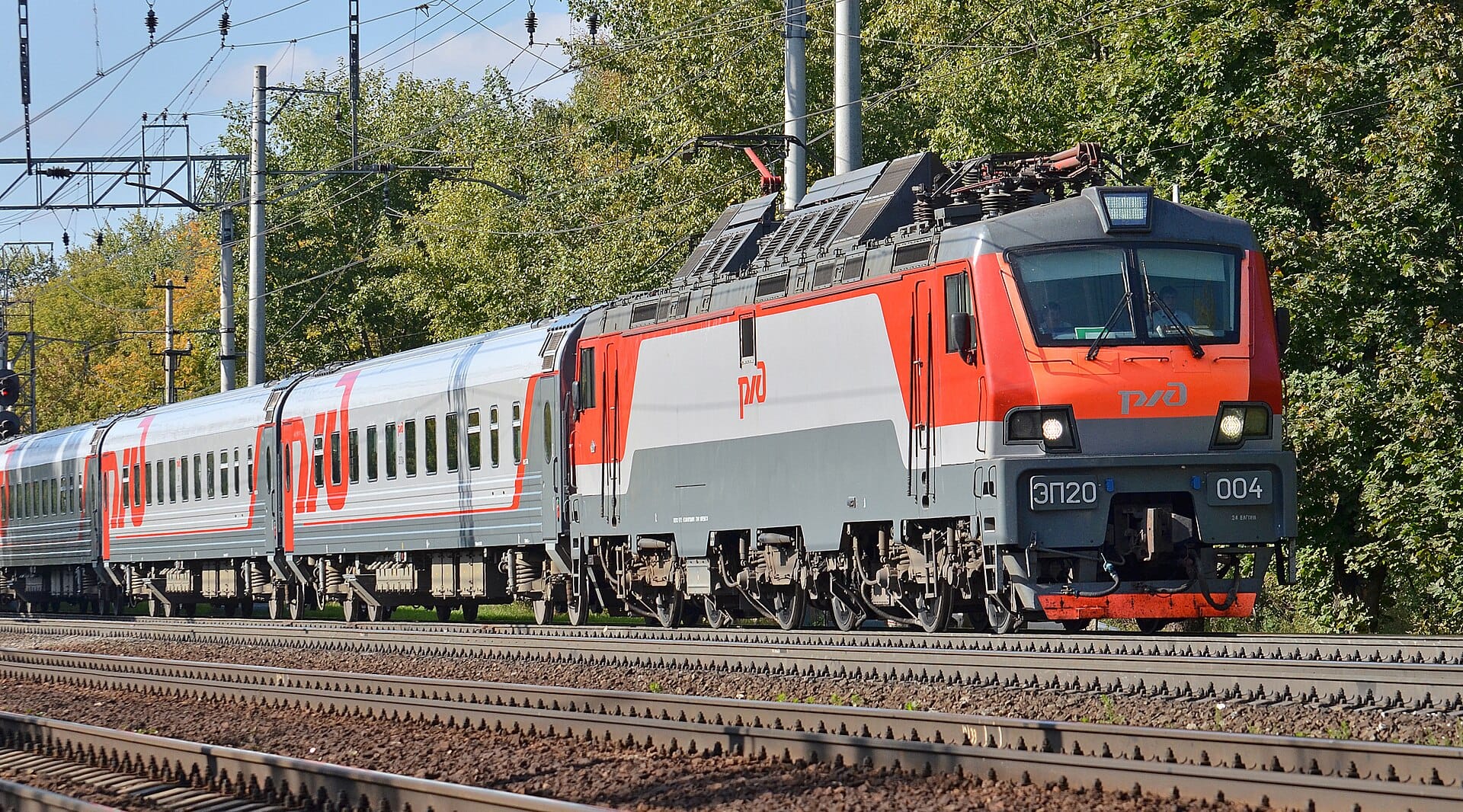
So using any train photo with those colours should prompt immediate reflection.
Second, the Sapsan problem.
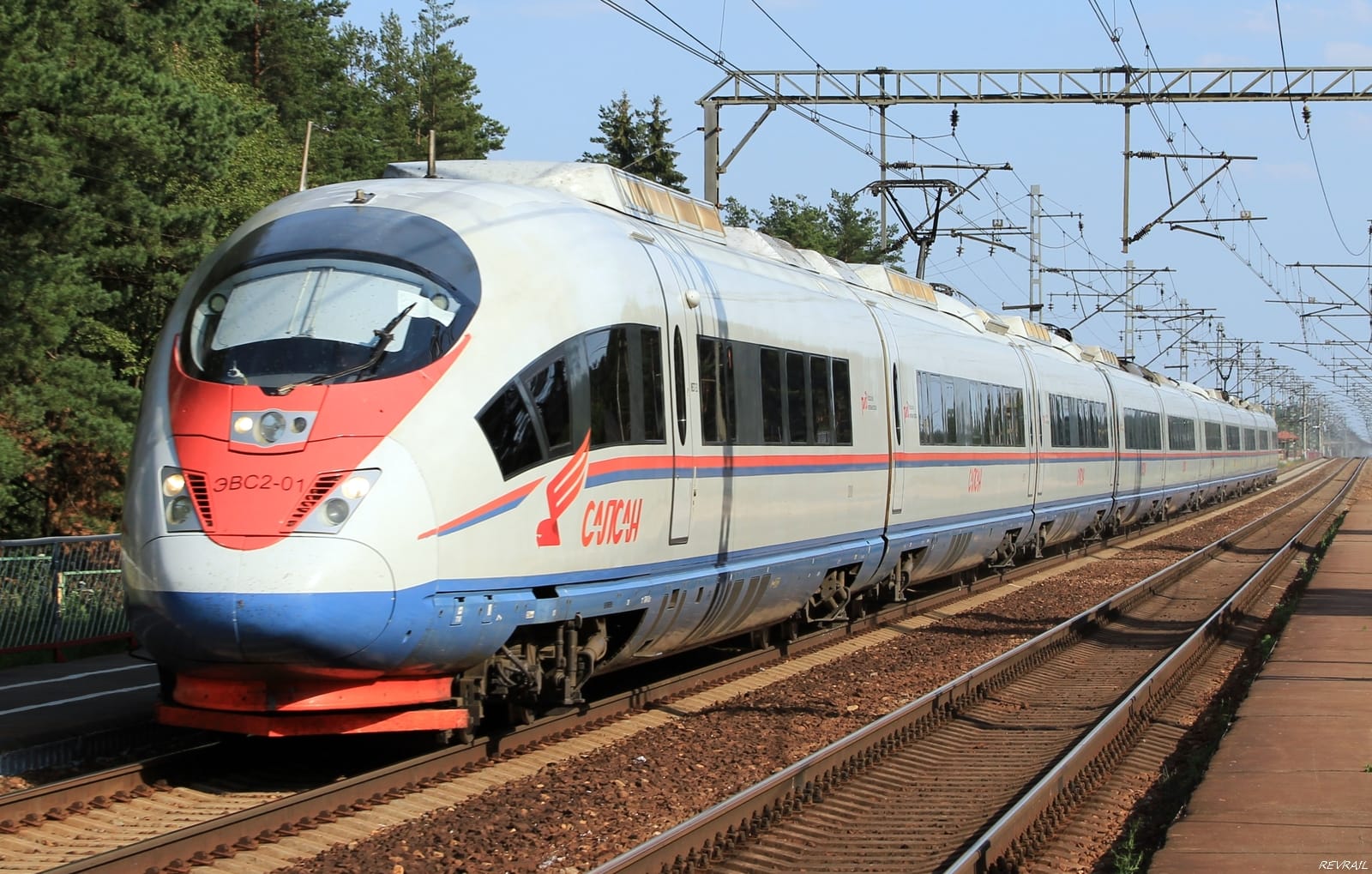
Libraries of stock images are full of photos of these units. The RZD Sapsan trains were supplied by Siemens in 2009, and bear a close resemblance to the trains that manufacturer supplied to German and Spanish railways at the same time. Also, unlike other RZD trains, these trains do not carry the typical two tone grey and red livery, but are normally red, blue and white:
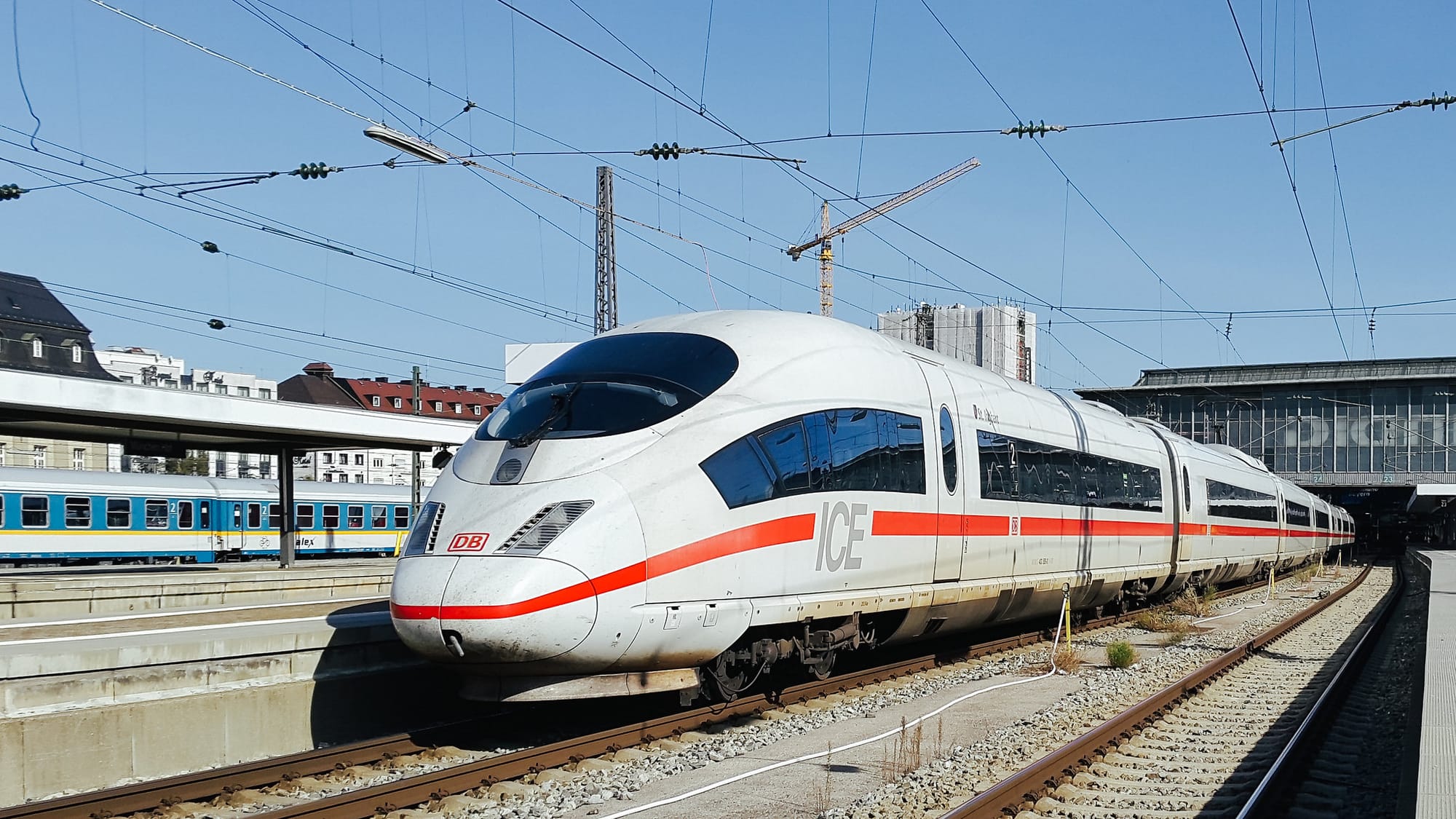
This is the Deutsche Bahn ICE version:
And the Renfe AVE version:
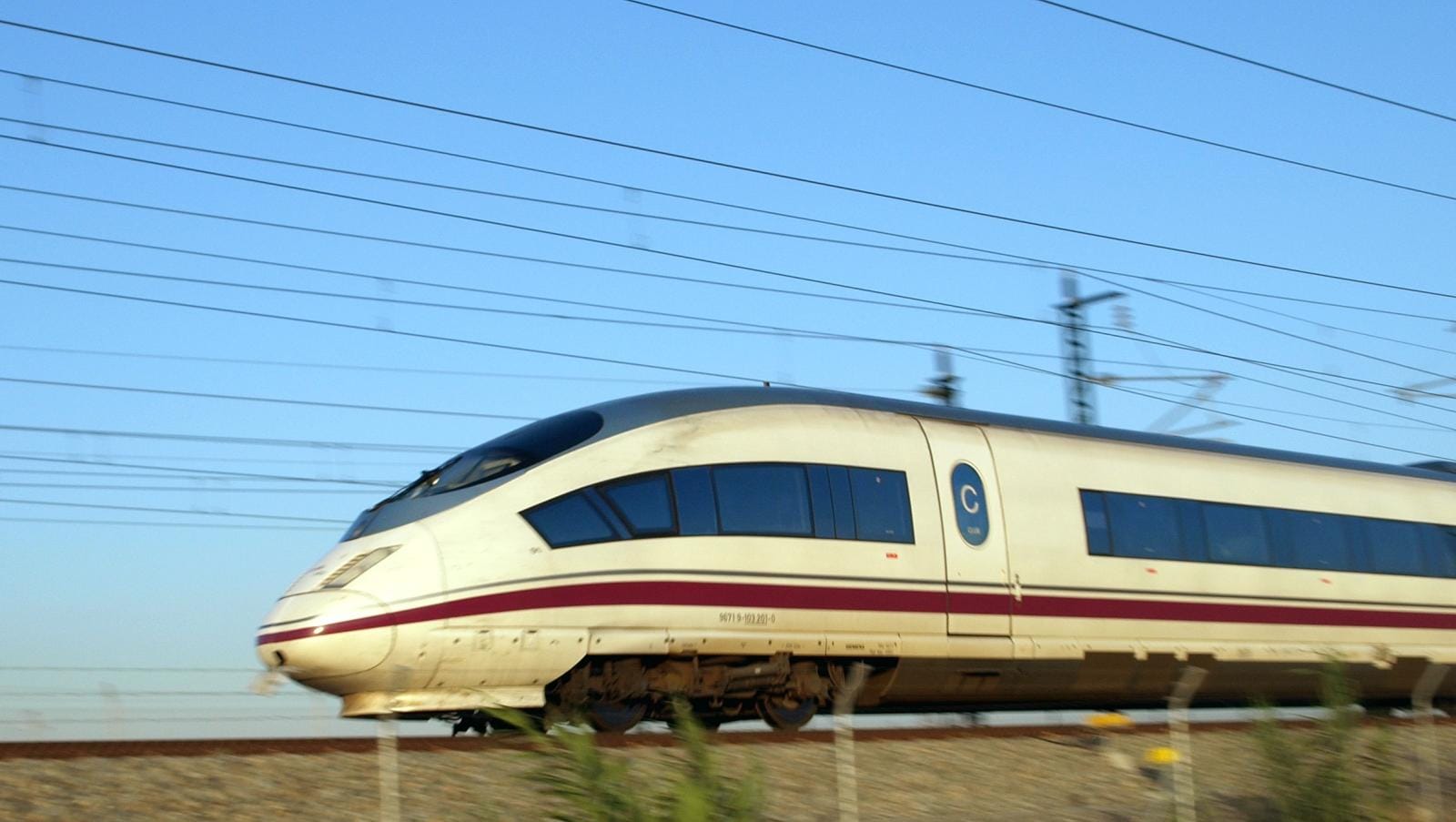
The way to avoid using a Sapsan image is to check for 3 aspects: the colours, the roof grilles, and the profile of the lower part of the nose (two pieces Sapsan, one piece ICE or AVE).
Third, the Siemens Desiro EMU problem.
Stock photo libraries are full of photos of these trains as well.
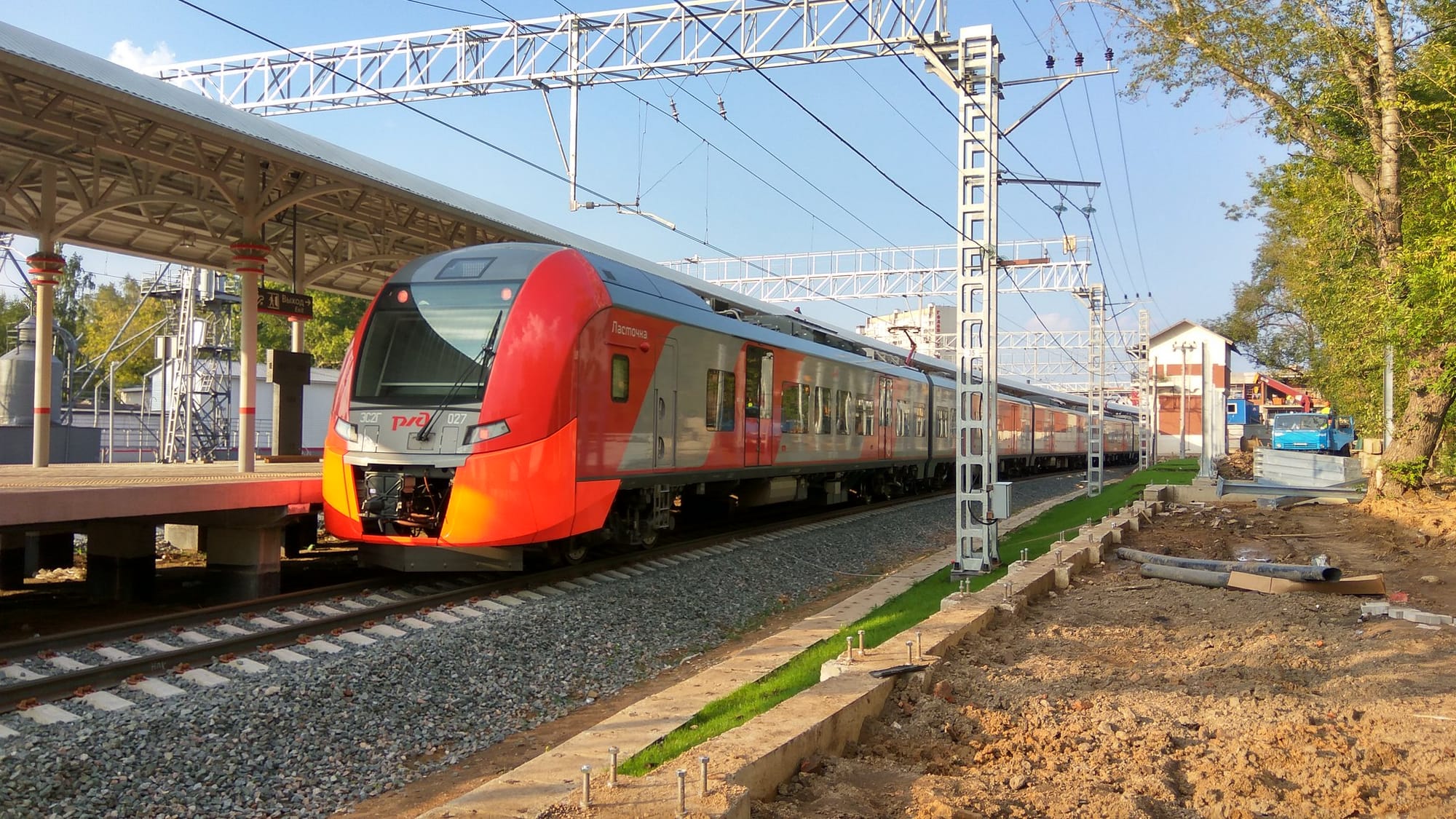
These trains were also supplied by Siemens to RZD in the early 2000s, and you can find more photos of them here. However all the trains of this type have the typical RZD colour scheme, albeit with an extra large fluorescent orange part on the front. These should be easy to spot.
Fourth, the Allegro problem.
This one is slightly different, but still poses issues, and stock photos of this type of train are likewise common. This train service was a joint venture between Finland's VR and Russia's RZD. The trains looked like this, although not all of them featured the Allegro name on the nose, although all of them did have the blue and red waves lines on the side of the cab:
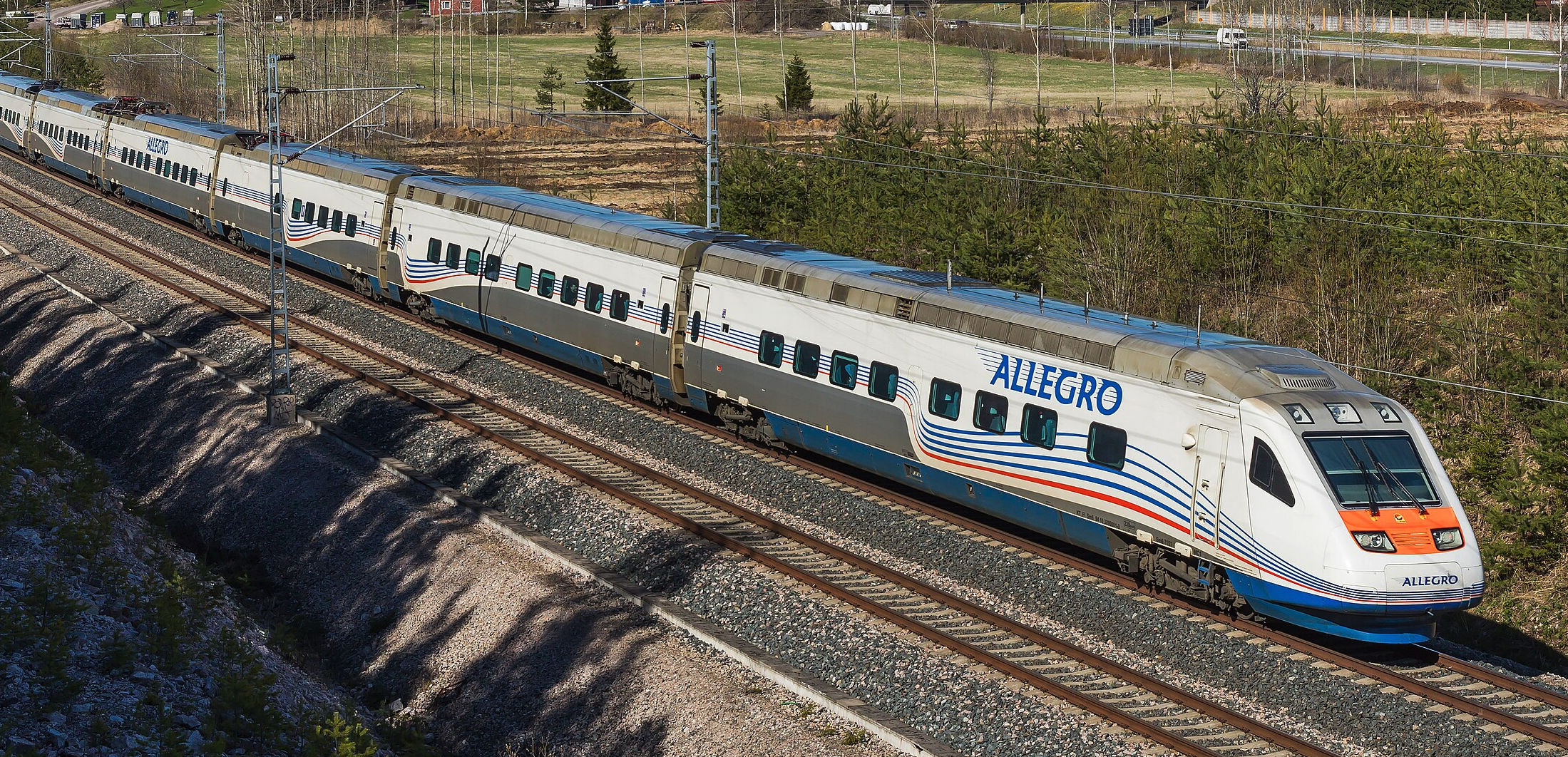
Post Russia's invasion of Ukraine, VR has (not without controversy) taken complete control of these trains, painted them green, and deployed them nationally within Finland.
A possible issue here is that many European railways have high speed EMUs of this type. The basic rule hence remains to look out for the waves lines on the side of the cab - if the train has these, do not use the image.
Fifth, freight train confusion.
This is starting to get more complicated now, so bear with me.
Railways in the former Soviet Union use different standards than those in most of the rest of Europe. The easiest way to identify trains from these systems is how the couplings work. In the former Soviet Union there is a central coupler, and no buffers, as highlighted here:
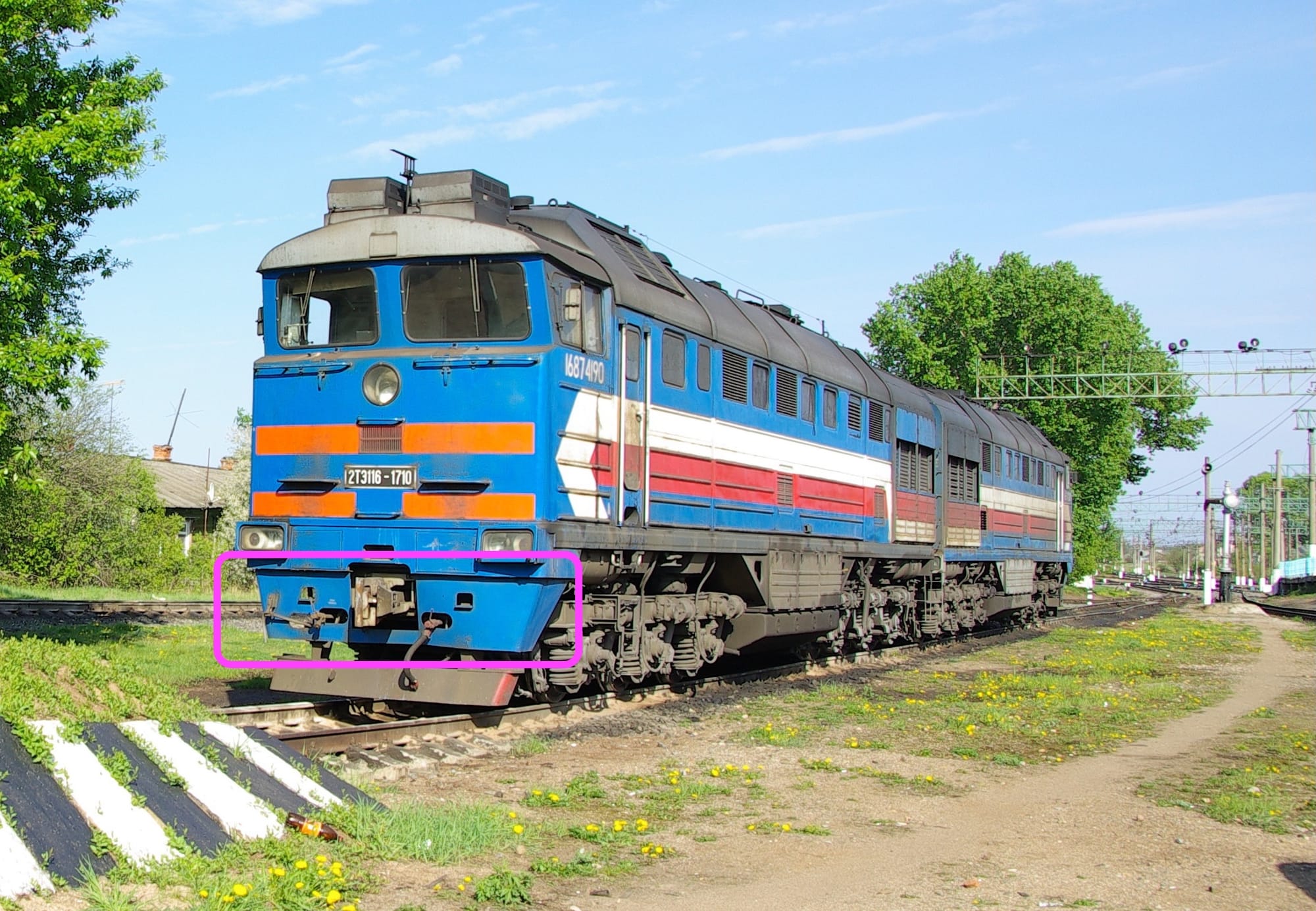
While in most of the rest of Europe, it is buffers and chain:
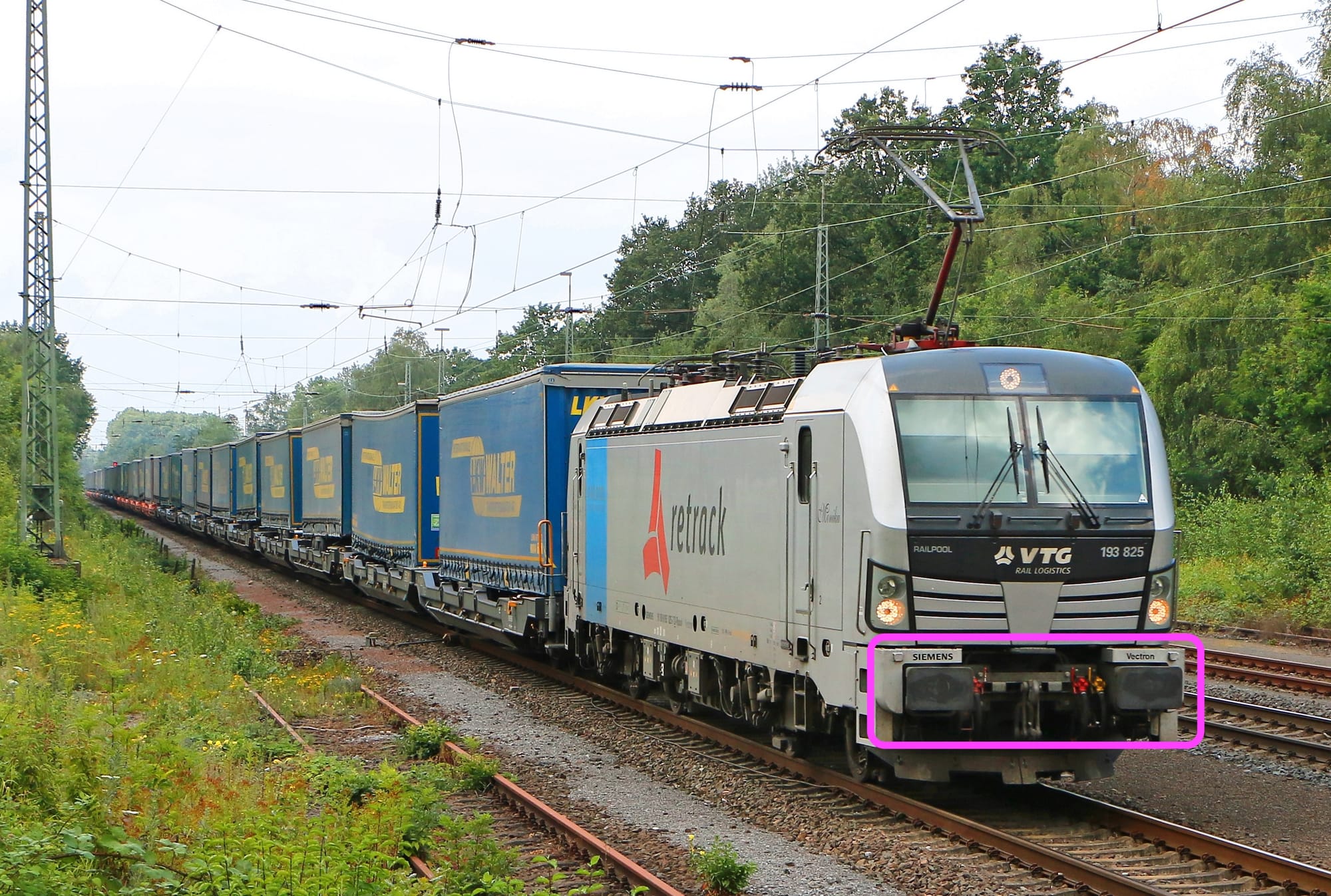
However this does not all line up neatly from a political point of view. Trains in Estonia, Latvia, Lithuania, Moldova and Ukraine use the central coupler. Trains in non-EU Europe, such as Serbia or North Macedonia, use buffers and chain. So in these cases you will need to check the individual cases.
Sixth, various other not so politically difficult issues.
These cases fall into the category 'wrong, but not politically problematic'.
As well as there being many RZD trains in stock photo databases, there are also many photos of Ukrainian trains, especially the type DPKr-3 (see Google Images), that looks like a sort of generic modern looking train. This might not be quite what you are looking to illustrate.
When it comes to pictures of passengers in stations, these ones from Thailand, and these from Sri Lanka, are used far and wide. These are likely not the right images for a story about European railways.
Photo Licensing
This post uses Creative Commons Licensed photos. The list below reflects the order in which the photos are used in this post.
ЭВС2-01 - Sergey Tikhomirov - July 14, 2014 - CC BY-NC-ND 2.0
Русский: Мой сайт xxx/ - Sergey Korovkin 84 - September 17, 2014 - CC BY-SA 4.0
DB ICE Tz 358 "St. Ingbert" | München Hbf - Yosua M. - September 29, 2018 - CC BY-NC-ND 2.0
Renfe_S103_Pan_St_Vicens_3 - Bonaventura Leris - July 13, 2009 - CC BY 2.0
RZD ES2G-027 MCK Koptevo - Artem Svetlov - August 22, 2016 - CC BY 2.0
Karelian Trains Sm6 7151 on a Helsinki - Saint Petersburg service. Pictured near Haarajok, Finland - Kabelleger / David Gubler - 5 May 2018 - CC BY-SA 4.0
Balttransservice 2ТЭ116-1710 Diesel locomotive Rizskoe direction Volokolamsk - Artem Svetlov - May 9, 2008 - CC BY 2.0
[DE] Hamm 19-7-2019 | VTG Rail 193 825 - Jordy Kronenburg - July 19, 2019 - CC BY-NC-ND 2.0

