How Alstom's inability to deliver trains on schedule, and Danish incompetence, will break an important regional train connection (and how to fix it)

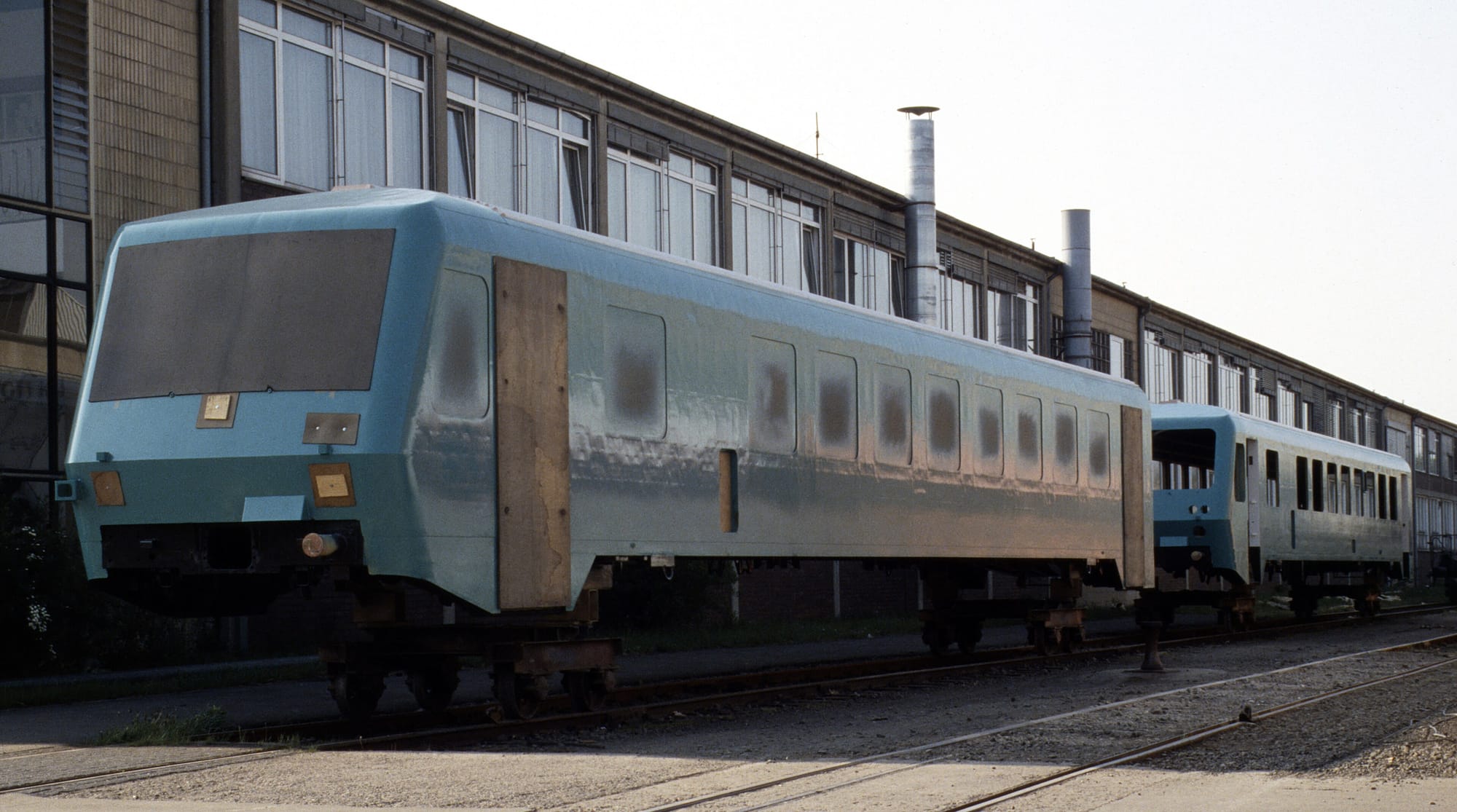
As if Denmark - Germany long distance international connections were not already bad enough thanks to the Talgo saga, now the regional train connections between the two countries are getting worse as well.
What follows in this post is a diagnosis only of the regional trains - long distance Hamburg - København trains are not impacted directly by this.
There will be rail replacement buses at least throughout the whole of 2027 between Flensburg and Padborg at the border, replacing all the regional trains - DSB confirms this here (see "Ændringer, når du rejser internationalt"). It will also leave Flensburg without regular trains to Denmark.
But the problem starts this time not with Talgo, but with another deficient manufacturer: Alstom, and specifically the Alstom works at Salzgitter in Germany. Because nothing ordered from that works is delivered on schedule at present.
And then comes normal Danish railway incompetence on top.
It goes like this.
Danish railways, having been rocked by the IC4 AnsaldoBreda scandal, decided to finally do things properly: electrify Denmark's main lines, upgrade the signalling on these lines (to ETCS), and order electric trains to replace the unreliable IC4 diesels.
Two system (25kV ac for Denmark, 15kV ac for Germany) Siemens Vectron locomotives would haul the international passenger trains, and single system (25kV) IC5 EMUs were ordered from Alstom Salzgitter for national services.
However everyone knew this would pose a problem for cross border regional trains - currently diesel regional trains from Denmark terminate at Flensburg, and Flensburg has 15kV wires.
So a solution was found German side, with some Danish financing.
When Schleswig Holstein ordered its new Coradia Max EMUs from Alstom Salzgitter, some of the trains would be dual voltage to allow cross border operation. Hamburg - Flensburg regional trains would be extended into Denmark (to Tinglev, that also serves the line to Sønderborg - see OpenRailwayMap).
However when the DSB IC5 order was placed in December 2021, the trains were meant to start to enter into service in December 2024. Now we now know even December 2026 will not happen, and DSB rather cryptically talks of "the end of 2027", although how many trains it thinks it will get by then is unclear.
But the installation of ETCS on the tracks in Denmark has been proceeding anyway, and DSB is short of trains equipped with ETCS on board equipment - due to the huge delay delivering the IC5. So DSB has been stripping the German PZB signalling out of its older IC3 diesel trains (meaning these can no longer run to Flensburg) and installing ETCS instead. From December 2026 DSB will have no regional trains, either diesel or electric, that can run Fredericia - Tinglev - Padborg - Flensburg.
DSB's solution? The rail replacement bus Padborg - Flensburg. For at least a whole year, December 2026 until December 2027.
Not only is this inadequate, it was also foreseeable - because when Schleswig Holstein ordered its Coradia Max trains in 2023, entry into service of those trains was only to be December 2027. Here is the original press release. Meanwhile this document dated 23 July 2024 confirms ETCS north of Padborg scheduled for 2027. So DSB had at least 24 months to come up with some solution better than a bus between Padborg and Flensburg, and has not done so.
Also given that Denmark has an 11 year long temporary suspension of Schengen, border controls heading northbound on the road are going to make the rail replacement bus mighty unreliable, especially in summertime.
I am kicking myself that I did not have this issue on my radar sooner, but hey ho, at least I do not run a railway company.
But there is more.
Despite Alstom showing a Coradia Max at Innotrans September 2024, still no trains of this type run in Germany, and December 2027 is now the provisional date for the first of these trains to operate - in Niedersachsen, three years later than the December 2024 date that was foreseen when Niedersachsen signed their contract. While Schleswig Holstein has not acknowledged the problem, I cannot see any hope that construction, and approval of these trains for Germany and Denmark, can be completed by December 2027. So the danger is the Padborg - Flensburg rail replacement bus is going to last a lot longer than a year.
So we need some rail solution for the problem, that will last at least a year, and possibly considerably longer.
Simply extending Hamburg - Flensburg RE services to Padborg (which can be reached with 15kV and does not need ETCS) is probably not an option, as those trains use Twindexx Vario that have no approval even for the short section to Padborg. Padborg station having only two platforms, and only one of those platforms having adequate voltage switching systems, is a further headache, so that is out. Using older 15kV-only electric locomotives is likewise probably too fragile as a solution.
I hence see only two options.
A Flensburg - Padborg - Flensburg shuttle service with a diesel multiple unit, probably an old 628 (some of which seem to have a DK authorisation). Or a longer shuttle service Flensburg - Padborg - Tinglev - Padborg - Flensburg, with some leased Siemens Vectron 15kV/25kV electric locomotives top-tailing InterCity carriages (DB has some spare). And all of this will benefit not only regional services, but also help cover the inevitable breakdowns of the long distance Talgo trains in the summer of 2027 as well.
Over to you, DSB and the Danish government: you broke it, so you fix it!
[Update 14.10.2026, 13:25]
Michael Ummels points me towards this that argues that ETCS is needed for anything through Padborg from the summer of 2027 onwards. I do not know if that is correct. If it is correct, then all this mess might make a case to delay the switch, or if it happen in summer 2027 it leaves only the Vectron solution I outline as viable (as 628 DMUs have no ETCS).
There are a few minor changes to the main text as well, to make some aspects clearer.
Photo rights
Fahrzeuge der Reihe 628.2 auf dem Werksgelände bei Linke-Hofmann-Busch - Pancolar - 13 May 1988 - CC BY-SA 4.0
.jpg)