Five "innovative" projects in France to save branch lines, but what's the point?

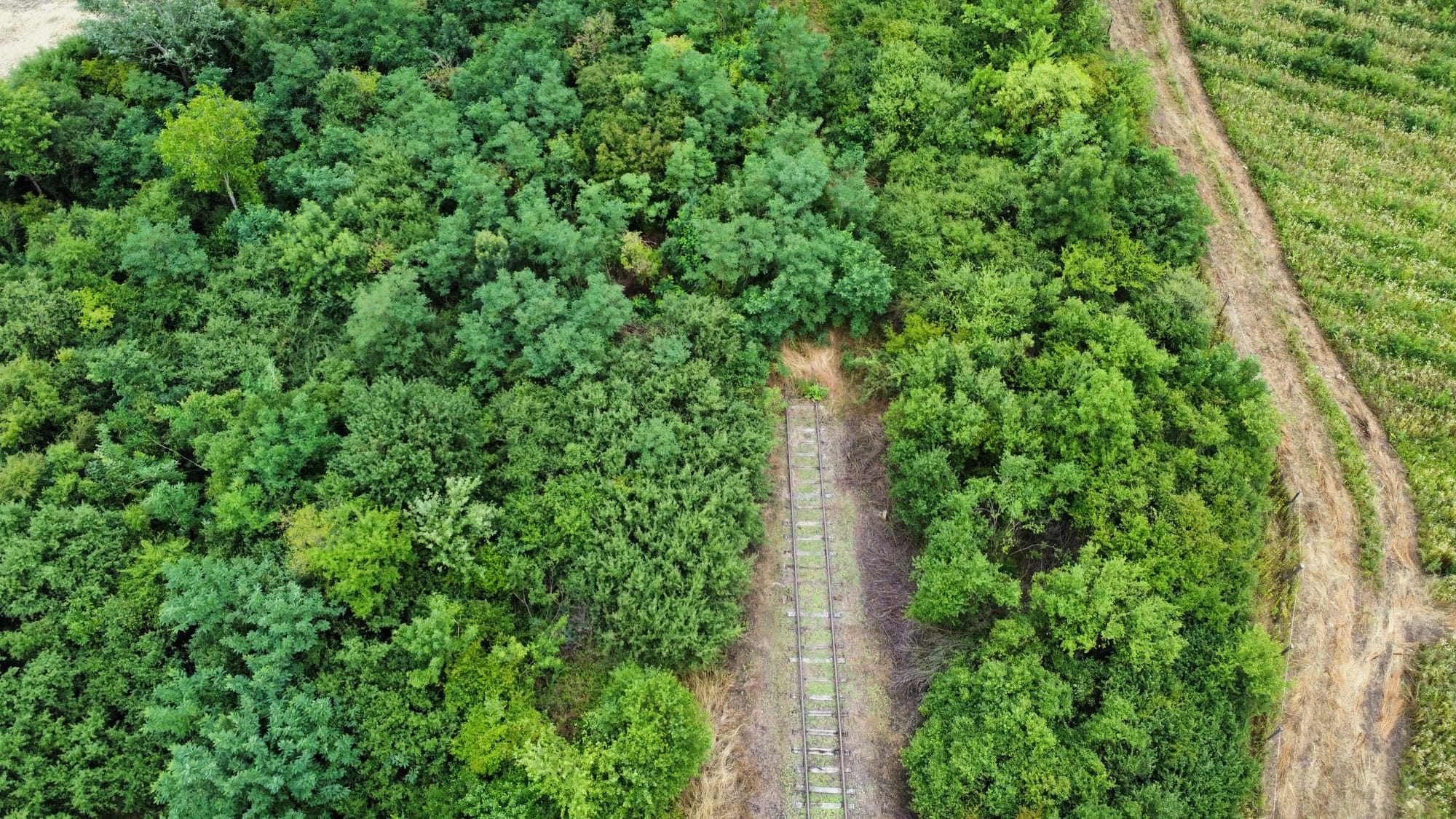
In the Newsletter this week
Analysis: Ferromobile, Flexy, EcoTrain, Draisy and TELLi - France's efforts to save branch lines
Jon elsewhere this week: Europapodcast-Folgen auf deutsch
Bullshit Meter this week: Thessaloniki-Sofia trains to return
Good week: Polish railways
Bad week: ÖBB's brand
Very bad week: part of the Alexandropouli-Svilengrad line washed away
Discovery of the week: Olivier Razemon's blog
Photo of the week: Railway line at the Slovenia-Italy border
Calendar: Special train Saarbrücken-Bouzonville
This is the second edition of what will become my subscriber-only newsletter that will be sent every Friday at 14:00 CET. Both free and paid subscribers will receive the first four editions. For now some of this is rather experimental - please bear with me!
Ferromobile, Flexy, EcoTrain, Draisy and TELLi - France's efforts to save branch lines. But what's the point?
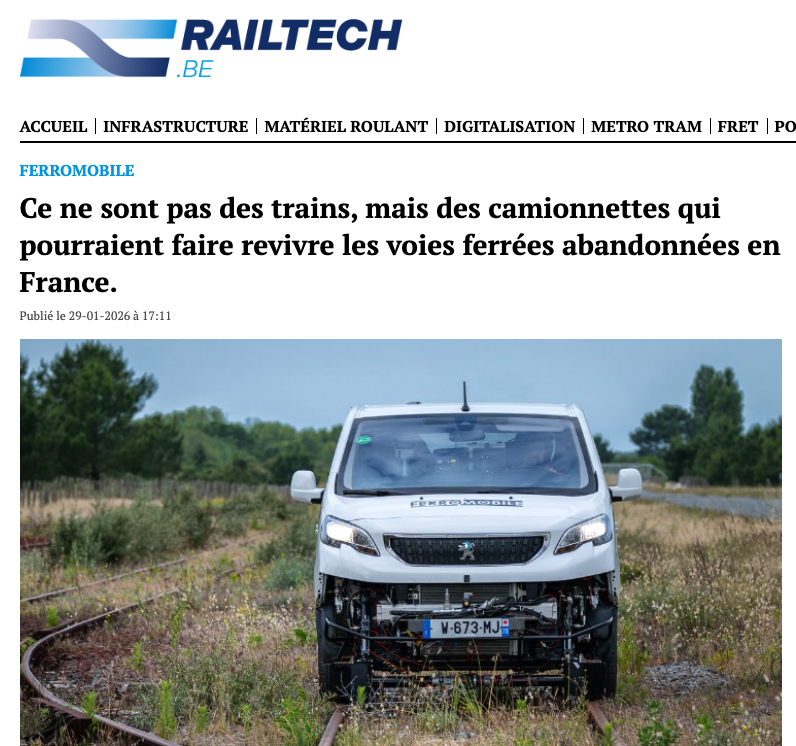
Another week, another round of hype about the latest type of rolling stock to save French branch lines. This time it is Ferromobile, as reported by RailTech.
But before we dive into the types of trains being proposed here, let's ask ourselves a more fundamental question.
What are we trying to do by saving branch lines, or even re-activating them?
The starting point needs to be that as many people, in as many areas of France (or any other country for that matter) need a reliable and regular public transport offer, even in sparsely populated areas.
And then we come to how this service should best be offered.
To put this another way, saving branch lines is no end in itself, but is a possible means to an end: a better public transport offer.
SNCF estimates that France has 7600km of lines serving sparsely populated areas, and many of those lines are in bad condition - but do you need some innovative new trains on those lines?
No, you need to renovate the tracks there.
The track where Ferromobile was trialled - the Chemin de fer du Haut Forez - was closed in 1980, and the state of the track will be terrible, and speeds to run on it hence very low. The towns they propose to connect are Courpière (population 4400) and Vertolaye (popn 562).
What you need here is a BUS. that can run the 23km along the D906 between the two places.
What you do not need is some rail wheels stuck on a Peugeot minibus to bump along some knackered rails at 30km/h.
So this is where Ferromobile and its closest equivalent Flexy (using Renault vehicles, as opposed to Peugeot) fall down. These are both adaptions of uni-directional basic road vehicles to run on rail tracks.
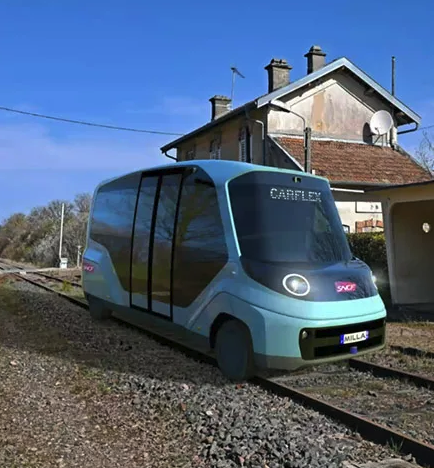
There are three main objections: first, why not just run these things on roads? That are likely in a better condition and allow higher speeds than rail tracks not in use for decades. Second, to allow these vehicles to turn at the end of their route, you need to design means to get them off the tracks, turn, get back on the track again, and go again. Third, given these vehicles do not respect train crashworthiness standards, you cannot mix them with any other type of train - so cannot run them into terminus stations.
Just run a bus. It's likely to be better.
But let's overcome one of the objections: rather than a uni-directional van with rail wheels, what about a small light bi-directional train that runs only on train tracks?
Here there are two projects - EcoTrain (more about that one from Railway Gazette here) and Draisy (SNCF has details of this one).
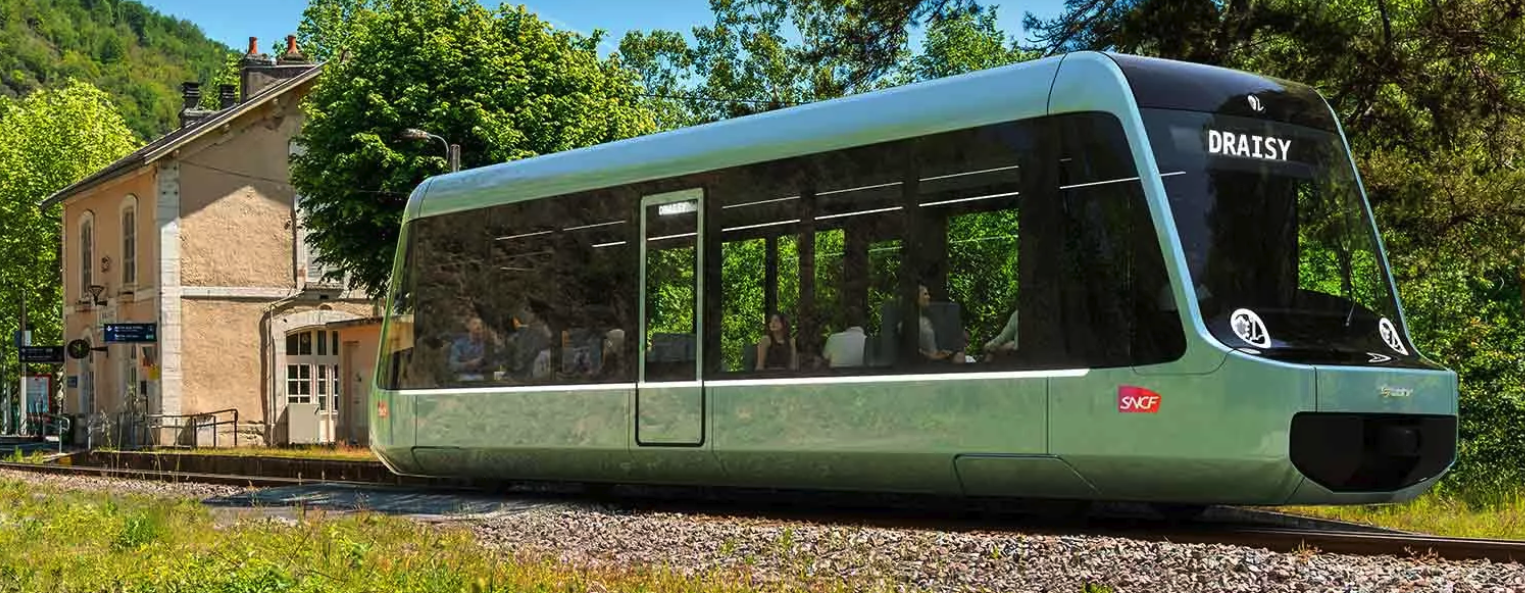
Each of these vehicles is to weigh roughly 20 tonnes, so keeping the axle load low - it should not further damage already fragile infrastructure.
But these vehicles are bespoke - they will cost a lot more than a Ferromobile or a Flexy. But they are also still basic and light enough to present problems. Single axles, and metal wheel on poor quality metal track, are going to give a bumpy ride (this is basically a modern Pacer or Bzmot).
And these vehicles are also not going to respect crash worthiness standards - no mixing a Draisy with regular trains when approaching a terminus.
So here too, you probably actually need a bus.
So that then brings us to the most advanced of the lot: TELLi (more about this one from SNCF here, and there is a news piece about it here).
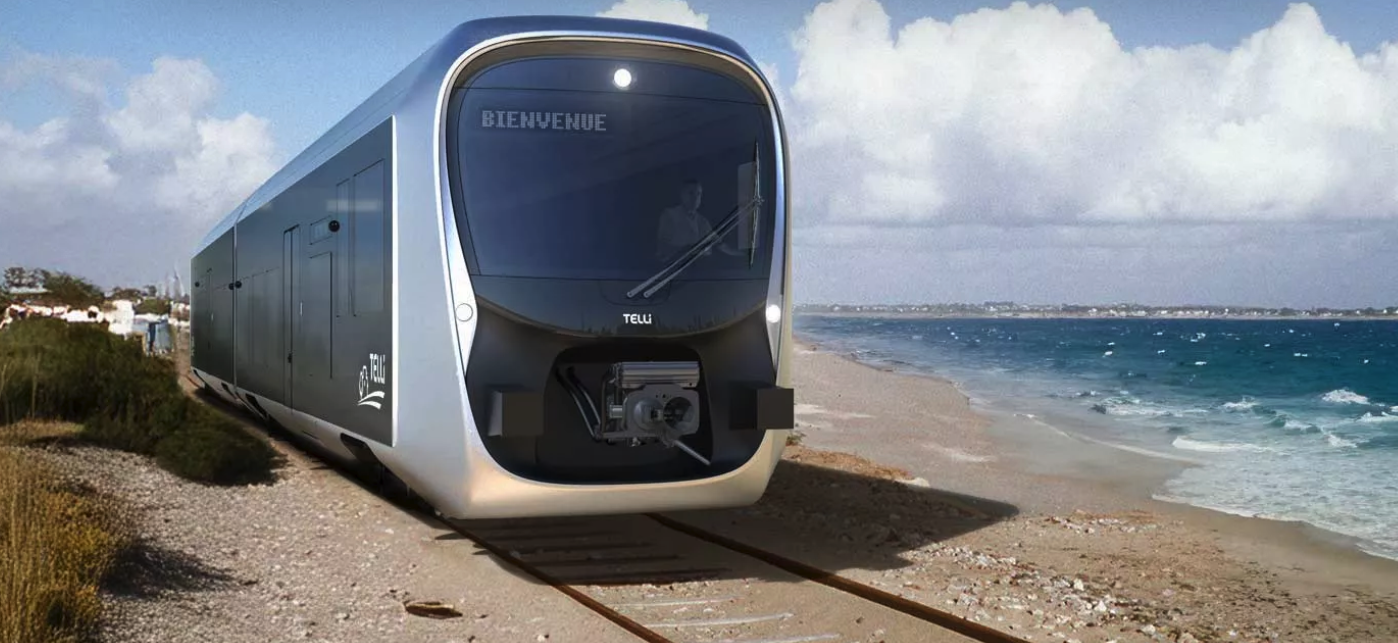
This one is the most like a train. It has two carriages, can charge its batteries from an overhead wire, and it looks like it will respect crash worthiness standards (it running on lines with other trains is shown in the promotional video at least). I can't work out what wheel formation it is meant to have though.
So what's the objection here?
TELLi might have a few clever design elements to make it extra light or cope with bumpy track, but this is not going to come cheap. And supposedly cost is meant to matter here.
And perhaps more significant, the Swiss (well, building it in Germany) have got there already: the Stadler RS Zero already exists. Powered by a battery to charge from overhead wires, it has bogies and air suspension for a decent ride, and respects crash worthiness standards.
So to sum it up, Ferromobile and Flexy likely make no sense - because you would be better with a bus on a road. EcoTrain and Draisy are too light to be real trains, and more expensive than buses, and cannot be mixed with regular trains - so will be hard to use. And TELLi is the best of the lot, as it's more like a train, but it's not likely to be cheap, and Stadler got there first.
So, sorry France. This looks like throwing good money after bad. Better put the money into renovating some tracks, and think about providing a solid public transport offer instead. Boring though that sounds.
Jon elsewhere this week: Europapodcast-Folgen auf deutsch
Normally this newsletter is in English... but as this is about a German language podcast please forgive the interruption!

Ich habe fünf Folgen für den Europapodcast von Christoph F. Siekermann und Manuel Knapp aufgenommen, in denen es um meine Arbeit im Eisenbahnbereich geht. Die erste Folge ist jetzt verfügbar!
Bullshit Meter: Thessaloniki-Sofia trains to return
So Sofia-Thessaloniki #CrossBorderRail is meant to re-open "next year" - so we assume December 2027? We'll be charitable.
It's operationally possible (it used to run), but given how slow it is, and the mess of Greek railways and the poor financial state of Bulgarian ones I don't believe it yet.
Here's the news story about it from RailTech.
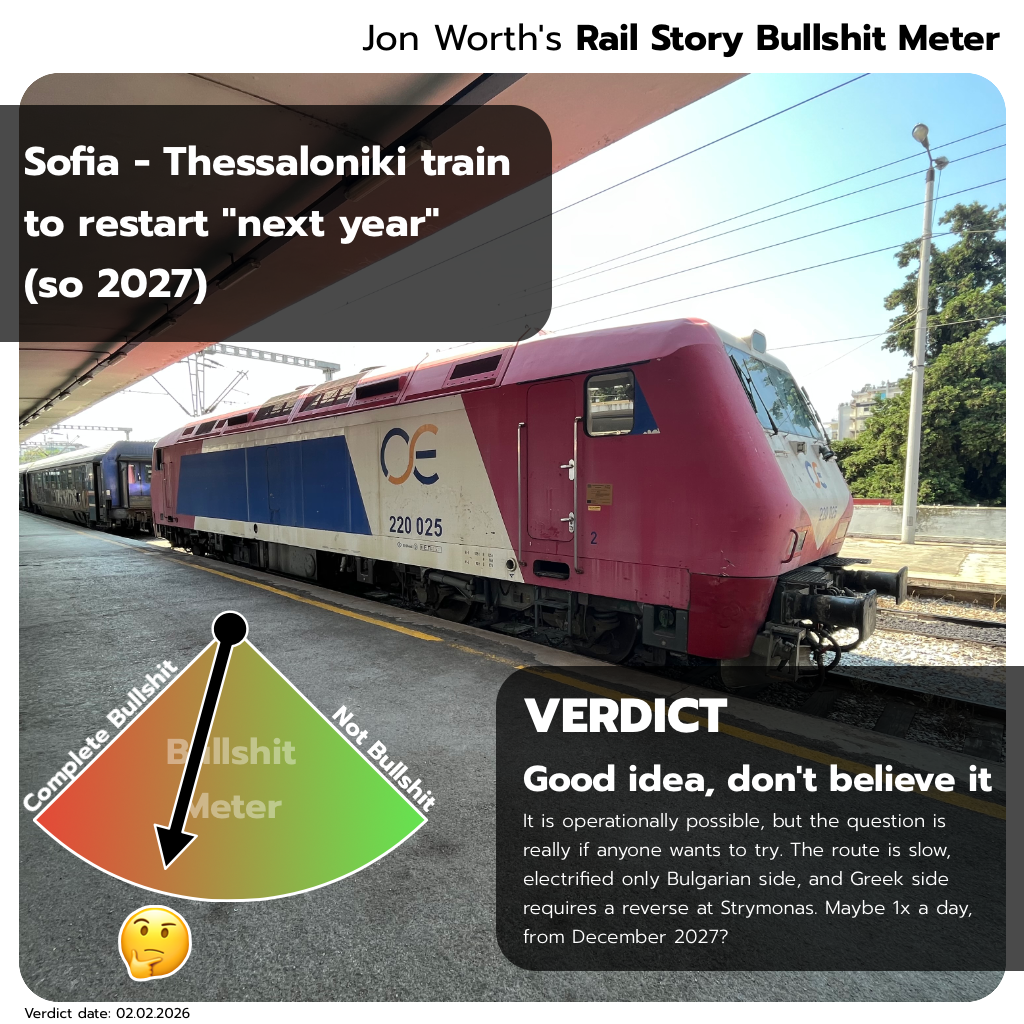
All previous Bullshit Meter posts can be found here.
Good week: Polish trains
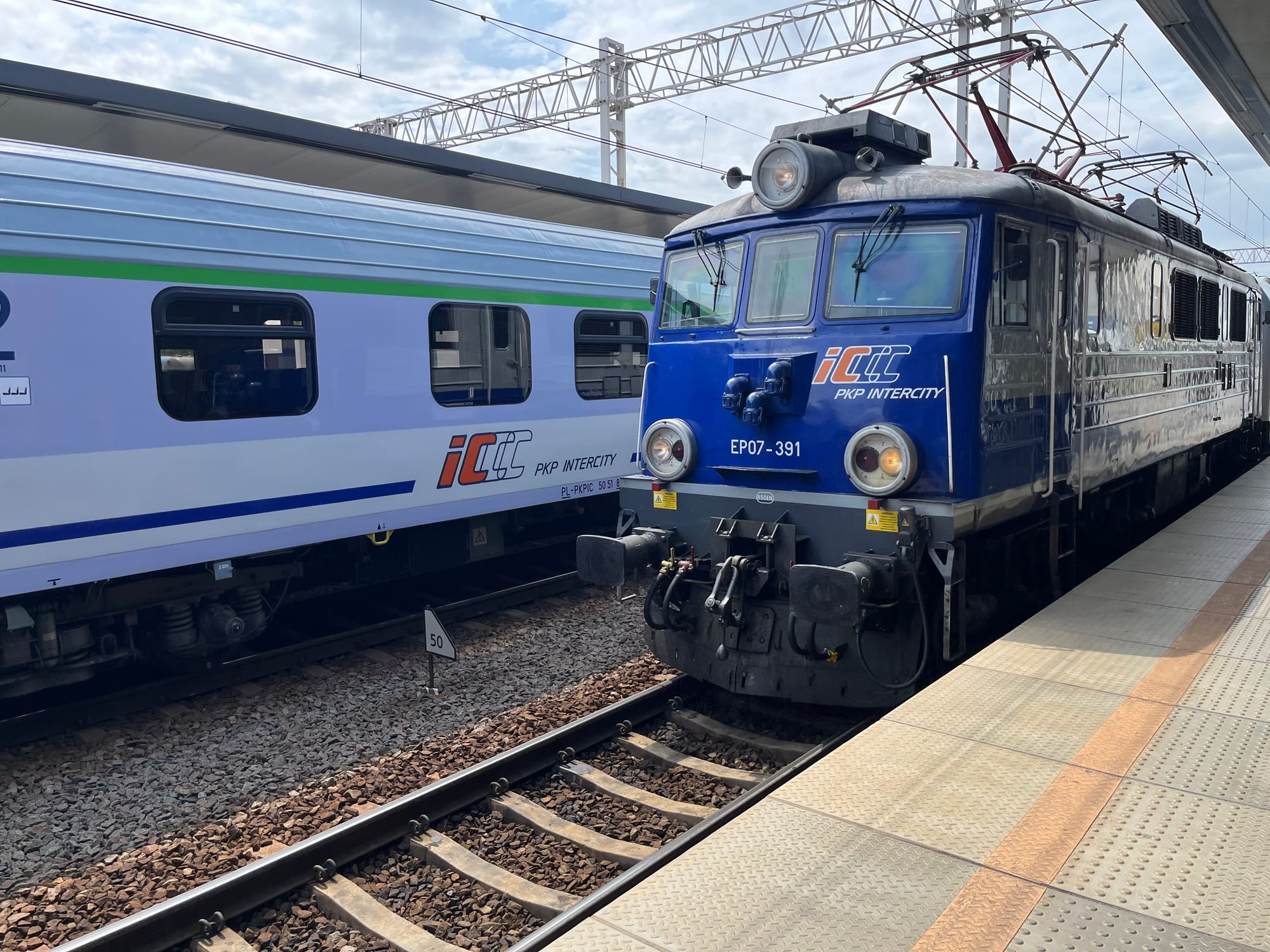
Passenger numbers on Polish railways have hit a 30 year high, as reported by TVP. Yes, some of the trains running may still pre-date the 1995, the year that 2025 surpassed, but there have been improvements across the board in Poland in recent years, and it is no surprise that passengers are coming back in their droves. New trains, renovated trains, new stations, even a better website for PKP IC. Good news all round, and travel by train in Poland is now really solid.
Bad week: ÖBB's brand
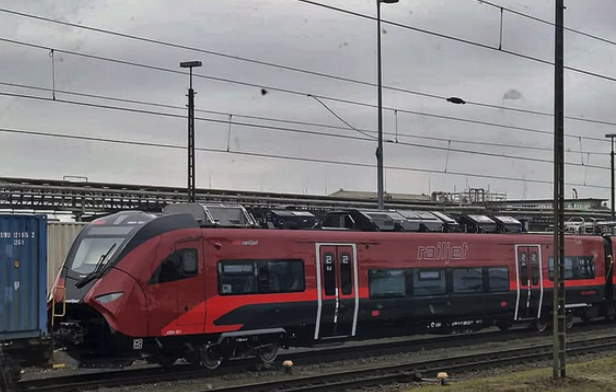
Railjet is ÖBB's premium brand for long distance services. Think of sleek long distance trains travelling at up to 230km/h between Wien and Salzburg.
Well that's what the brand was. No longer. This is a picture of a regional Siemens Mireo EMU in Railjet colours (discovered on Bluesky here), to be introduced on routes that cross the middle of Austria on secondary lines. 160km/h max speed. Large doors befitting of a regional train. OK, I guess they have fitted some reasonable-ish seats, but a premium train this is not. Bad branding call, ÖBB!
Of course it ought to have been called RegioJet...
Very bad week: part of the Alexandropouli-Svilengrad line washed away
Bad weather in north eastern Greece resulted in ground underneath the track between Alexandropouli and Ormenio being washed away, as reported in the local press.
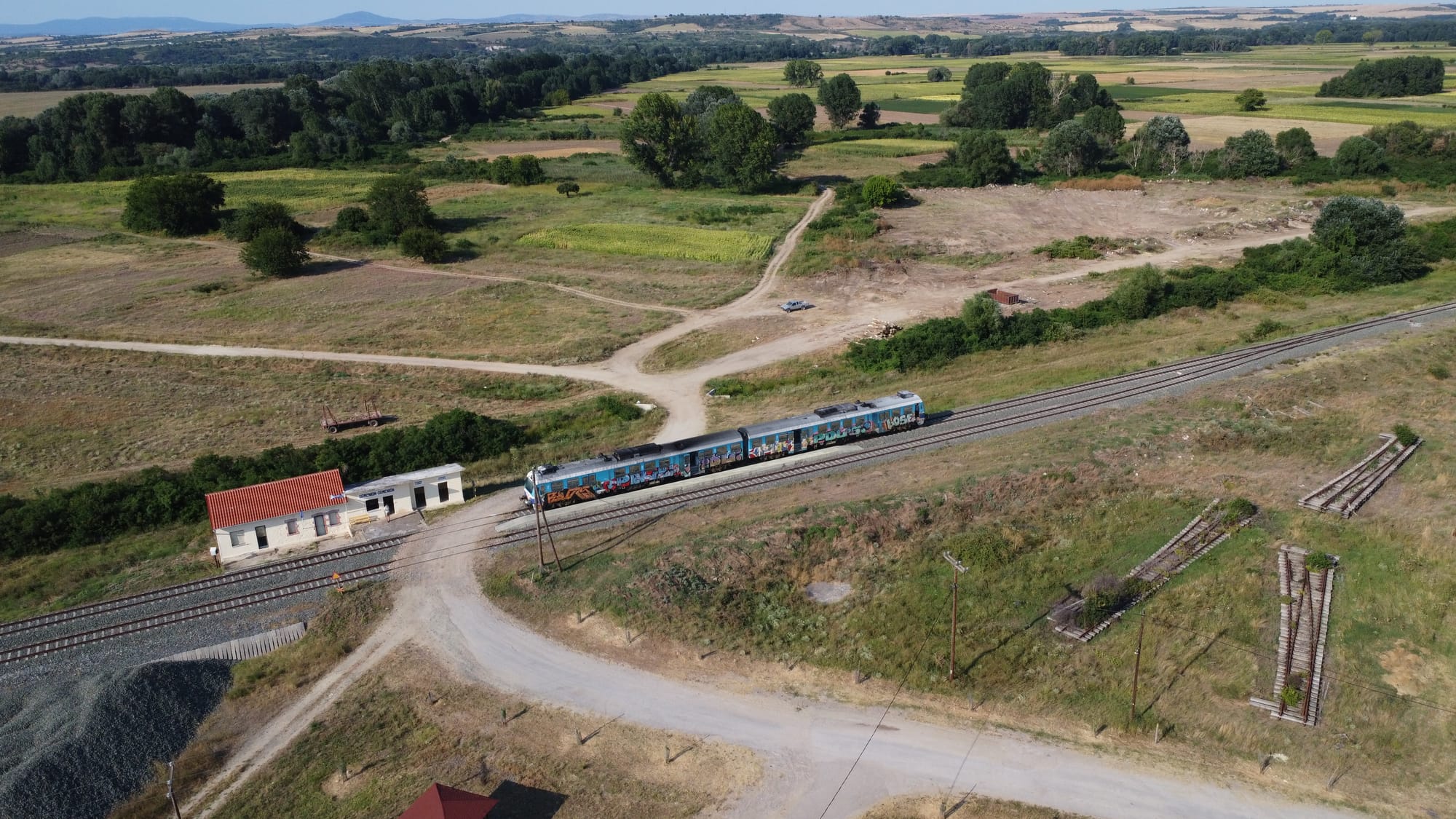
Ormenio was one of the most amazing (and amazingly forgotten!) places I went to during my first #CrossBorderRail tour in 2022. There was one train a day to a tiny station. Track exists to cross the border to Svilengrad in Bulgaria, but everything is overgrown with bushes. No trains have crossed the border for a decade or more. My writeup is here.
Discovery of the week: Olivier Razemon's blog
I have known French transport journalist Olivier Razemon for many years, and there is no one who has quite his ability to sum up wider transport dynamics in elegant prose in French. His posts about free public transport, and public transport people envying the cycling sector are classics.
And now he's back with a new one: the problems of noise on French trains.
If you can read French, do add his blog to your RSS reader!
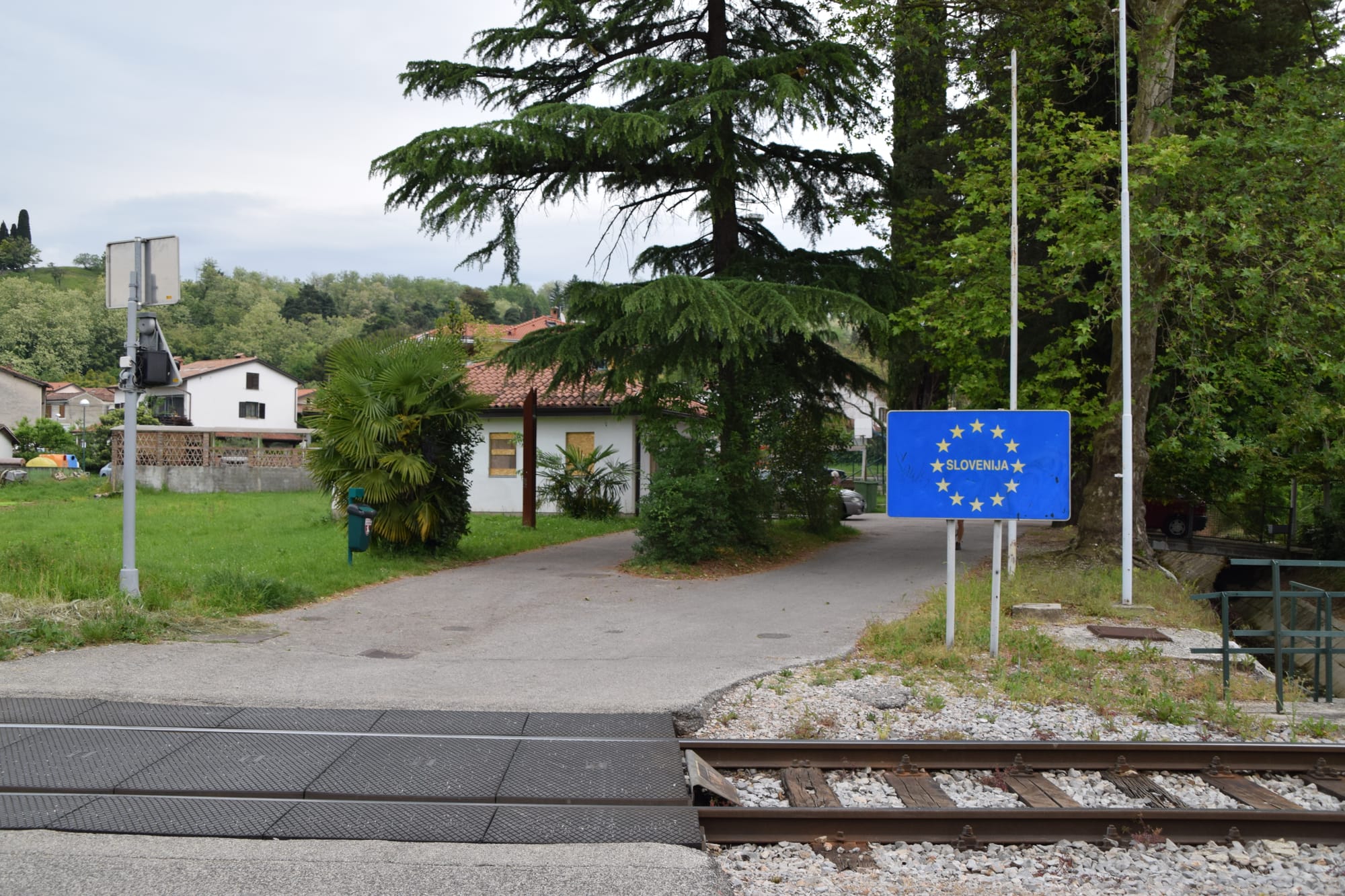
Photo of the week: the border at Gorizia
Each week I am going to include a photo from my archive in the newsletter. These are going to be places that remind me of the joy of this railway work, or are simply good picture or beautiful places. But each time there will be a reason.
This is the Italy-Slovenia border between Gorizia (where I am stood to take the photo) and Nova Gorica in Slovenia. The line is the border here. A limited cross border passenger service runs between Gorizia Centrale and Nova Gorica, with two trains a day each way only on weekends. Better than nothing, and started when the cities were European Capital of Culture in 2025, the danger is that few passengers take the trains due to the bad timetable and the line closes again.
Calendar: Good Friday train to Bouzonville
I have cycled alongside the Dillingen (Saar) - Niedaltdorf - Bouzonville cross border line (intact, but without any regular passenger traffic), but on Good Friday 3rd April I should finally be able to take a train on the line. Every Easter there are special trains from Saarlouis to Bouzonville for the Easter market there. This year, finally, I should be able to take one! Background in French here.
If you would like to stay up to date with what I am doing, there are public calendars to which you can subscribe: Jon Worth - Speeches and Events ICS | Jon Worth - Travel ICS | Jon Worth - Other Rail Dates ICS And if you'd like me to speak at an event or run a workshop, contact me about that.
Photo Rights
All photos in this edition, except the Mireo EMU pic, are taken by Jon Worth. Original Mireo pic - see the link to Bluesky. Bullshit Meter images always have photo rights listed directly on the image.