#CrossChannelRail final report released, and the next steps

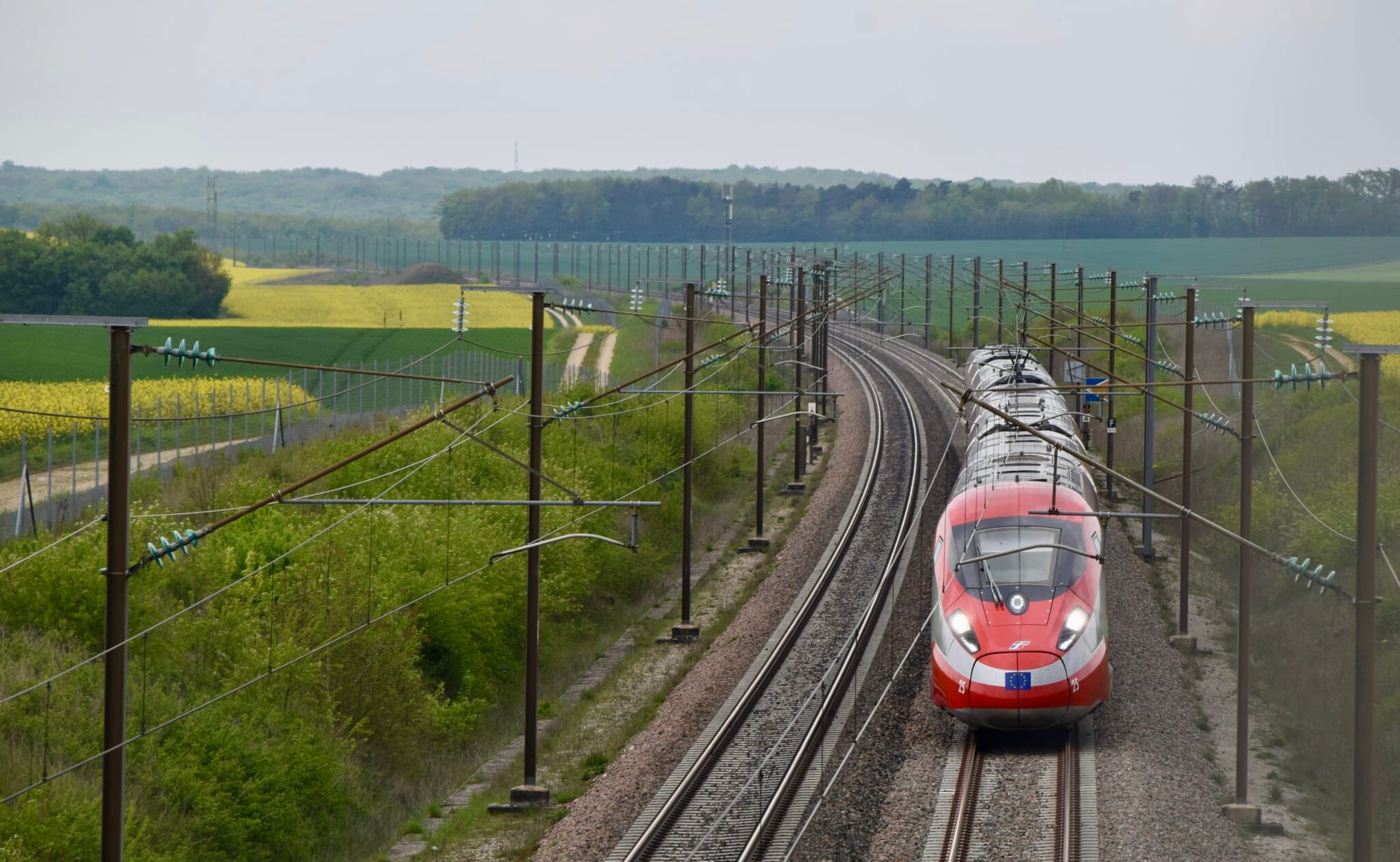
After three weeks of research on the ground in spring 2025, dozens of follow conversations, and plenty of desk research, today I finally published the conclusions report from my #CrossChannelRail project - you can download the PDF of the report here. The stations map is also available in a zoomable web version - that is here.
The aim of the work was simple enough - to assess what trains would be suitable for Channel Tunnel routes, work out what stations could be served by trains from London, and run the rule over who could operate those trains. In the end the total was 8 types of trains, 63 stations assessed, and 7 possible operators.
Most importantly we are closer now than we have ever been to there being a rival to Eurostar on Channel Tunnel routes, and at least three companies could viably run to London. As for routes, West Germany (Köln and Frankfurt) and Switzerland (Basel and Zürich) are the most plausible new destinations.
Thank you to everyone who came along to the event today to launch the report - both in person and online. The video recording of the presentation is here:
And the slides are here, although honestly reading the report itself probably makes more sense. From my side huge thanks to the office of Kent and Hauts de France in Bruxelles for hosting the event today, especially Dafydd Pugh for making this happen. Also as stated at the event, questions I could not answer in the video I have answered in writing - these are all below, minus the names of the people who asked the questions. You know who you are!
What happens next?
Within moments of publishing, people found typos and minor issues in the report. I will produce a new version of the report in the next few days with minor changes. If you find any error or matter requiring correction, please contact me. Likewise if you would like me to present this work to you or your organisation, do get in touch.
Longer term there are some more aspects of the Channel Tunnel work that merit some more research - in particular where depots could be build and about track capacity. I will start thinking how to best dig into those.
Written answers to questions posed at the report launch event
- Did you have a think about through-ticketing improvements as part of the project at all from places like Berlin where a direct connection is just entirely unrealistic? Could a future operator, such as Virgin or the Trenitalia consortium, perhaps pick up where Eurostar have fallen back in recent years and through-ticket with e.g. DB or SBB to a wider range of onward destinations on their own ticketing platforms? (Much like the old DB Sparpreis Europa)
ANSWER: Berlin is too far, and Berlin Hbf would be hard to adapt anyway, as would Hannover. And then you need to get through the congested Ruhrgebiet to get to Köln anyway. So direct trains to these places are not viable in my view. And I am not that bothered by "Sparpreis Europa" type of tickets, as the forthcoming ticketing reform (draft due from the European Commission in early 2026) should solve all these issues anyway. So I do not think we will need a kind of Virgin works with DB, Eurostar works with someone else kind of arrangement. The place where operator tie ups might make sense is for operations more than it is for ticketing.
- I think you dismissed the option of ontrain border control. There is no legislation against it. Digital ticketing and ID check could assist pre-boarding checks. Border guards then travel up and down the HS1 line for the Kent boarding passengers
ANSWER: Correct, but I see no political will in the UK to do it. If you can build the political will to do it, I am all for it. But for now I see it as politically impossible, even if, as you say, legally there could be a way.
- Are there recommendations you would make to rail enthusiasts and other members of the general public who would like to see more cross-channel routes and services? How best to add pressure to governments or operators, or can we contribute to research (beyond funding Jon's crowdfunding)?
ANSWER: We urgently need more public pressure about this topic in Germany (for routes to Germany) and in France (to sort out capacity in Paris, and maintenance). In both of those countries there is scant little discussion about these Channel Tunnel topics. I think it is also important to see what can be done (and there are plenty of things that can be done!) within the existing legal frameworks. We cannot be defeatist about this overall.
- It seems to me that focusing on connections in Brussels seems a lot easier operationally than trying to run longer direct connections from London
ANSWER: For routes from Germany, yes. But there is the constraint: terminal capacity at Bruxelles Midi is about 900 pax an hour, so not huge. Plus passengers generally prefer direct trains to connections. So while I admit Bruxelles Midi is a better place to change than anywhere else (it does work, and it has higher capacity than Lille, and avoids the trek across Paris), it nevertheless also has some limits.
- When do you plan to do similar report concerning Spain and Portugal where there is a huge length of high speed lines with connection to France through Irun, Canfranc and Perthus tunnel ? There is still the project on the way to reopen the cross boarder line Pau – Canfranc – Zaragoza.
ANSWER: Ha! I agree with the need to analyse all of that, and I have been to all of those places (in #CrossBorderRail, my other project). But I am not the right person to really assess the high speed infra in Spain and Portugal as those are two of the countries in Europe I understand least, and have visited the least over the years, and I speak neither Spanish nor Portuguese. So yes, I agree with the need, but it probably will not be me who can do that work!
- In your pdf, I read adapting Antwerp-Central is near impossible, but you don't rule it out completely?
ANSWER: Anterpen Central is just about plausible. You could put a barrier along one of the low level platforms (Platform 3 Bruxelles Midi or Bordeaux St Jean style), but I cannot work out how you would get people down to that platform securely. There are the southern staircases that you could perhaps deploy, but then where would the terminal for passport controls be? So it's all just about plausible, but not easy.
- Do you have indication SBB has plans to run to Brussels, or are you just naming a theoretical possibility?
ANSWER: I think I might have been a bit unclear about SBB and Bruxelles (and Lille) in the event. It strikes me as plausible that SBB could run Switzerland to Bruxelles via CDG and possibly Lille. Where I am sceptical is as to whether this is a viable option for passengers to change onto trains to London. But to directly answer the question, yes, I think SBB running Switzerland - Bruxelles is viable.
- The re-opening of Ashford & Ebbsfleet obviously needs input from KCC to promote the economic & environmental benefits. Are Reform UK indifferent, hostile or what to this? (Comment from another participant: Kent County Council and other local councils in Kent have been extremely active on this aspect over the last three years)
ANSWER: honestly I have been unable to keep track of what Reform has (or has not) said on this specific topic. But at the moment I think Kent County Council (and Ashford Council too) are very committed on this issue. The only aspect where they can perhaps do less than they might is on the finance. But ultimately were Eurostar a little less complacent, and a little more aware of the politics of this issue, they ought to be more amenable to re-opening Ashford or Ebbsfleet or both.
- Need the passport/luggage check and platforms need to be together or could there be some distance in them, as long as the corridor can be closed off? Would a longer corridor between the checks, make more stations viable for channel tunnel service?
ANSWER: there is actually a quite long corridor at Amsterdam. So there is no problem with that in principle. You just need to make sure it is secure. However the problems at - for example - Marseille St Charles or Lyon Part Dieu are so fundamental even a long corridor is not going to help you!
- If Lille is not a good connexion hub, what about Marne La Vallee capacity for connexions from Switzerland and Germany?
ANSWER: Marne-la-Vallée is a really clever station, and - unlike Lille - the wind seems to howl through it less. So I am all for it. BUT the terminal there is even smaller than Lille Europe. So from Switzerland, yes, it could be used to some extent (from Genève, and from Basel and Zürich if routing via Dijon). It is no use for anywhere from Germany though as all routes from Germany would use LGV Est, so arriving on the Paris Bypass north of Marne-la-Valée.
- Regarding maintenance depots, did you look at options outside of London? One that springs to mind is the old Chart Leacon site in Ashford? Will mean empty train movements.
ANSWER: I have explained this one a bit more in this blog post. And honestly it is a bit of a shortcoming of my #CrossChannelRail project - I should have looked more thoroughly at possible maintenance sites. Let's see what (if anything) Trenitalia says in the next few weeks about this topic, and then I might consider running follow up project where I could start to work out ideas where maintenance could happen. And yes Ashford is one, but not the only one.
- At what level of price & comfort do you expect Eurostar challengers to pitch their offer? (e.g. especially given Eurostar's premium strategy thus far with emphasis on facilities for business passengers)
ANSWER: I expect them to be a little below the Eurostar standard, but not much. Similar to Italo compared to Trenitalia where there are still multiple classes, business users would happily take an Italo, but the dining car has been replaced by vending machines. Given that there is a per passenger AND a per train charge to use the Channel Tunnel, I do not see there being scope for a kind of OUIGO-Star all economy. And I don't think there is much space to be more deluxe than Eurostar. So a little less deluxe than the incumbent looks to make most sense.
- I have always wondered if Temple Mills as a maintenance location is almost a false thing to consider. To me Lille area for a new depot could be a clear option as it is not a long journey to London and it would be the case then of a 'simple' platform turnround which is better that being maintained in London. Lille to Brussels is easy and a quick journey. I know people want Paris area but is Lille that bad even for Trenitalia as that would give them the option for Belgium / Germany and Switzerland via the 'Paris avoiding line'
ANSWER: Yes I have wondered that too, and this blog post explains it a bit more. But I think Lille is not ideally suited, as you'd end up having to start or terminate a bunch of trains there to make it work. It still strikes me that finding some alternative to Le Landy in Paris or near Paris is a vital part of the puzzle.
- With respect to Bordeaux being considered economically viable, will the Basque Y and Madrid help? Could the EU force SNCF to complete Dax-Hendaye sooner rather than later? Could Spain and Portugal contribute financially?
ANSWER: not really. Even if all of that were built Bilbao would still be more than 6 hours from London, and Madrid 9 hours. That is really the upper end of what anyone would do. And there are no big centres of population between Bordeaux and the Spanish border. So while I do hope Basque-Y gets done sooner rather than later, I don't think this will help the case for London-Bordeaux very much.
- I have a general comment quite far beyond the Channel Tunnel. The problem is: Cross border long distance trains are often NOT profitable enough (cheap tickets of the competitor in the air) so that train companies decide NOT to run them. Example: There is only ONE long distance train per day from Germany to France which does not end in Paris. And not any at all from Germany to Spain – although 5 mio Germans go to Spain every year.
ANSWER: I disagree with this. Railway firms, especially the state ones, do not care. It is all too much hassle. Especially if it is about crossing France. And Germany-France has this ridiculous dance between SNCF and DB where they dare not demand too much of the other one. You could obviously run more trains Frankfurt - Lyon, and do it profitably, but you do not because politically no one demands it, and for railways to do it is all too much bother. Even though they could make money off it. And there are no private companies of the scale necessary to try either.