Not being allocated depot space at Temple Mills: blessing in disguise?

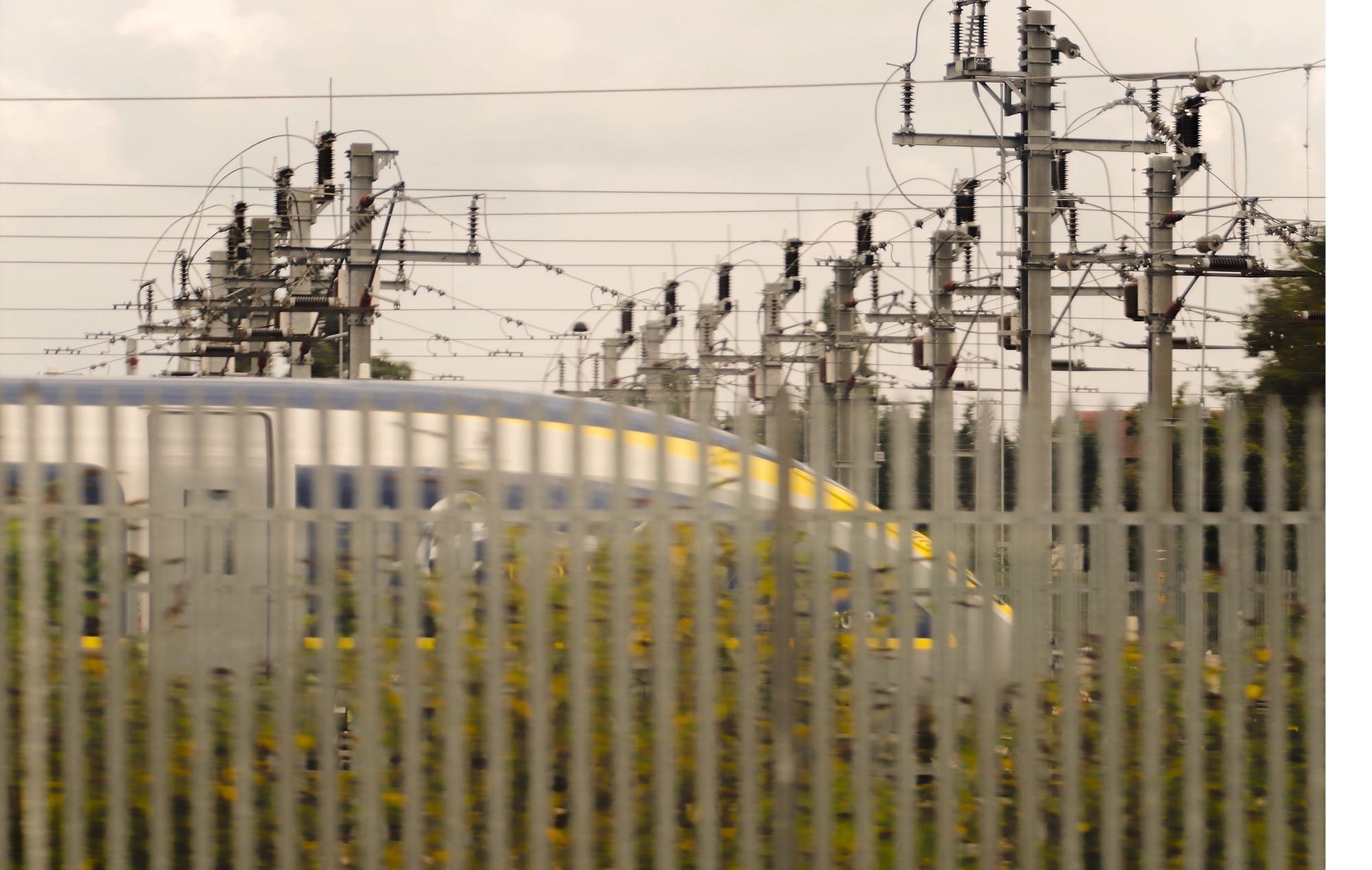
As the discussion about future rivals to Eurostar has heated up, so more and more of the focus has been on access to the Temple Mills depot in East London. The Office of Rail and Road (ORR) last week decided that yes, there was capacity for a company other than Eurostar to maintain its trains at Temple Mills, and that company is to be Virgin Trains. I analysed that on my blog here, for the iPaper here, and today the latest episode of the Green Signals podcast is out - with me as a guest talking about this.
But over and over on social media I have been asked the question: why all this focus on Temple Mills? Why not do train maintenance somewhere else?
The response to that then is where else could you do this maintenance?
Let's start with existing suitable depots.
Eurostar's existing fleet is maintained at Temple Mills (UK, east of St Pancras), Le Landy (France, north of Paris Gare du Nord) and Forest (Belgium, south of Bruxelles Midi).
However I have been repeatedly told that Le Landy is full, and French private high speed new entrants Proxima/Velvet and Kevin Speed are building their own maintenance facilities at
Marcheprime (near Bordeaux)and Le Creusot (along the Paris-Lyon high speed line) respectively, so as to avoid even trying to deal with SNCF for this. In Belgium it is likely a little easier - from 1 April 2026, SNCB-NMBS will be the sole operator of Forest (see here, under "Access to maintenance service facilities") and the ex-Thalys part of Eurostar will have no further role there, although I have been told there is only a little bit of spare capacity at Forest.
So to summarise, Temple Mills is known, and there is a process of sorts to be able to access it. Forest might work in a limited way, but Le Landy likely does not.
And then we come to what has happened since the ORR decision.
If you listen to Phil Whittingham of Virgin Trains in the Green Signals episode (it starts 5 mins in - direct link) he speaks of how negotiations between Virgin and Eurostar now have to start, before Virgin can sign an order for new trains. And meanwhile The Times reports Eurostar is considering judicial review of the ORR award to Virgin.
Then later in the Green Signals episode (44 minutes in - direct link), Ashford councillor Diccon Spain states we can expect an announcement within a couple of weeks about how Trenitalia is going to proceed with London routes, despite not having any access to Temple Mills.
The logical answer to how Trenitalia could do that would then be to build their own new depot somewhere.
Trenitalia, let us not forget, has had headaches with depot access before, when the Maurienne line between France and Italy was blocked, preventing them getting their trains back to Milano for maintenance. And Trenitalia is expanding strongly in France. So could Trenitalia's solution then be to build its own maintenance facility, likely in France (and in greater Paris) rather than in the UK, and maintain its France and Channel Tunnel fleets there? And then it would need only stabling in the UK and Belgium. Stabling overnight in platforms at St Pancras, at the never used platforms at Stratford International, or even alongside Temple Mills, could be possible, and alongside Forest depot in Bruxelles. Proceeding this way would also mean not having to deal with Eurostar at all in the same complex way Virgin Trains is facing.
Even the UK's Department for Transport is aware of the depot headaches. Last month it started the search for partners to build a new international depot.
The problem for me here is that possible new depot locations is a known unknown in my #CrossChannelRail project - at some point I might even run a little project and get on the folding bike and go scout locations. But - purely speculatively from the maps and satellite images - something around Le Bourget at the edge of Paris (OpenRailwayMap, Google Satellite) would make sense for Trenitalia at least. Finding space around Lille (OpenRailwayMap) / Tourcoing (OpenRailwayMap), or on the edge of Calais (OpenRailwayMap), would not be hard - but operationally would mean terminating trains there, adding cost and complexity. That operational objection also applies to Dollands Moor, at the UK end of the Channel Tunnel (OpenRailwayMap). Thanks to @PGLux for the help disentangling this.
UK side - and this could also be Gemini's thinking as they intend to continue, despite the ORR decision - there are three locations worth examining. Brownfield land somewhere near the Ford plant at Dagenham is the nearest to St Pancras, and has a connection to HS1 (OpenRailwayMap, Google Satellite for the state of the buildings), but track layout and land acquisition could be complicated. The second option is that there are tracks into Church Path pit north of Ebbsfleet (OpenRailwayMap, Google Satellite), but these tracks are short (thanks @partim and @roastveg for the pointers on this one). And Ashford depot (OpenRailwayMap) maintains Hitachi-built Javelin trains already (and Trenitalia would use Hitachi trains for its London service), but the tracks serving the depot are 750v third rail electrified, not 25kV overhead, and capacity at the depot is limited.
Implicit within all of this is the potential fragility of operations for an operator - be that Virgin Trains, Trenitalia or Gemini - of trying to run Channel Tunnel operations with just one depot, be that Temple Mills or some potential future location elsewhere. Eurostar's set-up, with depots it can use at each of its three main destinations, is much more resilient. I presume this can be overcome in emergency situations, where depots other than the foreseen main depot can be used - for a hefty fee no doubt - for emergency recovery or repairs in the case a train has failed.
However the crux, ultimately, is this: there are no easy solutions here. Temple Mills, and the process to access it, is at least known - but comes with the headache of having to work with Eurostar and potential legal challenges. Developing a new depot instead has potentially high costs and long lead times, but could at least have some synergies for non-Channel Tunnel operations, especially for Trenitalia.
No Temple Mills access a blessing? Not quite. But Temple Mills might not be quite the gateway to success it has been framed so far.
[Update 4.11.2025, 18:00]
I erroneously stated the tracks at Church Path pit were UK loading gauge - they are not, they are UIC GB1. The text above has been corrected accordingly. Thanks @roastveg.