Working out what Eurostar is going to do - based on the numbers, not what the company says

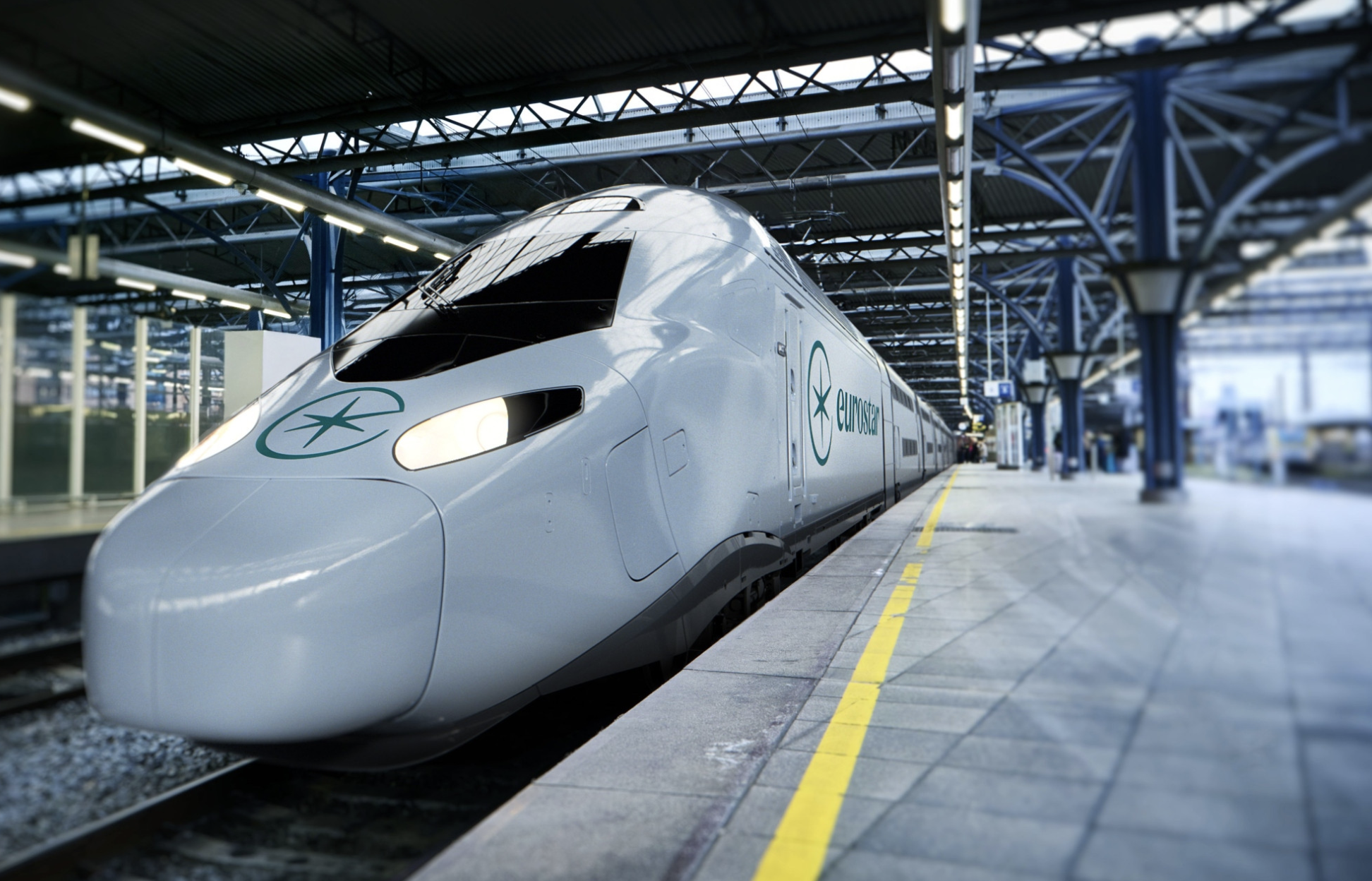
If you take what Eurostar has said in its press release, Alstom has said in its press release, and what has appeared in the FT and The Guardian among others yesterday, you end up with the impression that these Avelia Horizon double deck trains Eurostar is to order from Alstom are going to be everything to everyone. But not everything said about all of this can be true - because some of it contradicts.
So let's break this all down using the numbers and what we know about Eurostar's fleet, and see where that leads us.
I will start with only some basic facts from what was announced: that SNCF Voyageurs, for Eurostar, is going to order 30 Avelia Horizon double deck trains, and the first of these will run by 2031. After the initial 30, there is an option to order 20 more. These trains - in common with orders of this type for TGV services - will be c. 200m long, with a power car at each end and 9 carriages in between. And I will work with the assumption that Eurostar wants to increase the capacity of the routes it will run (so it will not replace existing trains with smaller or lower capacity ones).
The length here is important. Trains c. 200m long can be coupled together to run as a 400m double unit. Anything where an individual unit is longer than 200m cannot be used as anything other than a single unit, as platforms at Paris Gare du Nord and Bruxelles Midi can accommodate maximum 400m long trains.
This is the fleet Eurostar currently has for Channel Tunnel services:
| Type | Built | Length | Seats | Sets in service | Can run in |
| Class 373 (also known as TMST or e300) | 1992-1996 | 394m | 758 | 8 | UK, FR, BE |
| Class 374 (also known as e320 or Siemens Velaro) | 2011-2018 | 398.8m | 902 | 17 | UK, FR, BE, NL* |
So that amounts to 25 400m long trains.
And Eurostar's ex-Thalys trains for services in continental Europe:
| Type | Built | Length | Seats | Sets in service | Can run in |
| PBA | 1993-1996 | 200m | 377 | 9 | FR, BE, NL |
| PBKA | 1995-1998 | 200m | 401** | 17 | FR, BE, NL, DE |
So that amounts to 13 400m trains equivalent.
And then the new trains Eurostar is to order:
| Type | Built | Length | Seats | Sets on order | Can run in |
| Avelia Horizon | 2026 onwards | 202m | 540*** | 30 (option for 20 more) | UK, FR, BE, NL, DE |
That amounts to 15 400m trains equivalent.
Given that all of Eurostar's 373s, PBAs and PBKAs will be more than 30 years old by 2031 when the first Avelia Horizon will be delivered, and 30 years is the expected life of a high speed train, Eurostar ideally needs to replace all of these old trains. Only the Siemens 374s do not need an imminent replacement.
But you need 2 Avelia Horizons to replace 1 373. So you need 16 Avelia Horizons to replace the 373s, and 26 to replace the PBAs and PBKAs. So 42 Avelia Horizon trains for a complete replacement of the whole of the old fleet.
And Eurostar has ordered 30 Avelia Horizon, with an option for 20 more.
So the 30 trains Eurostar has committed to ordering from Alstom is too few to replace its entire old fleet.
So what is Eurostar going to do with just 30 trains?
Theory 1 - Replace only PBAs and PBKAs with Avelia Horizons
Replacing the existing 26 200m long trains with a fleet of 30 200m long trains looks like the simplest fit. All of the ex-Thalys routes are based on a 200m long train model at the moment, with trains often being coupled and uncoupled at Bruxelles Midi. Eurostar has never even operated a 2x 200m formation between Bruxelles and Köln, although it can between Amsterdam and Paris. Plus there are no known headaches with regard to approval of Avelia Horizon double deck trains on ex-Thalys routes in continental Europe, although the big step down into a Avelia Horizon designed for 55cm platforms at the 76cm platforms in Belgium and Netherlands could be a minor inconvenience.
The main downside to this outcome is the new trains would not be used to London at all, but given the potential headaches with the Channel Tunnel evacuation rules for a train without a continuous corridor throughout, and questionable door placement, this outcome strikes me as the most likely one.
Theory 2 - Replace PBAs and 373s with Avelia Horizons
Eurostar is still refurbishing its PBKA trains, but no such refurbishment for the PBA trains is foreseen. Eurostar would need 16 Avelia Horizon trains to replace the 8 373s, and 9 to replace the PBAs - 25 trains, and they have ordered 30.
This however is going to result in a rather complicated rolling stock situation, with Avelia Horizon operating some London - Paris trains (I presume, due to higher capacity than other trains), and 374s the rest to London, and some Paris - Bruxelles - Amsterdam and maybe even Paris - Bruxelles - Köln trains being run with Avelia Horizon too. But given one Avelia Horizon coupled with one PBKA will not work, that is going to result in some very complicated stock deployment on ex-Thalys lines.
Plus this outcome would mean Avelia Horizon would have to be OKed to run through the Channel Tunnel from the start.
Theory 3 - Replace PBAs and 373s with Avelia Horizons, and redeploy as many 374s as possible to Continental Europe routes
Eurostar could theoretically deploy all 30 Avelia Horizon trains on London routes, and move some of the Siemens 374s onto Continental European routes. But 374s cannot run to Germany, as they lack 15kV electrification to run there. So you would end up with a mix of Avelia Horizon and 374s on London routes, a mix of 374s and PBKAs on Paris - Bruxelles - Amsterdam, and PBKAs only on Paris - Bruxelles - Köln. That ends up with an outcome even messier than Theory 2 above.
Theory 4 - Replace PBAs, PBKAs and 373s with 30 Avelia Horizons (the Malevolent Eurostar theory)
I had sort of considered this idea initially, but considered it too extreme. But someprompting on Bluesky pushed me to add it. SNCF - with its TGV fleet - has pursued an aggressive reduction in its number of trains in recent years, so why not do the same to Eurostar?
Look at the seat numbers, instead of the number of trains, and you need 12 Avelia Horizons for the same seat capacity as 8 373s, and 19 Avelia Horizons for the same seat capacity as all the PBAs and PBKAs. So 31 trains total. Use 30 trains a little more efficiently than the 31 currently, and bingo, you're covered.
The problem with this one is it would need a complete change in the service pattern, particularly for ex-Thalys routes, where you would have to abandon some departures altogether as you would not have enough units to cover all the existing slots. And you might have to also run single 200m sets to London. And Eurostar has - over and over - stated that it aims to carry 30 million passengers by 2030. There is no way you can increase passengers with a fleet that would be this small. So I cannot see this one being the one pursued. And route expansions to Geneva, Frankfurt etc. would simply not be possible.
Conclusion
The most obvious way for Eurostar to deploy 30 Avelia Horizon trains is to replace the entire ex-Thalys PBA and PBKA fleet. Any attempt to deploy the new trains to London from day one results in a much more complicated rolling stock situation, with a mix of three types of trains incompatible with each other to be used across all the routes.
If Eurostar ever orders the 20 additional 200m Avelia Horizon trains, those would then most obviously replace the 8 400m long 373 trains (as 16 Avelia Horizons are needed to replace 8 373s).
And the 8 "extra" Avelia Horizon trains (from 26 to 30 in the first tranche, from 16 to 20 in the second tranche) then would be used for route expansion.
-
- Siemens class 374 Eurostar trains have a provision to be upgraded to allow them to run in Germany. But given no German station you can serve from London has a 400m secure platform I cannot see why Eurostar would re-equip the 374s
** - assuming all Thalys PBKA receive the "Ruby" renovation
*** - there is a slight oddity here, in that Eurostar's Avelia Horizon trains are to have only 540 seats. SNCF's TGV-M is to have around 600 seats in a 2 class, 200m long formation (although I cannot currently find a confirmed final number). I presume this is due to Eurostar wanting more, or more deluxe, first class, and more space for catering on board? But 60 seats per set fewer is a lot!
- Siemens class 374 Eurostar trains have a provision to be upgraded to allow them to run in Germany. But given no German station you can serve from London has a 400m secure platform I cannot see why Eurostar would re-equip the 374s
[Update 24 October, 14:00]
Added theory 4, and a few extra lines about class 374 to Germany, and Eurostar capacity of its Avelia Horizon.
[Update 30 October, 09:00]
ORR has today decided that Virgin Trains should have access to Temple Mills, but there is an interesting paragraph in the decision (PDF here) about Eurostar's train order:
30. We consider that EIL’s firm plans (that is, the Phase 1 service step up and the procurement of its replacement fleet of 30 trains) will offer lower economic and social benefits than any of the applicants as EIL’s Phase 1 plans only entail a maximum of 15 additional services a day by 2035. EIL’s wider plans, which include an option to buy 20 further trains and extend services to new destinations such as Frankfurt and Geneva, are not included in the forecasts it submitted.
My emphasis. So the extra 20 Avelia Horizon trains are so sketchy so as to mean ORR did not even consider those ideas when making their decision.
[Update 30 October, 17:40]
General Secretary of Eurostar Gareth Williams was on this week's Green Signals, recorded before the ORR Temple Mills decision, talking about Eurostar's double deck fleet - and he explicitly states (about 4 mins in) the Class 373 TMST trains are to be the first to be replaced. So Theory 2. Something really does not add up here. The question is what?