We have no intellectual space for big but implementable ideas about railways

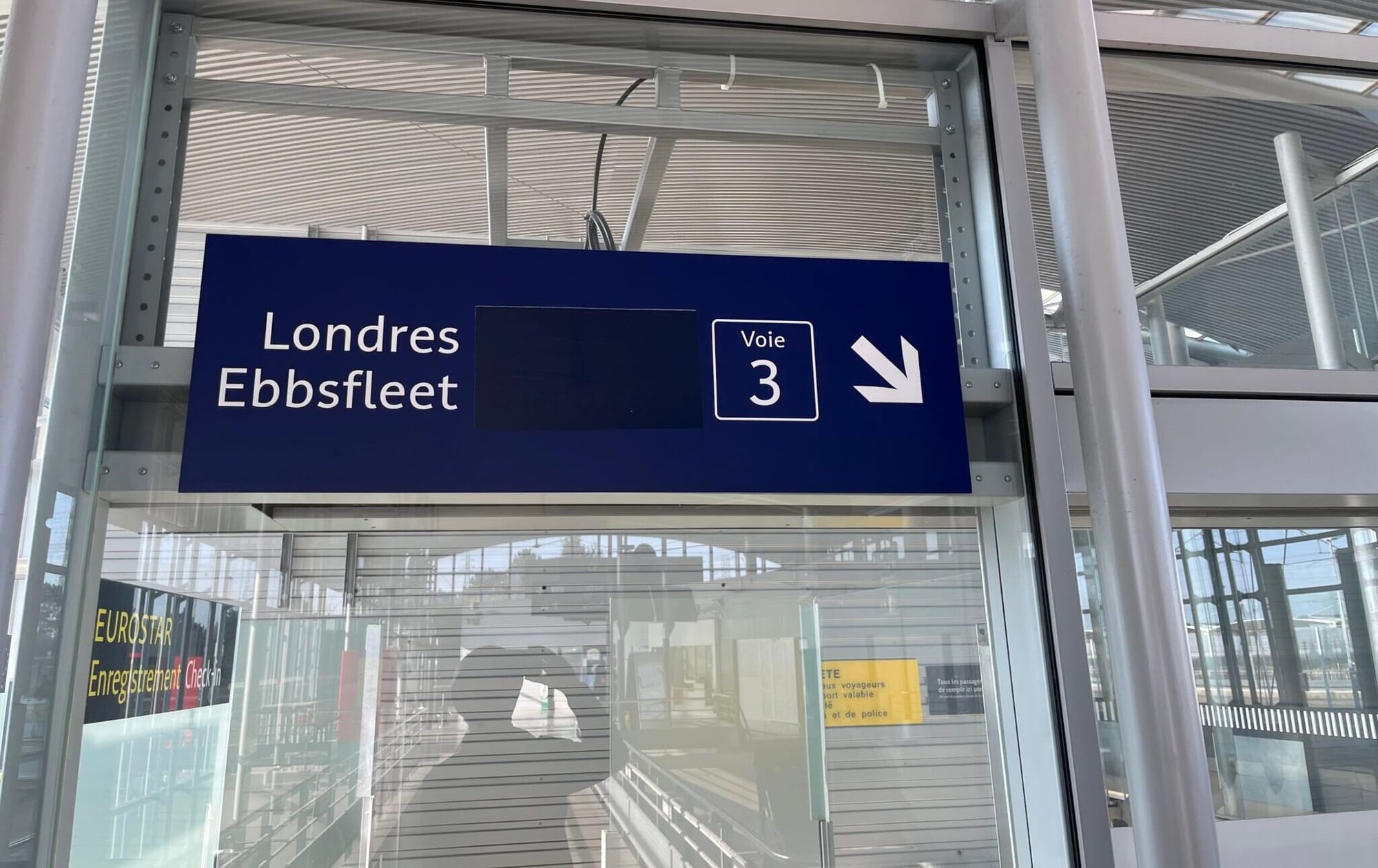
There's this railway joke* where a passenger is at Calais Fréthun station, staring at the "Londres, Ebbsfleet - Voie 3" sign. The passenger stops a gnarled SNCF employee and asks "How do I get to London?" (in French, obviously), and the response is "Well I wouldn't start from here!"
That notion - I would not start from here - has been on my mind a lot this week, in two different railway contexts.
The first, most obviously, is about the future of the Channel Tunnel. Because despite the sign at Fréthun, there is no way to London from there any more, because Eurostar stopped serving the station at the start of the COVID pandemic, and never resumed. But instead of asking the fundamental question should Fréthun (and Ashford and Ebbsfleet) be served again, and then moving to the how that could be done, we ask ourselves a narrower question instead: why is Eurostar not serving those stations and is there anything we could do about that?
At no point along Eurostar's thirty year evolution from tri-national state cooperative operation to SNCF dominated, part Caisse de dépôt et placement du Québec owned, now merged with Thalys state-private mix have we stopped to ask: is this what we need now? Is this what Calais needs, Ashford needs, the Channel Tunnel needs? And if we judge that Calais Fréthun, the smallest of the stations with border facilities, does need trains to the UK, but Eurostar is not going to provide them, what operator or operators do we need who could?
The same applies to last week's wrangle about the Temple Mills depot. Reading the submissions to ORR for access to Temple Mills, and especially those from Virgin and Gemini, you have the strong impression that the entire strategy of these companies with regard to what rolling stock to acquire was based on what would fit into Temple Mills. If I wanted to start a cross-channel train service, I wouldn't want to start from the size of the depot. At least the UK's Department for Transport has started to think a little more widely about this problem.
In my forthcoming report about the future of through services through the Channel Tunnel I am trying to come up with things that can be done, are implementable, and I am also trying to open up different ways of thinking about the problems. But even I as a self-employed sole campaigner struggle to avoid annoying everyone - by being too aspirational for some and too pragmatic for others.

The second railway context where this absence of big and implementable ideas strikes me is this week's European Commission High Speed Rail action plan - my detailed analysis of that "plan" is here.
A document dealing with something so broad is likely to take one of two approaches. It can either be vague enough to offend no-one and propose very little concrete (which is what it does, largely), or it can do what 21st Century Europe's Starline paper did - be very clear, aspirational, and completely unimplementable.
And there I am wondering where the middle ground between the European Commission and Starline is.
Let's not delude ourselves here - the number of sockpuppet comments about the Commission's "plan" on LinkedIn does not make it any good - just few are willing to be as blunt about it as I was in the FT. I even know a bunch of the people responsible for drafting the "plan" and none of them are bad people, and many of them have excellent technical knowledge. But given the political constraints imposed by Member States, from state owned railways represented in CER, and that this document is non-legislative, is there any way to do better?
Perhaps more worryingly, is there even intellectual space for the Commission to have done better? CER - the main proponents of all of this all along - have the intellectual vivacity of a piece of grey cardboard. There are no NGOs I know that really care about this aspect of rail. Even I am guilty here - I wrote a sole paltry blog post about this high speed stuff, because from the off I had no hopes for it, although the idea to do something about not scrapping useable trains is in there is perhaps traceable back to one of my better ideas years ago.
So the people wanting the plan don't know what to put in it, meaning the Commission have no intellectual framework for it, and no one lobbies the Commissioner to be more ambitious or more concrete. If you wanted a plan for European High Speed Rail, well, I wouldn't start from here!
What do we do about this? I don't know. But at least if you're one of the people who feels in the firing line of my critique in the past week, trust me this isn't personal. This isn't you, it's a systematic problem - we have no intellectual space for big but implementable ideas about railways.
-
- it's my version of the tourist in the Irish countryside joke, background here.