Taking the train rather than the plane for business travel in Europe: does it work?

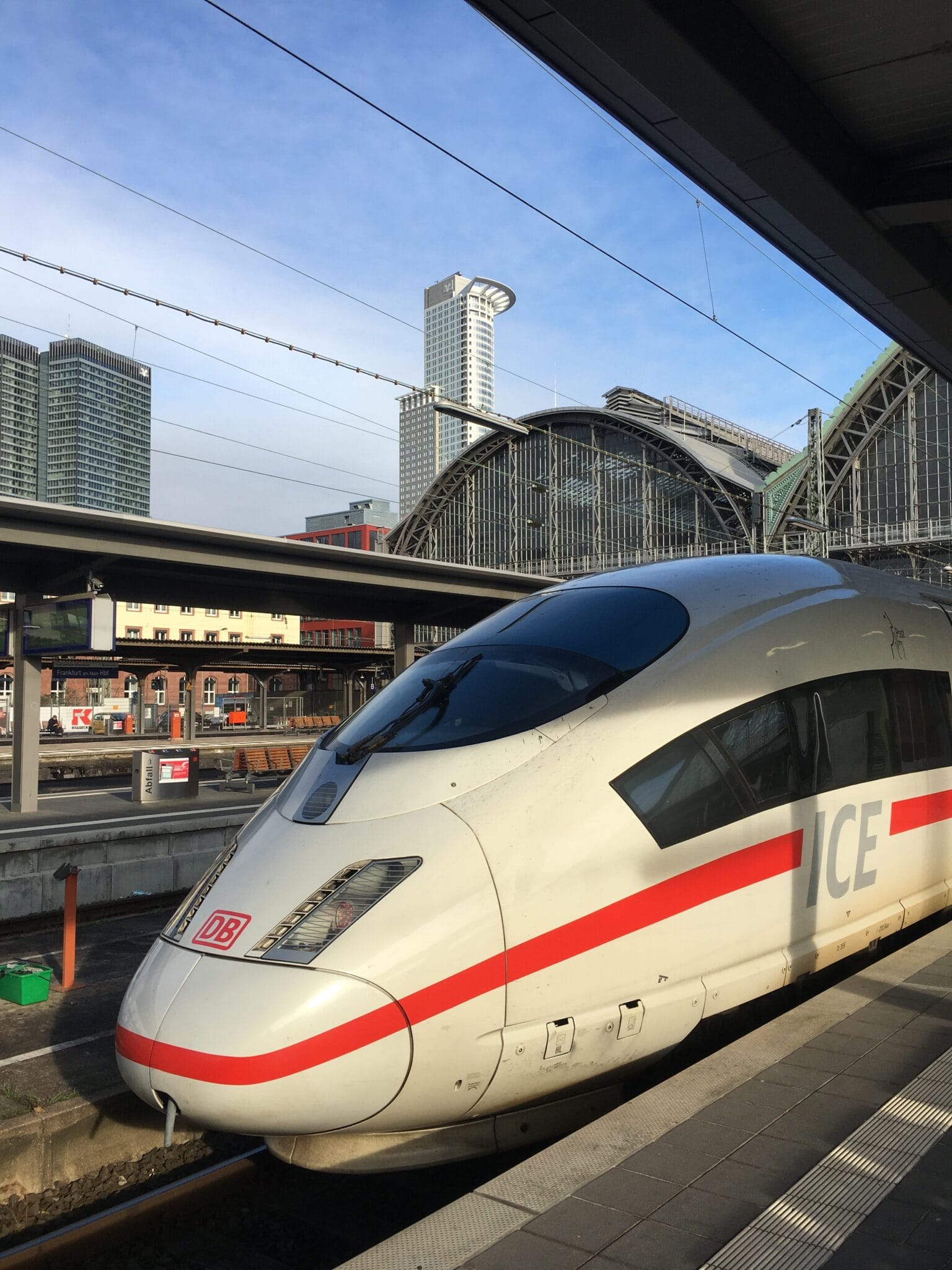
Anyone who follows me on Twitter will know I take the train for almost all my journeys, and many of these are business trips. Sean Hanley has asked me to sum up my experiences in a blog entry, so here goes. This post should be read in conjunction with the ones about the Eurostar Aachen trick, and Germany cheap tickets, and all my travel observations are here.
1) Set your limits
The train is not going to be your best bet for every rail trip in Europe. Distances are often too great, and on many routes connections are simply too poor. For example London - Amsterdam / Brussels / Köln / Frankfurt / Strasbourg / Lille / Paris / Lyon / Montpellier / Marseille / Geneva / Zürich should all be viable with just one change, and a journey time of 5-6 hours. London - Hannover / Berlin / München / Milan / Toulouse / Barcelona are too far for most people, or need 2+ changes. Within continental Europe even some short hops (like Milan - Marseille, or München - Prague) have such awful connections that flying may still be the best bet. For timetables I always still use DB Reiseauskunft (in English here) for timetables for my entire trips.
2) Booking tickets
This part needs a blog entry all of its own! This remains the major headache to make EU-wide rail workable. Rail company websites, with the exception of Deutsche Bahn's, remain pretty damned awful, and often will not give you prices for tickets right through to your destination. Services like Loco2 (UK), Capitaine Train (FR) and Waymate (DE) are trying to make EU-wide booking viable. Buying two tickets for a journey can sometimes be cheaper than one through ticket, even within one country. Working out how and where to split is one of the most time consuming processes when trying to get decent ticket prices. This stuff takes a lot of time and learning still. I always try to avoid the websites of Eurostar, SNCF and Thalys if I can, but sometimes that is impossible, especially if you want to amass frequent traveller points (see below).
3) Book ahead
Think as you would when booking flights - book ahead! Most rail companies allow you to book 3 months ahead, and operate a rolling booking system, where days become available one at a time. Put a date 92 days ahead of your departure in your diary! If you then cancel your trip, different countries' railways have different systems. DB makes a 15 Euro fee to cancel a ticket, but more or less any ticket can be cancelled, while Eurostar and SNCF tend to make their cheapest tickets impossible to cancel or refund.
4) Ticket collection
Most railways (Eurostar, DB / ÖBB / SBB (mostly), SNCF / SNCB (partially)) have online ticketing systems, where you either download a PDF, or have a barcode on your smartphone. This option, or paper tickets sent to your home address, are almost always preferable to collection of tickets at ticket machines in stations. Always avoid having to collect a ticket at a station in a country other than the country with whose company you purchased the ticket in the first place - it's very often a nightmare.
5) Points mean prizes
If you travel a lot by train a Frequent Traveller card can be very helpful. Here again DB excels, with its combination of BahnCard and BahnBonus cards giving reductions for regular travellers, and access to lounges in railway stations in many European countries, including Eurostar. While DB and Eurostar lounges tend to be better than SNCF's, all of them give you a quite place to work with free internet access if you have an hour to spare at a station.
6) In the trains
Quality and amount of space varies enormously. German ICEs generally offer more legroom and headroom than Thalys / Eurostar / TGVs. Spanish and Italian high speed trains generally have more than 2 classes of accommodation to choose from - the higher levels are very smart. For business travel I would never have a problem with 2nd class on DB, but always try to go for first class on Thalys or TGV if I can, if the upgrade is not too costly. On DB it is also possible to book in a quiet carriage - always worth doing. Most French trains are compulsory reservation, while German trains are optional reservation, for a €4 charge. I will always pay this if my journey is longer than an hour.
7) Reliability
I've had some delays when travelling by train in Europe, but few serious issues. Some lines (notably Brussels - Köln) are less reliable than others, and night trains are more prone to delay than daytime trains and high speed trains. Also if you use a night train, make sure you book a Schlafwagen (Sleeping Car / Voiture Lits), rather than a Liegewagen (Couchette) - you will not be in a good state for a business meeting after a night in a counchette.
8) Internet Access
My second major gripe, after ticket booking. Too few European rail services are wifi-equipped. Thalys is the only high speed service with wifi, but it's often so slow so as to be unusable. DB has wifi on some routes only, while no Eurostars and very few TGVs are currently wifi equipped. I partially work around this using a Huawei mifi, but even still I do not have proper internet access on moving trains.
So then, does it work? The answer is yes, but with a few niggling problems, and that it will not work for all business travel in Europe. But the next time you're travelling for work, try booking it with the train. If you have questions or need assistance then do ask below, or tweet me - I'll do my best to help! I most definitely do not regret taking the train rather than the plane.