On 20th August the European Commission heavily promoted (Bluesky, LinkedIn, Mastodon) its public consultation on the revision of the Rail Passenger Rights Regulation. As a few people asked me what I thought of this process, here’s my response – part analysis of the problem, and part list of ideas of what needs to be fixed and how, and hence a kind of suggestion for what submissions make sense for the consultation.
Overall my starting point is the European Commission is determined and committed here. Right from von der Leyen’s political guidelines last year, and Tzitzikostas’s hearing in the EP, there has been increasing activity from DG MOVE of the Commission – on the Single Digital Booking and Ticketing Regulation (SDBTR), and now also on passenger rights.
The introduction to the consultation about passenger rights sums up the sort of landing ground the European Commission is looking for. This is the crucial bit: “The Commission is considering an update to the Rail Passenger Rights Regulation to ensure that passengers can effectively exercise their rights when they miss a connection on a train journey involving multiple rail operators – provided the journey was purchased as part of a single transaction on a ticket platform.” These points are expanded more in the rationale in the Commission’s call for evidence.
At the moment many journeys cannot be bought in a single transaction (because railways don’t share data) so passengers have to assemble journeys involving multiple tickets booked on multiple sites, and they then end up with no rights. The idea in the future is that only a single transaction will be needed, and that then comes with rights (but if passengers still have to assemble their own trips rights won’t apply in those cases). IF – and it is a big IF! – data sharing is adequately fixed, one transaction to get passenger rights is a constraint I can live with.
Overall though I am confident the Commission understands the problems, and will propose good and far reaching legislation. The problem will come later, when rail companies bend the ears of national ministers, who water it all down in the Council. But for now, trust the Commission and trust the process.
The site for public feedback is here, and you need to verify your email address in order to submit. Somehow while drafting my submission it logged me out, so do keep a local copy of your text before you submit it!
Here is the text I submitted!
The core approach from the Commission is correct here. Railway tickets booked in one transaction should be accompanied with full passenger rights, regardless of how many rail operators are involved.
The precursor for this: it needs to be possible for a train ticket anywhere in the EU to be booked in one transaction, something that is not the case yet! So a revision of passenger rights legislation only makes sense if SDBTR is also agreed.
The way the Commission words its approach – essentially that multiple tickets booked in one transaction should de facto be considered as equivalent to a through ticket for the sake of passenger rights – is correct. Obliging railway operators to sell a single through ticket to anywhere is too complicated and should not be attempted, as this places too heavy a burden on the IT infrastructure of railway companies.
The important point is then: who is liable for the costs associated with the disruption to a passenger’s journey?
It is vital this falls on the railway operator that caused the problem in the first place – the operator whose train was delayed, disrupted or cancelled. These costs must not fall on the ticket sales platform, as margins for ticket (re-)sale are already very thin.
If railway operators are fearful this will increase their costs, the response must be this: allowing passengers to book cross border railway tickets without the fear of being out of pocket or stranded should result in more passengers, hence more income and more profit, at least outweighing a small additional cost for some compensation and accommodation for stranded customers.
The crux: it must be as easy to book, and as easy to have passenger rights, for a cross border railway journey in Europe as it is for a rail journey within one country. We must never lose sight of this!

“Obliging railway operators to sell a single through ticket to anywhere is too complicated and should not be attempted, as this places too heavy a burden on the IT infrastructure of railway companies.” From an IT PoV, that is simply not true. And most of the complications actually arise from rules that are created to hurt customers
From a how railways are managed point of view it is true. Hell, SNCF cannot sell be tickets between any two points IN FRANCE. Good luck forcing them to sell me any two points in Europe! The point is this: IT within railway companies is often terrible, but as those staff have been there a long time you cannot easily make them change their behaviour. That is why I am trying to find some solution to these problems that requires the least change in behaviour possible. In other words: this is human, not technical.
the thing is that with the privatisation process, at least in France, each operator sells unique tickets only on its own network. Even a company that operates a line on the count of another entity (eg local ter operated by sncf for the regions but where rhe commercial conditions are decided by the region, not sncf) do not warrantee an assistance in case of missing connections with a line that it operates in full responsibility ( read tgv)
Obviously, the competition (renfe,trenitalia ) do not even bother to sell local trains
All of this did work up until 1995, when sncf was a monopolistic public operator fully responsible for all missed connections
Now it is a thinly disguised private company with public shareholder, that is managed as any private company but with additionnal constraints due to the highly unpopular change of status
The destiny of the rail network in France is probably to come back to 1935’s situation: a slightly profitable Paris Lyon Marseille and North(Lille Bruxelles) companies and redinked public owned connections to the western and central part of the country, roughly corresponding to the former Etat network (historically the first nationalized network)
There are two issues here: did France cock up its regionalisation and rail reform processes? Yes, in my view. Germany, that has had loads of operators a lot longer, has made sure tickets remain integrated (with a few exceptions, I admit). The second is could EU law partially fix the problems – in France and elsewhere? And I think the answer is – if done right – it could. But let’s see how the reforms go.
I wonder if part of the solution is introducing what could be called the ‘Eugene Wilde principle’ or the “Gotta Get You Home Tonight” requirement*. The “Gotta Get You Home Tonight” requirement would mean that all operators have an obligation towards stranded passengers (regardless of whether that passenger purchased any part of their journey from that operator), and need to help them reach their intended final destination that day (i.e.: allow them to travel on any of their services, that would help them reach their destination). This should not be seen as a replacement for other passenger rights, but as a minimum that applies even when other rights do not (for example, if someone is travelling on separate tickets purchased in separate transactions).
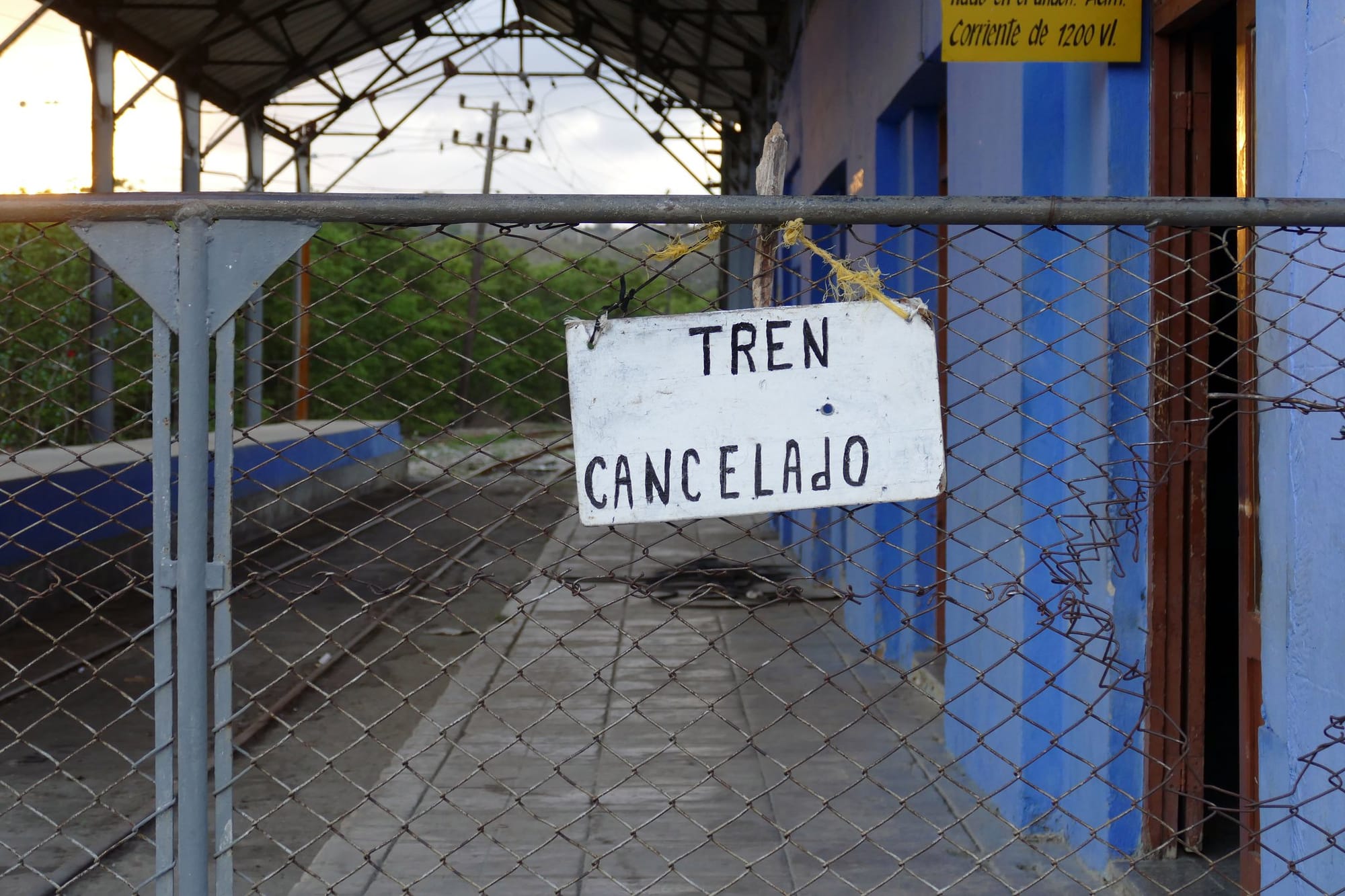
Looking at the current feedback to the Commission’s consultation, it is full of stories from frustrated passengers, of operators ‘passing the buck’ (i.e.: telling stranded passengers that “a different operator caused that problem, so it’s not our responsibility to assist you”, rather than helping the passenger in front of them). This is particularly unsatisfactory on international journeys, where ‘the other operator’ may be in a different country, and the passenger has no easy way of contacting them; or even if they could contact them, that other operator has no easy way of solving the problem at hand. This kind of negative experience rapidly dissuades people from even considering attempting such journeys.
The “Gotta Get You Home Tonight” obligation would mean that operators could no longer hide behind “oh, that was another company’s fault”, but instead would be obliged to assist the passenger in front of them. Some companies, or individual staff, already do this reasonably well. However, it is clear from the responses to the Commission’s consultation that many operators currently do not, and would require a significant shift in organisational culture to be made.
Of course, passengers would need to meet some basic criteria to be entitled to assistance under the “Gotta Get You Home Tonight” obligation (i.e.: have proof of their planned itinerary, respecting minimum connection times; have valid tickets or rail-passes for the planned journey; and have evidence of the disruption that interfered with their plans). But if those criteria are met, then “Gotta Get You Home Tonight” should be a right that the passenger can expect to be upheld – not something left to the whim of individual staff or operators.
The fundamental question that the Commission appears to be asking in its consultation is who should pay for the costs of disruption (i.e.: the consequences of delays or cancellations) affecting passengers traveling on separate tickets, when purchased as a single transaction. It is deeply problematic to expect passengers to cover these costs themselves, as they can easily be significantly more than the price of the original tickets (if passengers need to buy replacement tickets at expensive ‘walk-up’ prices, and perhaps also make last-minute hotel bookings). Meanwhile, for operators the marginal cost of allowing a delayed passenger to take a spare seat (or if necessary, to stand) on a service that they were not originally booked on, is close to zero (even if the passenger’s original tickets were not with that operator). Indeed, the real cost to operators could in fact be negative (i.e.: profit-making), if the assurance of “Gotta Get You Home Tonight” encourages more people to travel by train.
Obviously, there are all sorts of complicated edge cases associated with such a policy, including:
• Hotels, taxis, etc: what happens when it is no longer possible for a passenger to reach their intended destination by train that, and they need either a taxi and/or a hotel? This entails a more significant real cost (although its probably still much cheaper if paid by an operator, who can have long-term commercial contracts for such services, rather than as a distress-purchase by an individual passenger).
• Night trains: what happens when a passenger’s ‘intended destination’ for the day is not a specific station, but a night train? (Part of the solution here is probably ensuring that booking systems advise longer connection times before night trains. As one of your other correspondents has said, experienced travellers know to allow such padding – but booking systems still offer unrealistically short connections).
• Reservation-compulsory trains: what happens with operators who like to run reservation-compulsory trains, at maximum capacity? Even if they had an obligation to accommodate passengers delayed by other operators, they might claim they do not have the space to do so. (The solution here should be that they do what better managed railways do: schedule the last train of the day late enough at night that it normally runs almost empty, and so has plenty of space to accommodate anyone who was delayed earlier in their journey…)
However, policy-makers need to hold operators accountable for solving these problems. As a society, we need more people to take the train instead of flying – and that won’t happen, if individual passengers continue to be faced with massive bills for new tickets and overnight accommodation, when a train runs late. A “Gotta Get Your Home Tonight” obligation could help to force operators to change their attitude towards assisting delayed passengers.
* I am aware that the actual lyrics of the song bear absolutely no relation to the topic in hand – but the title still fits…