I've been wrong all these years about printed train timetables (the lessons from a Montbard - Nuits-sous-Ravières train that doesn't run)

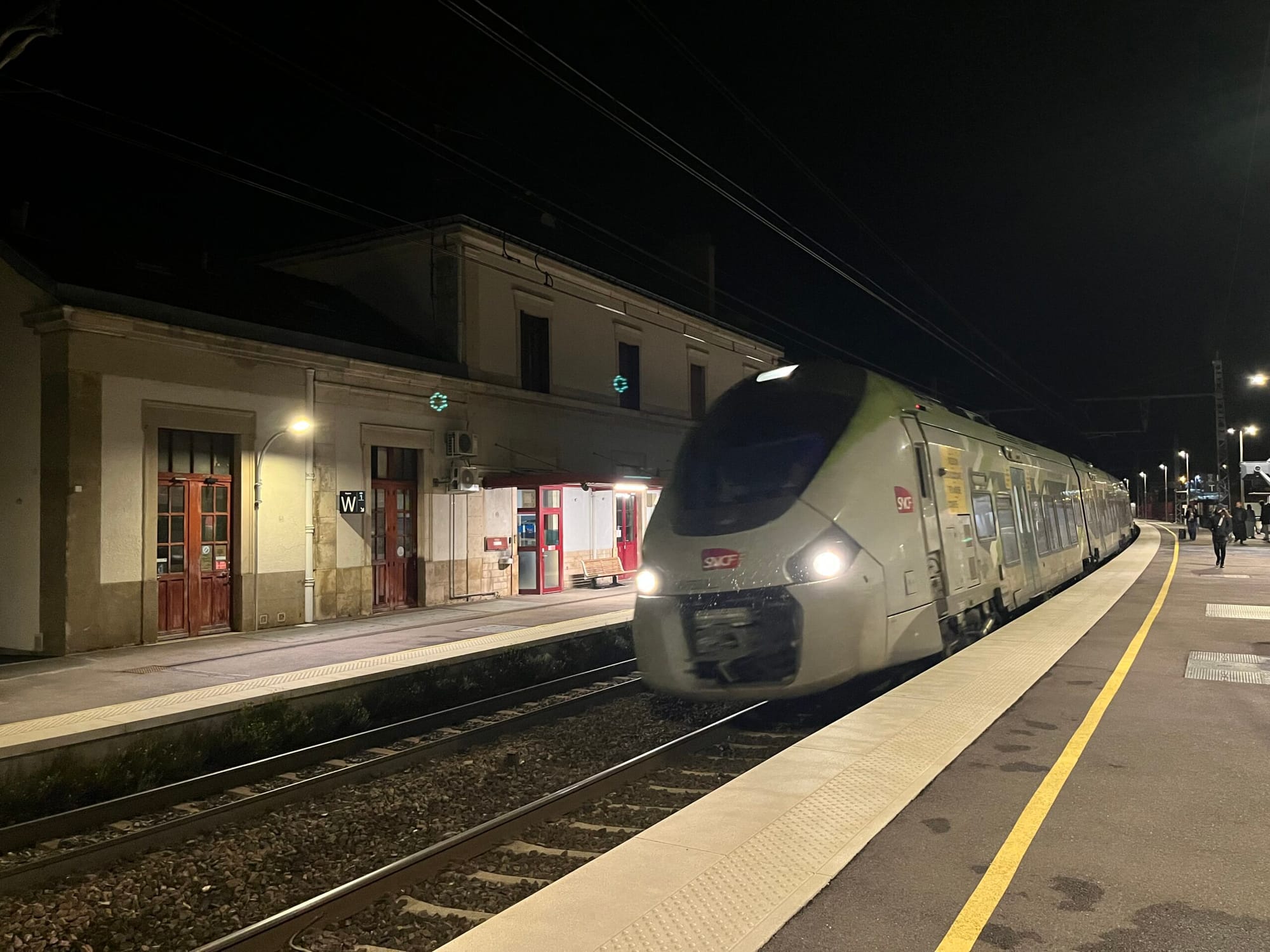
I am a child of the digital era. When I planned a first Interrail trip in 1999 Deutsche Bahn's website already had a timetable search for pretty much everything (I still have the printouts from back then). I have never bought a European Rail Timetable book, although somewhere on a shelf I have a few old editions someone gave me. I have always planned my trips with a "this is where I want to go, search for it" attitude, and if that did not work resorted to a map to work out where lines go (OpenRailwayMap is my obvious map of choice these days).
So the fact that France does not publish paper train timetables at stations any more did not really bother me, personally. Yes, there are general accessibility concerns with this - those who cannot master digital tools are left stuck, especially as access to ticket offices is increasingly limited. And yes, I am guilty of not paying that issue enough attention. But if the digital information is complete at least - or so I thought - then this is an accessibility issue, not a railway service issue.
But I was wrong. It is also a railway service issue.
On 4th April 2026, Easter Saturday, I need to travel home to Ravières from Saarbrücken in Germany. And the trip has thrown up all sorts of inconsistencies, and has prompted me to rethink my attitude to timetables and how they are presented.
Let's start my usual way: what does DB show me for the trip?
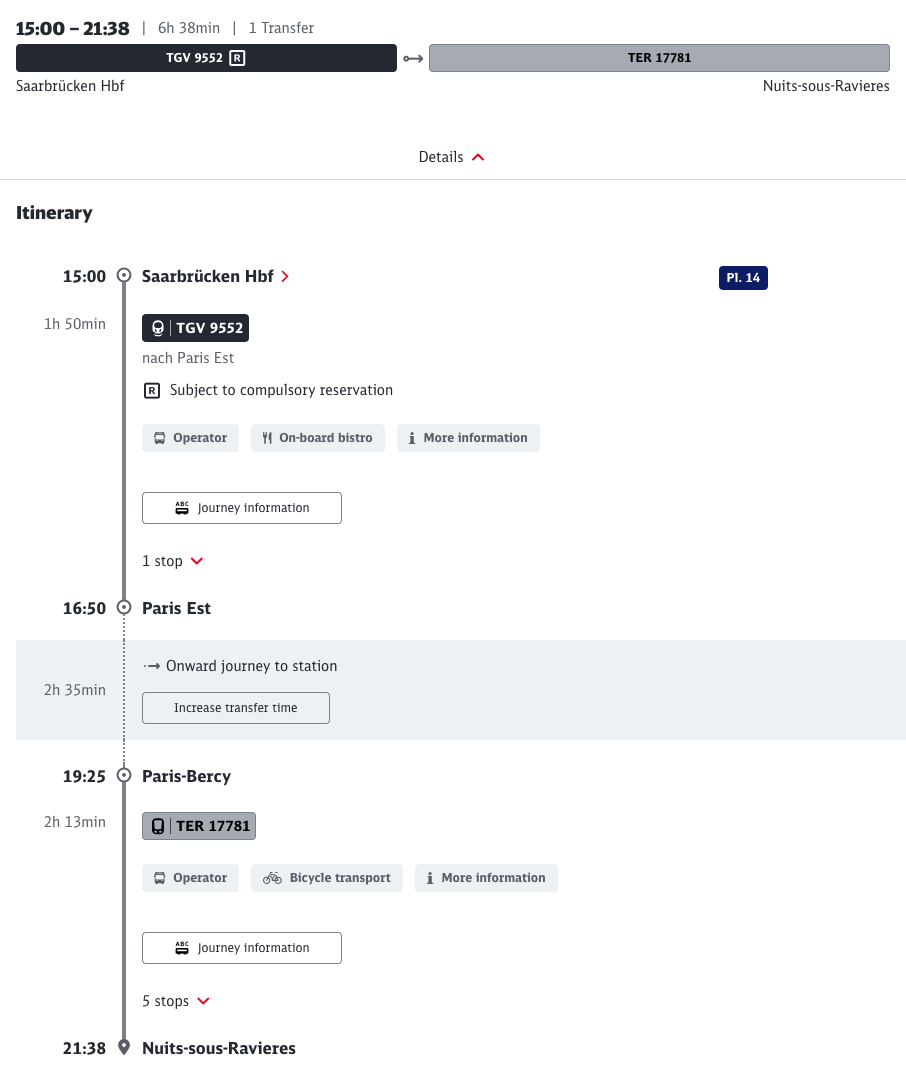
2 hours 35 minutes in Paris? Why so long?
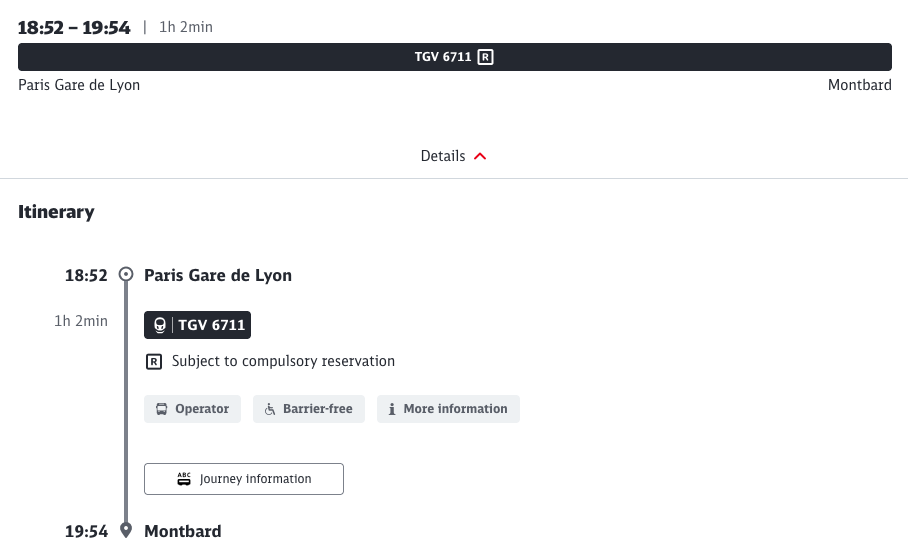
Is there - I wondered - a way to take a TGV from Paris to Montbard, and a TER from there to Nuits-sous-Ravières?
And yes, there is the TGV:
But there is no TER from Montbard to Nuits-sous-Ravières - the last one on 4th April is 18:11:
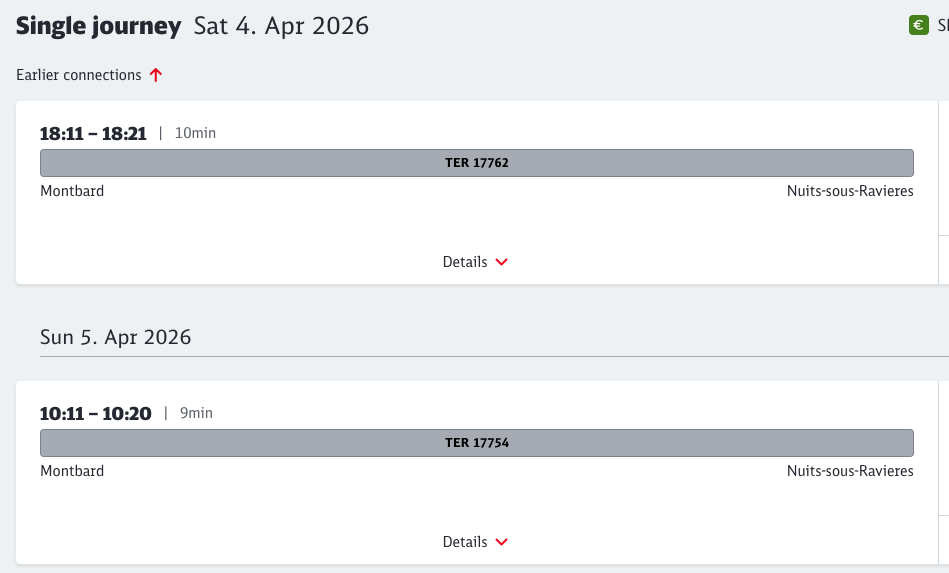
Where is TER 17764 on April 4th? That departs Montbard after 20:00 on at least some Saturdays.
At this point - given this is a French train - I thought it would be appropriate to use a French website to determine what was up with TER 17764. Voyages SNCF has a train number search, but it is by date - I can tell 17764 will stop at Nuits-sous-Ravières this coming Saturday, but is limited to Lyon-Dijon on 4th April (no Montbard or Nuits-sous-Ravières that day). But I have no information on why this is the case (is it because it's Easter and the train just does not run, or perhaps is it because it is engineering works?*), and the TER Bourgogne Franche Comté website does not help me either - there are no works listed for that easter weekend.
So I am left wondering about the issue: is it that Easter Saturday gets a more restricted service than a normal Saturday? In which case I suppose I ought to just live with it. Or are there engineering works? If there are, then a rail replacement bus should be provided, because I ought to be able to rely on there being a Montbard - Nuits-sous-Ravières after 20:00 on a Saturday, right?
And that is the crux of it.
If I have a printed timetable, I can tell what is normal. And have predictability from the outset. Even if I do not actually regularly consult that timetable. "This train runs every Saturday", and then if it does not run, there is an expectation I will have some alternative provided. But if I cannot tell what the expectation is, what the normal is, I can have no recourse in cases where that service is not provided.
Imagine that were my trip on 4th April not Saarbrücken to Nuits-sous-Ravières, but a shift working a Saturday job at the Super U supermarket next to Les Laumes-Alésia station (the stop before Montbard). And then suddenly one Saturday the train I need to get home does not run, and there is no bus either.
And when you start thinking like this as a railway you end up in a very odd place. The train becomes a nice to have, not something you can rely on for your everyday needs. And that's when people start to reach for alternatives, cars mostly. Slipping out of the obligation to provide a replacement service on an Easter Saturday evening translates into the train not being a reliable transport mode.
By now you're probably wondering: why does this timetable have to be on paper though? Would more transparency, digitally, be an answer? The answer is possibly digital solutions could be sufficient, if you have the right approach to your digitisation. There might be no printed Kursbücher in German rail any more, but the principle lives on, digitally - and below each train in DB's search it tries to tell you which days the train will run.
But the masters of transparency here are Austria's ÖBB, where their Scotty Web App gives you an international search by train number. But if you enter TER 17764 in the search there, you get more than 20 different versions of that train - and incomprehensible thicket of complexity for a passenger. What even is the normal TER 17764? Does it even exist? That stands in rather stark contrast to train 17764 on the German network - there are only 2 versions of that one.
[Update 6.1.2026, 15:15]
Suzanne Veerman pointed me towards the TER Mobigo Fiche (PDF) for the line through Nuits-sous-Ravières, and that indicates that 17764 should run every day. However the document has the ominous line "Horaires donnés à titre indicatif, consultez vos horaires avant départ." (Times are given as a guide only; please check your timetable before departure). But I have contacted Mobigo, the Bourgogne Franche Comté transport authority, to ask how I will get from Montbard to Nuits-sous-Ravières on 4th April, and whether a rail replacement bus will be provided. I will update this blog post as and when I get a response.
-
- One of my followers on Bluesky reckons it is indeed engineering works, but you should not need to have the right followers on a social network to try to work this out!