How to safely overload a high speed train (and why it matters for the debate about ticketing reform in the EU)

Imagine you're making a simple international trip: Frankfurt (Main) Hbf to Lyon Part Dieu. One change of train, in Strasbourg*.
But your Frankfurt - Strasbourg train is delayed, and you miss the Strasbourg - Lyon TGV on which you were booked.
What do you do?
You would either wait for the next available train on your existing route, or re-route (likely via Paris in this case)**.
But there is an additional complication here: TGVs are compulsory reservation, and so the next departing trains (even re-routing) could officially be full. You might be waiting many hours, or even until the next day, until there is a seat. And - in France and Spain in particular - there is often no slower alternative to compulsory reservation high speed trains.
So what is the solution?
For passengers that want it, and are willing to tolerate some discomfort but need to get to their destination as soon as possible, allow controlled overloading of high speed trains.
Here a quick aside. Why can you not just let as many people as you want stand in the aisles of a high speed train? Because that means the train will exceed the maximum permitted axle load on high speed lines. In France this limit is 17t per axle. You may also impede access to emergency exits. So I understand why passengers standing everywhere might need to be prevented.
But that no-one can stand is also incorrect. Anyone who has ever travelled on a TGV on a French strike day, or has taken a TER-GV in Hauts-de-France can confirm, some standing passengers are allowed.

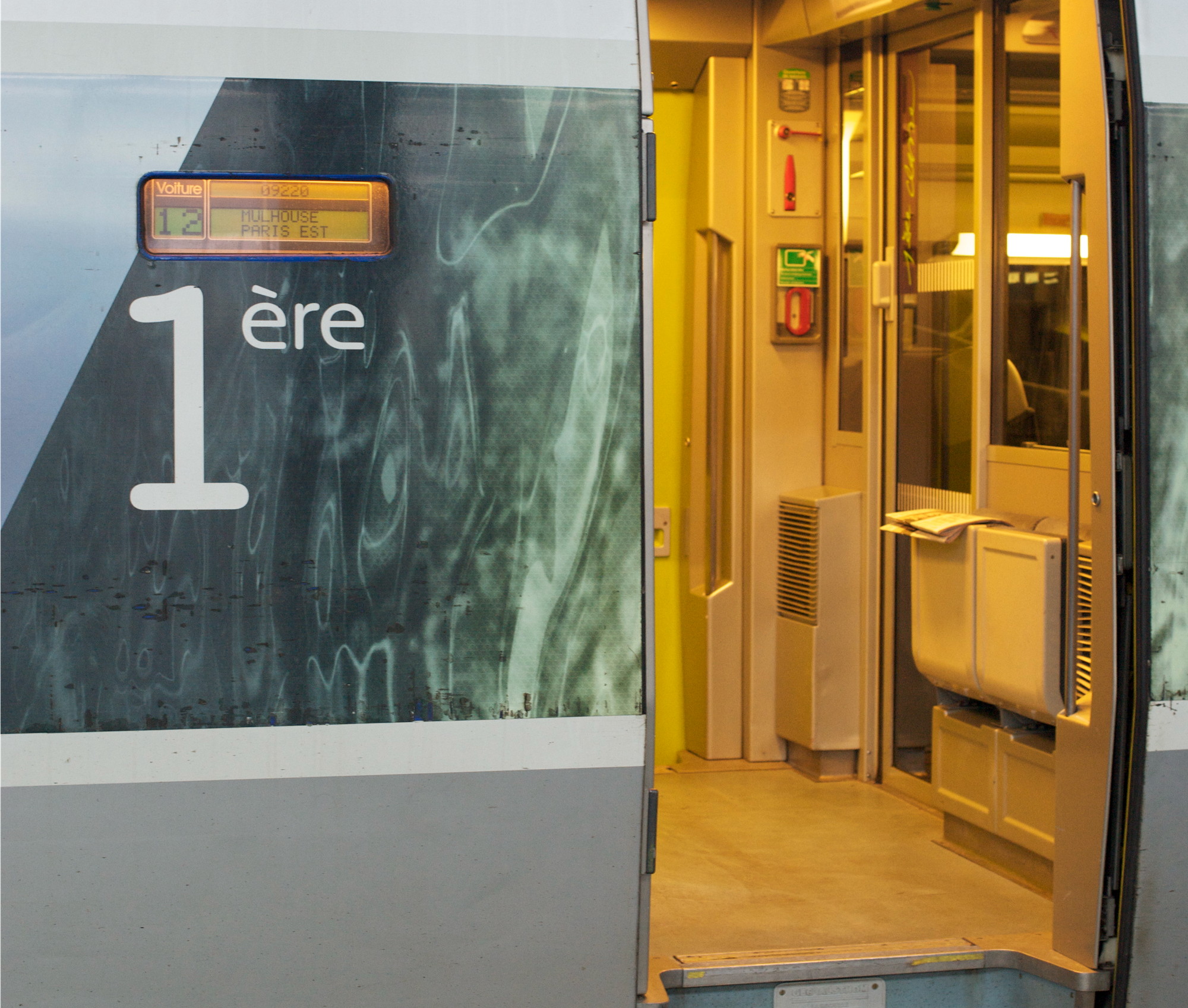
There are even some seats foreseen for this in some TGV designs - the "strapontin" pull down seats in vestibules, as shown here in vestibules. These seats are never made available for sale for regular passengers.
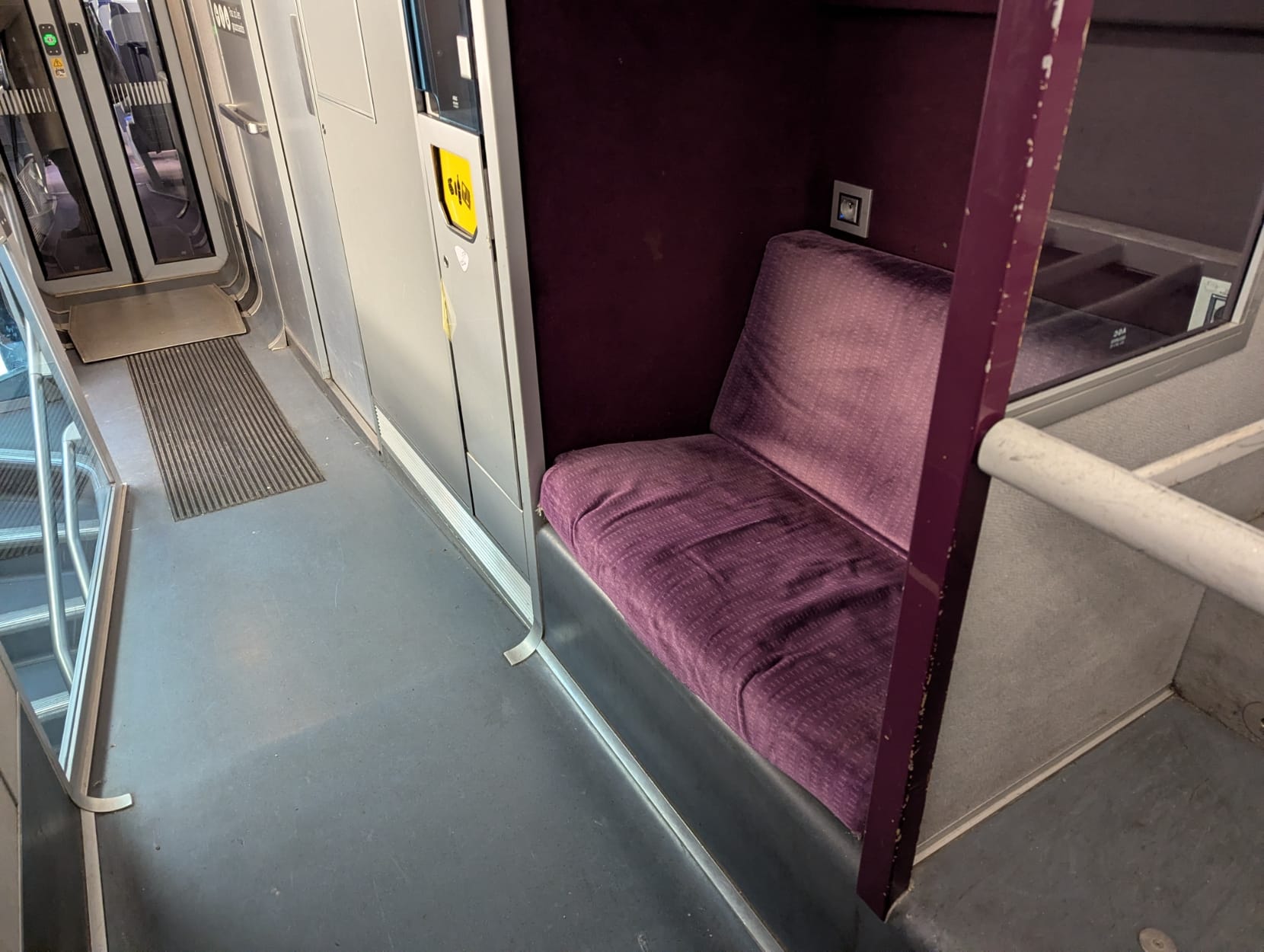
In a TGV Duplex it is a bit different - there are these sorts of little sofas on the upper level, and these do not have windows. But these could be deployed systematically for passengers impacted by disruption.
There is also a precedent from the other end of Europe how to do it: on PKP IC in Poland you can book "brak gwarancji miejsca do siedzenia" - a ticket that allows you onto a specific compulsory reservation train, but without a guaranteed seat.
So the solution in the TGV case is to work out a specific number of non-seated passengers that would be allowed per train, and - only in cases of disruption - allocate passengers those. At an educated guess it would be between 5 and 10 extras per carriage, so between 40 and 80 per 8 carriage TGV set. That would be your "safe overloading".
You would need to work out a simple way to allocate these extras - the best would be to give train managers the power to do so with their handheld devices, thereby eliminating the need for passengers to go and queue at a ticket office (that would further lengthen their delay).
A few additional points. Passengers would not be obliged to stand - waiting for the next train with seats would always be an option. But if a passenger needs to get to their destination urgently and with some discomfort, there should be a means to do so.
I also outright reject SNCF's argument that passengers standing causes unnecessary discomfort for those sitting. If I have already been inconvenienced having missed a connection, then sorry, a passenger with a seat can tolerate the mild frustration of me standing there - providing my presence is no security risk. And if the number of standing passengers were limited as I outline here, everyone ought to be able to live with it.
With the European Commission proposing a Regulation this spring to reform the rail ticketing regime in the EU, perhaps this sort of system ought to be foreseen within the new legal framework.
* - Yes, there is one direct train a day Frankfurt - Lyon, but before anyone trainsplains me, please just assume the passenger here needs to make the trip at some other time of day when that does not run!
** - Re-routing has some other issues that I will examine in some further post. For now just assume that in principle I am allowed to do it.
Photo licensing:
Cover picture: Mike Knell - Premiere - January 7, 2010 - CC BY-SA 2.0
TGV corridor with strapontins picture in the article: Théo Lenormand on Mastodon, used with permission
TGV Duplex sofa picture in the article: rail on Mastodon, used with permission