Confirmed: SNCF's Alstom built TGV-M Avelia Horizon trains are too large for some Italian rail lines

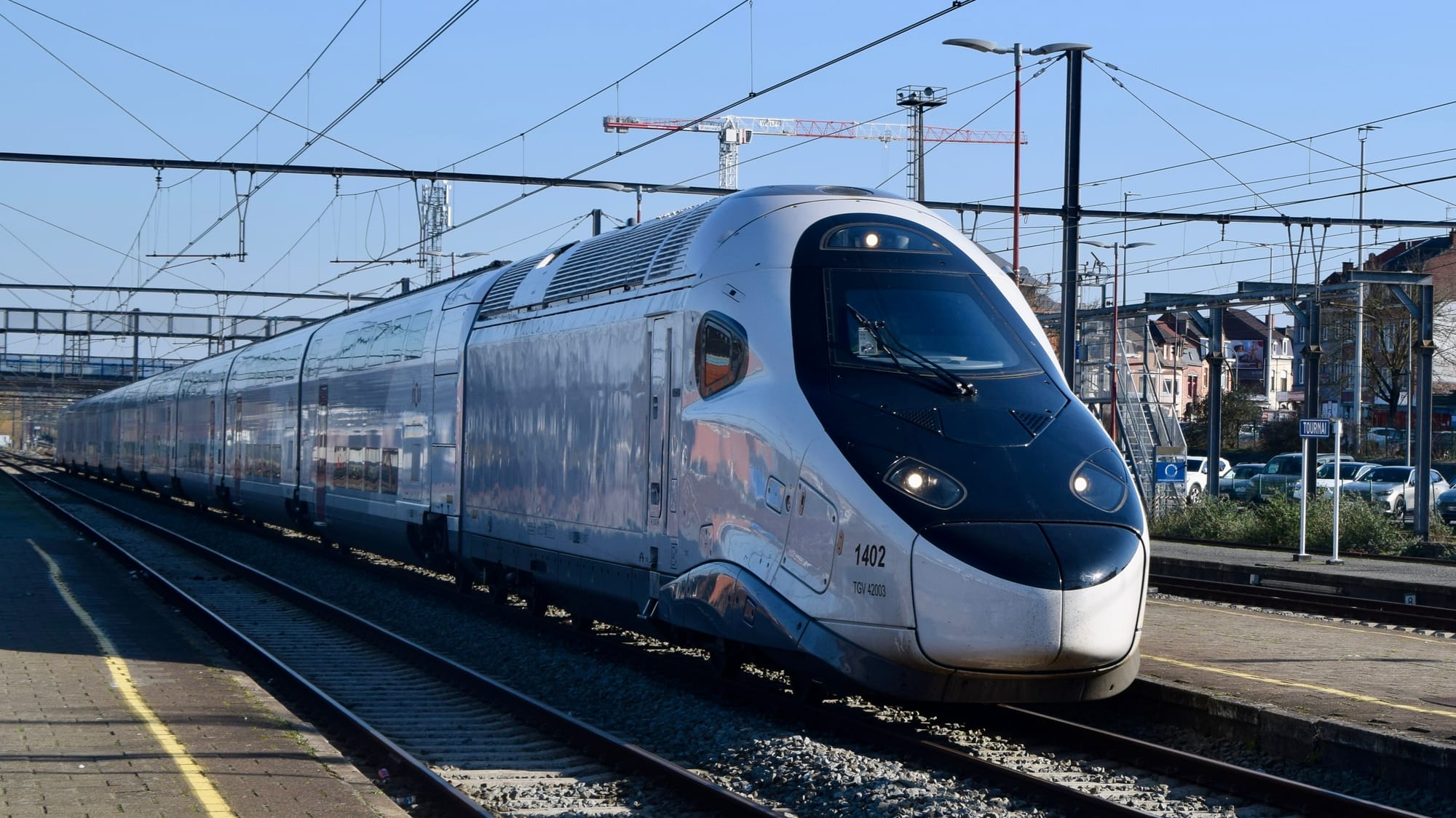
When Les Echos and BFM reported that SNCF's TGV-M trains (branded Avelia Horizon by their manufacturer Alstom) were too tall for Italian tunnels I could scarcely believe it. This news came in the same week as SNCF received some good news that they can get a package of guaranteed high speed paths to operate in Italy from next year.
So I set about trying to work out whether the media reports are true.
First some background.
The issue relates to the loading gauge of the TGV-M trains - the width, height and curvature of the roof of the trains.
No one is disputing that the TGV-M trains can operate on modern high speed lines in Italy, and that is where they will run every day. The issue relates to diversionary routes in the case that the high speed line is inaccessible for some reason (a broken down train, landslide, power failure etc.)
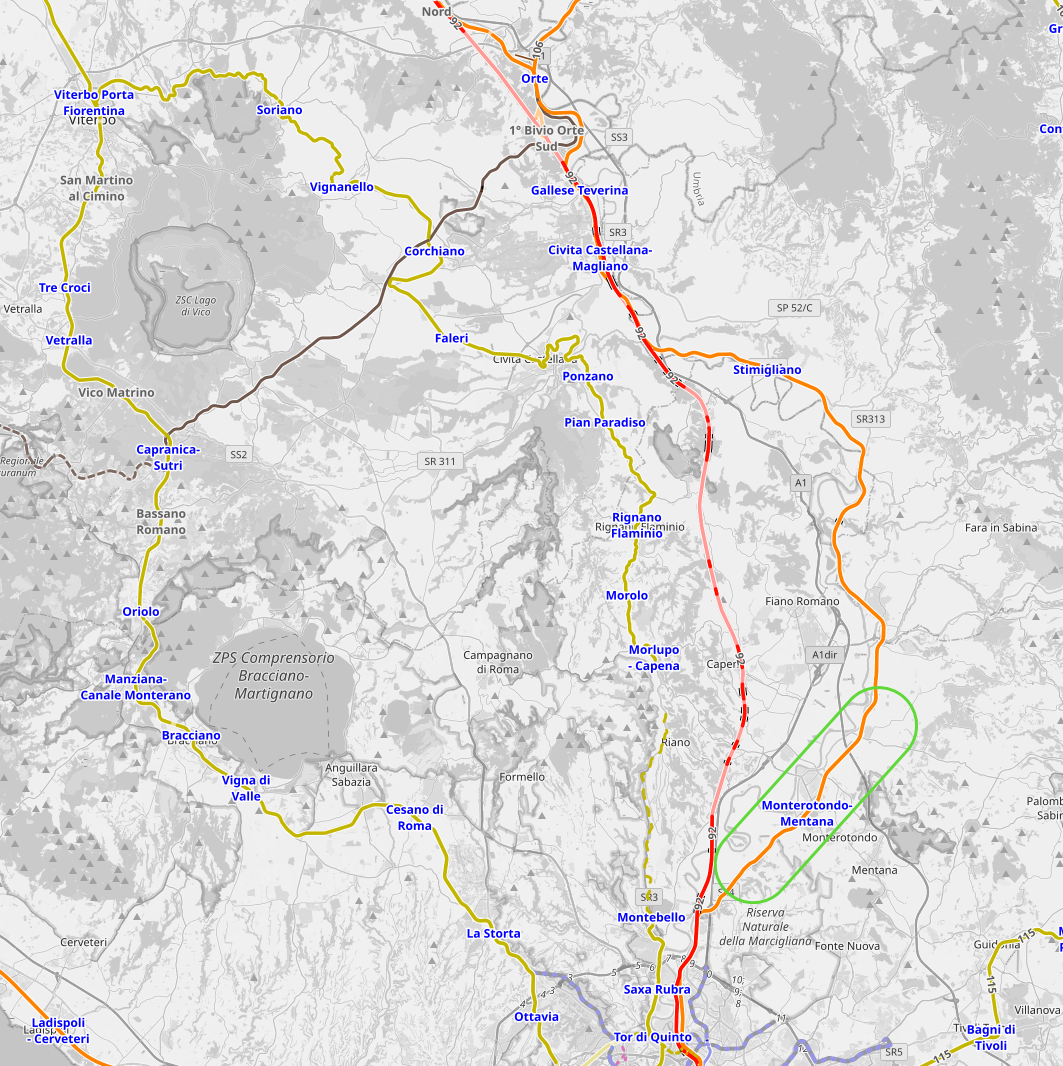
This is especially pertinent between Roma and Firenze - the oldest section of the high speed corridor, generally known as the direttissima. This line intersects with a parallel older and slower line in multiple places, and the operational concept for the line is that trains can enter and exit the direttissima as required. You can see this between Roma and Orte on OpenRailwayMap here - red is the diretissima, orange is the older main line:
So how do you work out the loading gauge of each section?
Here you need to use the EU Agency for Railways data - mapped here. You need to click on a section of line on their map, then click on Track in the pop-up. This is the data for the section through Monterotondo-Mentana highlighted on the map above, and then scroll down to Gauging - G1. The direttissima is G2.
Please note here there might well be other sections of line with the same problem - this was simply the first one I found to illustrate the issue.
But what do G1 and G2 that mean? This helps:
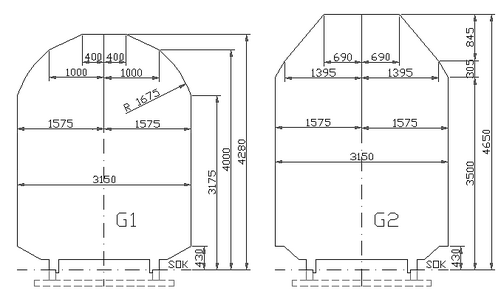
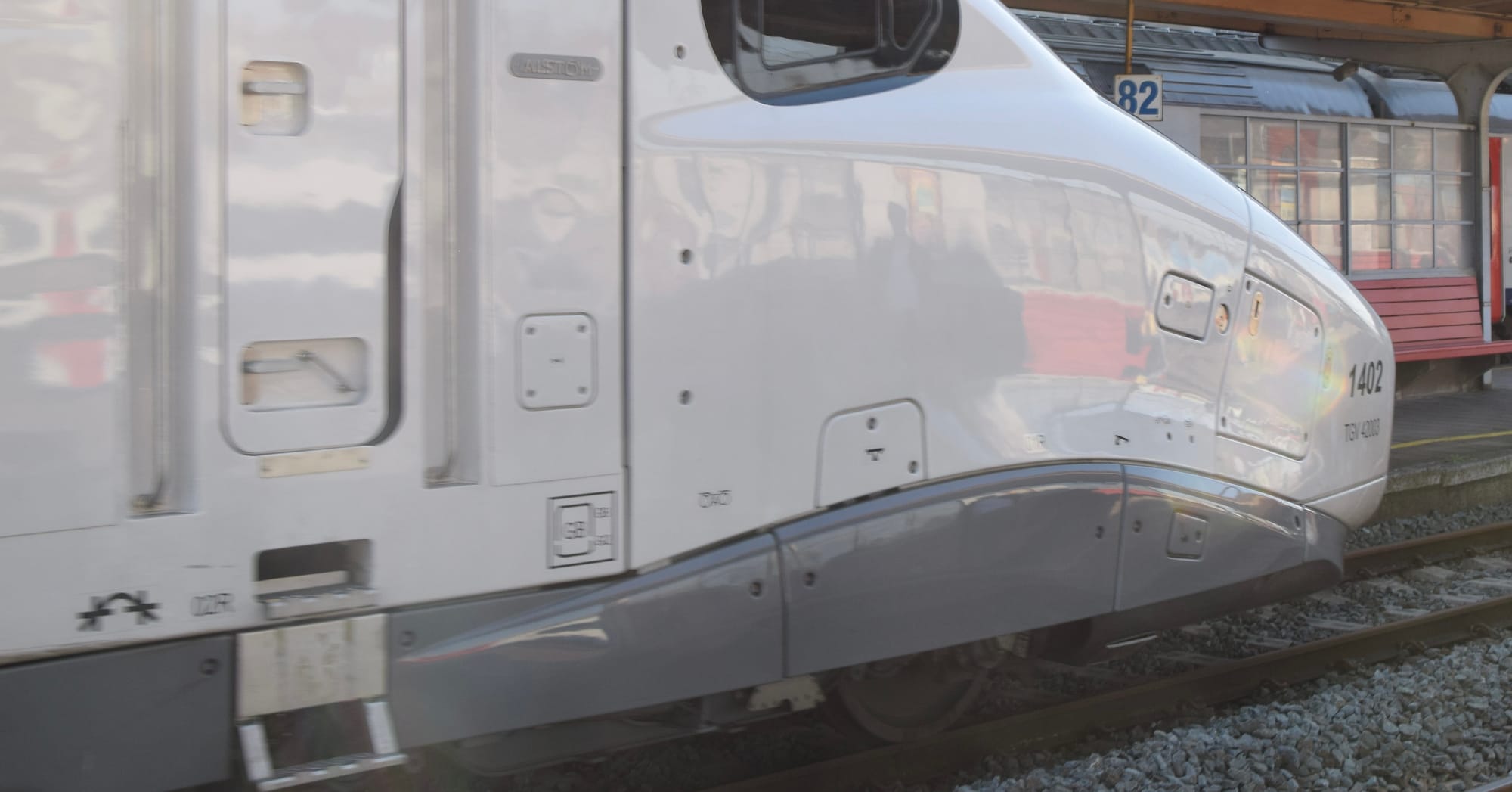
The important issue: G1 maximum height is 4280mm, and a Avelia Horizon is 4320mm. 40mm, or 4cm, but still too tall. That is the difference between hitting a tunnel or not. All TGV double deck designs have been at least GB loading gauge (see this diagram to explain that one - but simply put it is bigger than G1). I was first told TGV-M is GB gauge from this and I can confirm it with my own slightly blurry picture:

So - simply put - if and when there is a problem on the high speed line, a TGV-M cannot simply be switched to the older main line instead. A Trenitalia Frecciarossa or Italo high speed train - all single deck designs - can.
Is that really a problem?
It's hard to say.
The Italian network operator RFI thinks it is a problem, as it would require an alteration to the operational concept of its infrastructure. The procedure for what to do with a TGV-M when a line is closed would be different to the procedure for other trains, and could mean that services operated with a TGV-M would simply be terminated early in the case of a disruption, rather than being re-routed.
Re-engineering either the TGV-M to lower the roof of the carriages, or making loading gauge adjustments to the older routes, would both be theoretically possible, but would be very costly - and hence I cannot imagine either being pursued as solutions here.
Overall I do not think this is going to be a show stopper for SNCF's efforts to enter the Italian market. In the end RFI will probably relent.
But - strictly speaking - yes, it is true. SNCF's Alstom built TGV-M Avelia Horizon is too large for some Italian railway lines.
Image Licensing
TGV-M picture by Jon Worth - more on Flickr here. Map from OpenRailwayMap, adjustments by Jon Worth. Loading gauge diagram: Loading gauges for railway clearance G1 (International) and G2 (Germany) by Christian Lindecke, 21 May 2009, CC BY-SA 3.0.

Credits
Oliver Blanthorn on Mastodon, and Joel Haasnoot and PGLux on Bluesky for helping me get to the bottom of all of this. Thanks Martin Hoffmann for finding a picture of the GB loading gauge label on a TGV-M.