Chinese investment in European railways

In the Newsletter this week
Free to read: How to fix railway ticketing in the EU
Analysis: Chinese investment in European railways
Bullshit Meter this week: Loop line connecting British and Irish cities
Good week: A future for the Una line?
Bad week: Bane NOR seems to have caused its own landslide
Photo of the week: The end of the old Berlin-Wrocław
Calendar: Provisional date for Budapest-Beograd passenger services
This is the third edition of what will become my subscriber-only newsletter that will be sent every Friday at 14:00 CET. Both free and paid subscribers will receive the first four editions. For now some of this is rather experimental - please bear with me!
How to fix railway ticketing in the EU

In a new, free public post on my website this week, I examine how to reform the legal framework for railway ticketing within the EU - with a draft Regulation due from the Commission this spring. Read the full article here.
I also wrote a further follow up, about why safely overloading trains is an issue we need to examine too.
Chinese investment in European railways
The promise: a high(-ish) speed railway between two European capitals, Beograd in Serbia and Budapest in Hungary, built faster and at a lower cost than using European contractors.
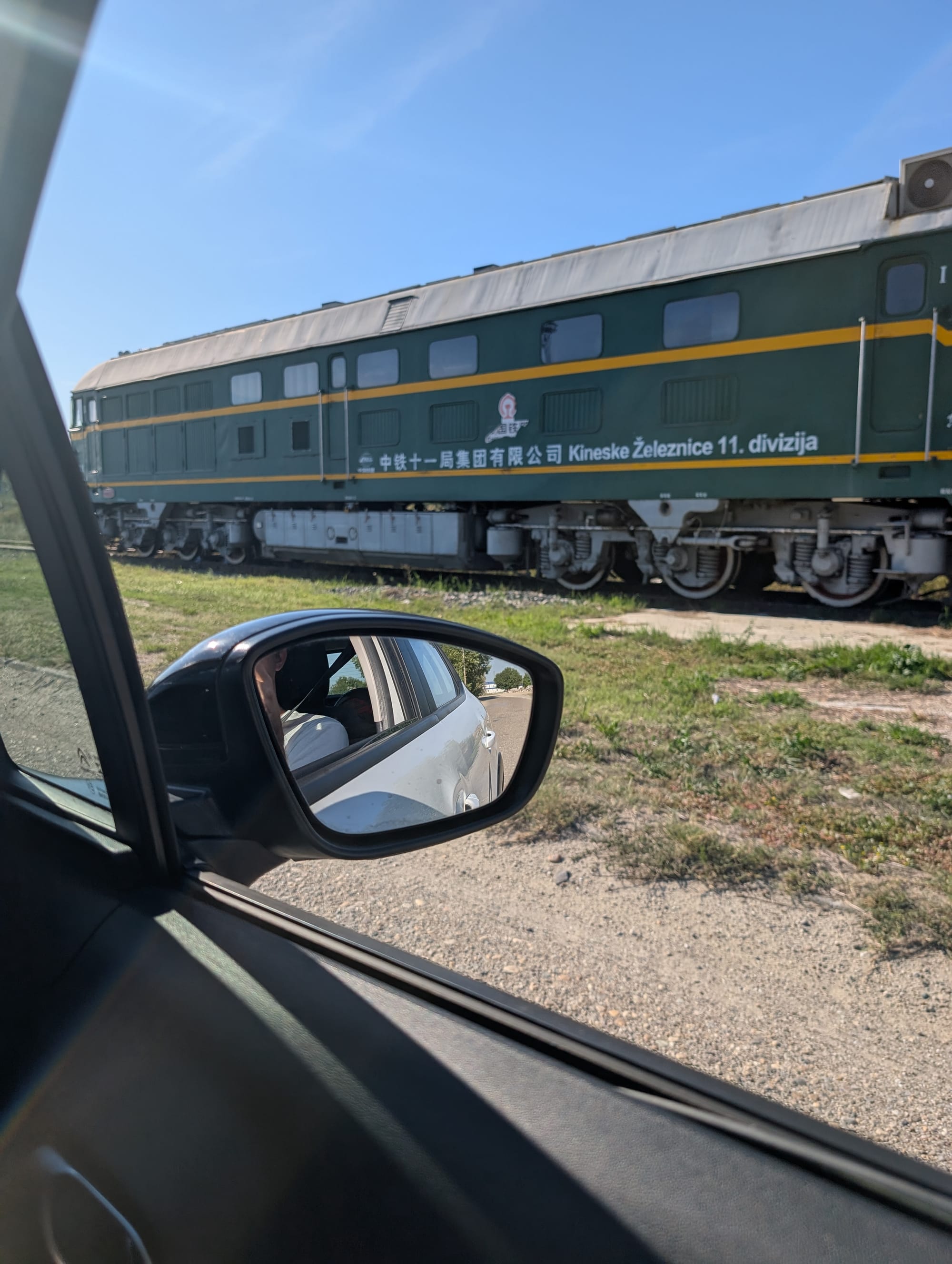
The reality: corners cut in the construction of the first section of the line to open (Beograd-Stara Pazova), according to a report by Ognjen Radović and Vladimir Obradović. "Of the 1,200 pillars of the railway line, 700 were erected without permission and without notification of the work. 180 piers were not placed in a suitable location at all, using low-quality concrete and reinforcement without any quality testing," they say. The original news report from N1 is here, and Lok Report has more in German here.
And that is before we even come to the collapse of the Novi Sad station roof collapse that killed 16 people, and led to nation wide political protest. Investigations are still ongoing to establish the precise responsibility for that.
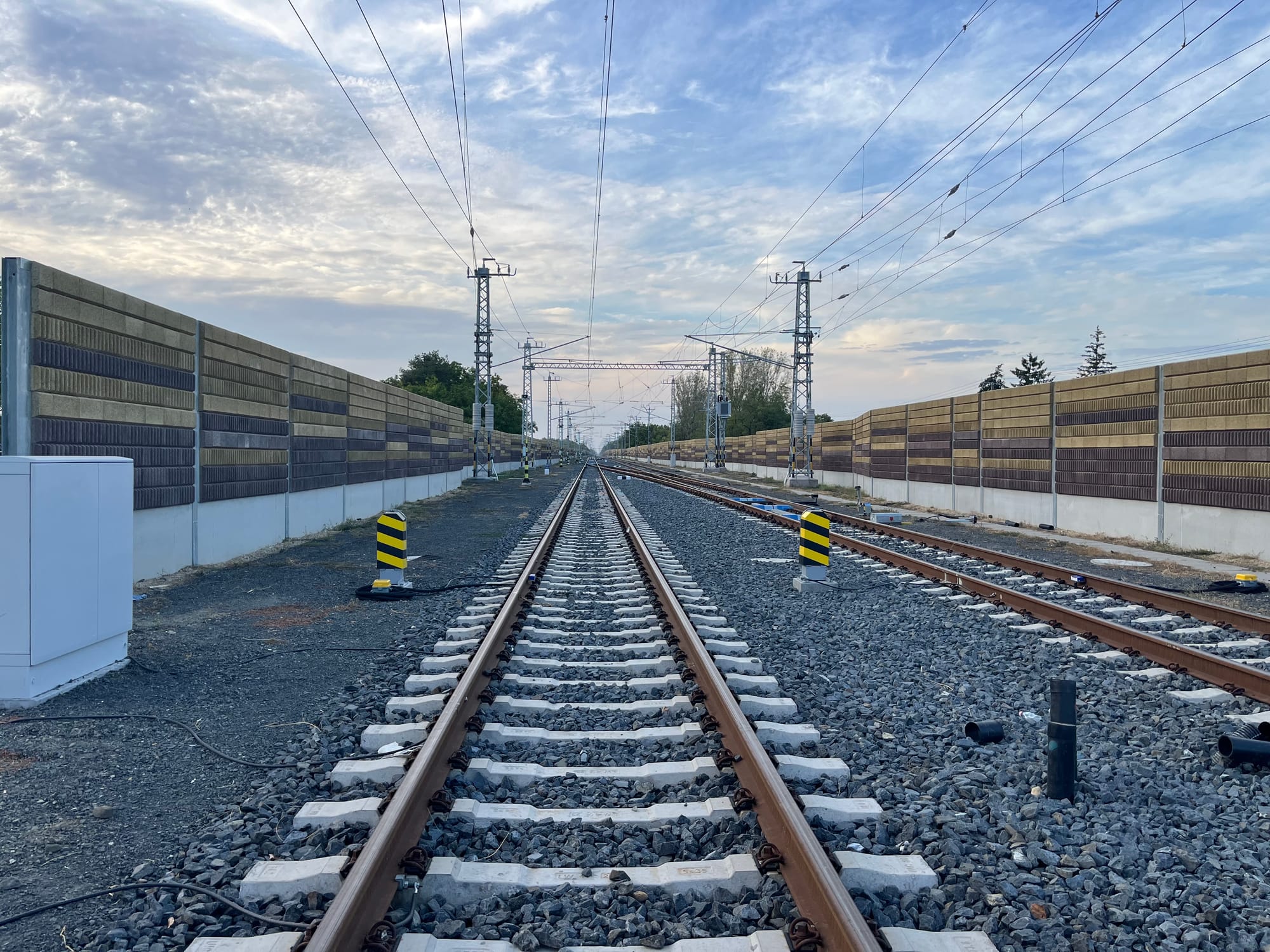
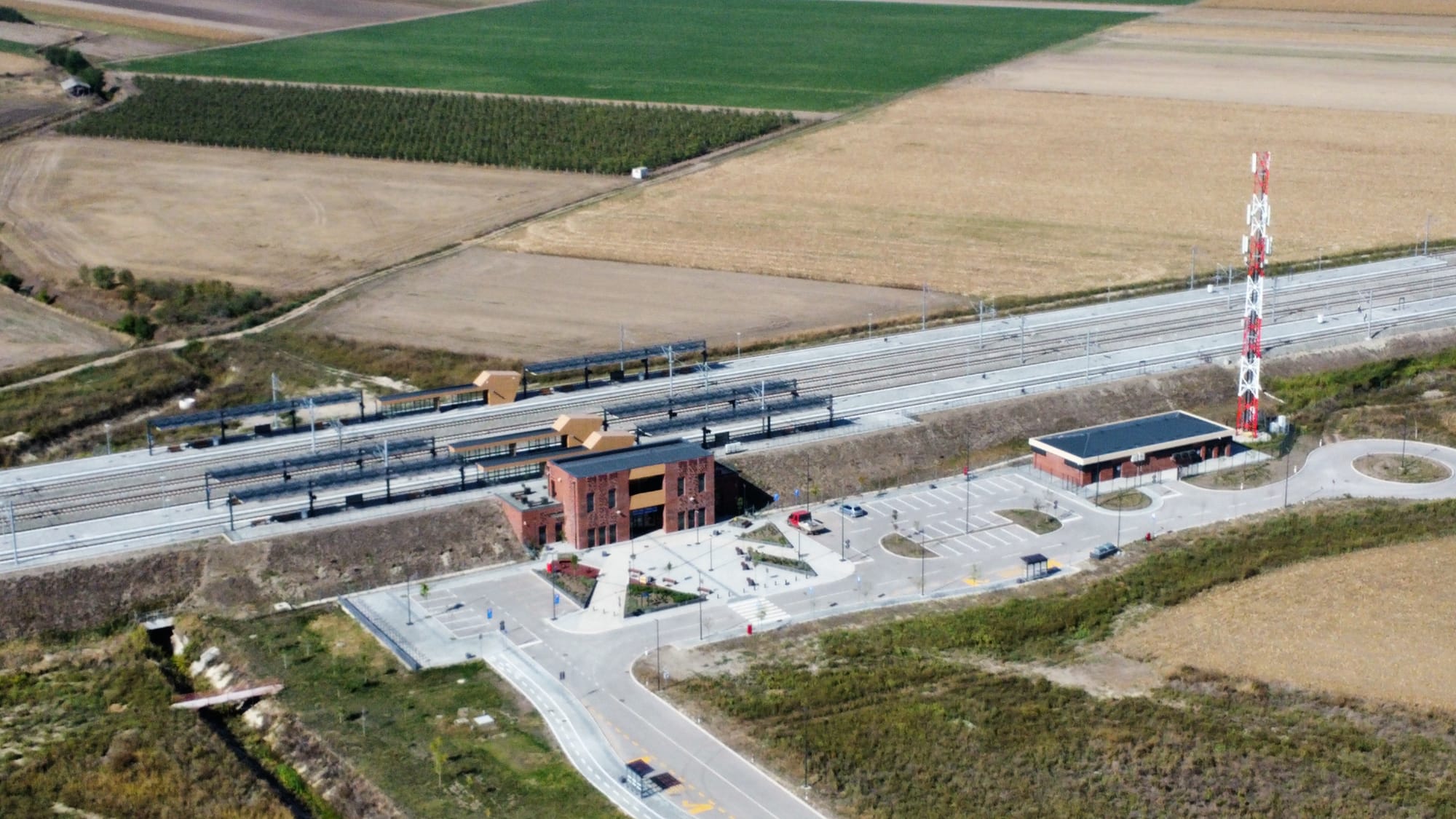
While Novi Sad station remains closed, Serbia did at least manage to get the second section of the new line as far as Subotica close to the border with Hungary opened in October 2025, with the whole route approved for 200km/h running. Meanwhile the line on the Hungarian side - pictured above in autumn 2025 at Kelebia - is lower spec. Level crossings have been retained, and the maximum speed is 160km/h. Genuinely high speed this is not. Hungarian operator MÁV disputes news reports that the line lacks the necessary safety systems to operate at full speed in foggy conditions - more background on that here.
Meanwhile the hope China can step in to help Hungarian railways with its chronic shortage of modern rolling stock is casting a shadow over the election campaign there. With Orbán facing a serious challenge to his position at the 12th April election, his transport minister János Lázár is trying to get a deal signed with CRRC before the poll - according to IRJ. And Lázár also hopes the Budapest - Kelebia section of the line to Beograd will open in mid March as well.
Meanwhile experience getting Chinese trains running on European main lines has so far been patchy. The 6 CRRC EMUs for Austrian private operator Westbahn are probably the most significant development so far, while Hungarian Rail Cargo Hungaria (subsidiary of Austria's state owned ÖBB) has 3 CRRC Bison locomotives approved for freight services. In Czechia, Leo's ill fated experience with Chinese EMUs resulted in private rival RegioJet buying them, and running them on regional services. North Macedonia has a handful of Chinese DMUs, EMUs and locomotives, but some are out of service due to a lack of spare parts. So far Serbia only has Chinese locomotives running at a coal mine, while the Chinese EMUs Srbija Voz wants to run on its Chinese line have not yet been approved to run. In Germany some Chinese locomotives haul DB works trains, and CRRC also bought Vossloh Locomotives in 2020.
How the European railway industry can defend itself against Chinese imports - or indeed if it even should - has been a topic raised by Austria's transport minister Peter Hanke. One presumes he is unaware that Austria's state owned railway firm ÖBB bought from CRRC for its Hungarian subsidiary!
At the moment how all of this is going to play out is far from clear, and it will be an issue that will no doubt feature in subsequent newsletters I write - not least as I have trips to Hungary and Serbia planned for March and April this year, and I will be testing the services on these lines for myself!
Bullshit Meter: Loop line connecting British and Irish cities
If we had any doubt about the UK's lack of coherent high speed rail planning, the country has been unable to connect its existing high speed railway line HS1 to the new HS2 line it is building.
But now along comes Chris Williamson (who is President of RIBA, so ought to be serious), and proposes a ring railway line connecting British and Irish cities. Suggesting one route across the Irish Sea is not enough - he instead proposes two. And the lines in between would be on elevated stone viaducts.
The idea is supposed to "inspire" and "provoke" according to this De Zeen piece, but all it managed to provoke here was a groan. You spent time on this?
Why not propose to teleport people to Dublin while you're at it?
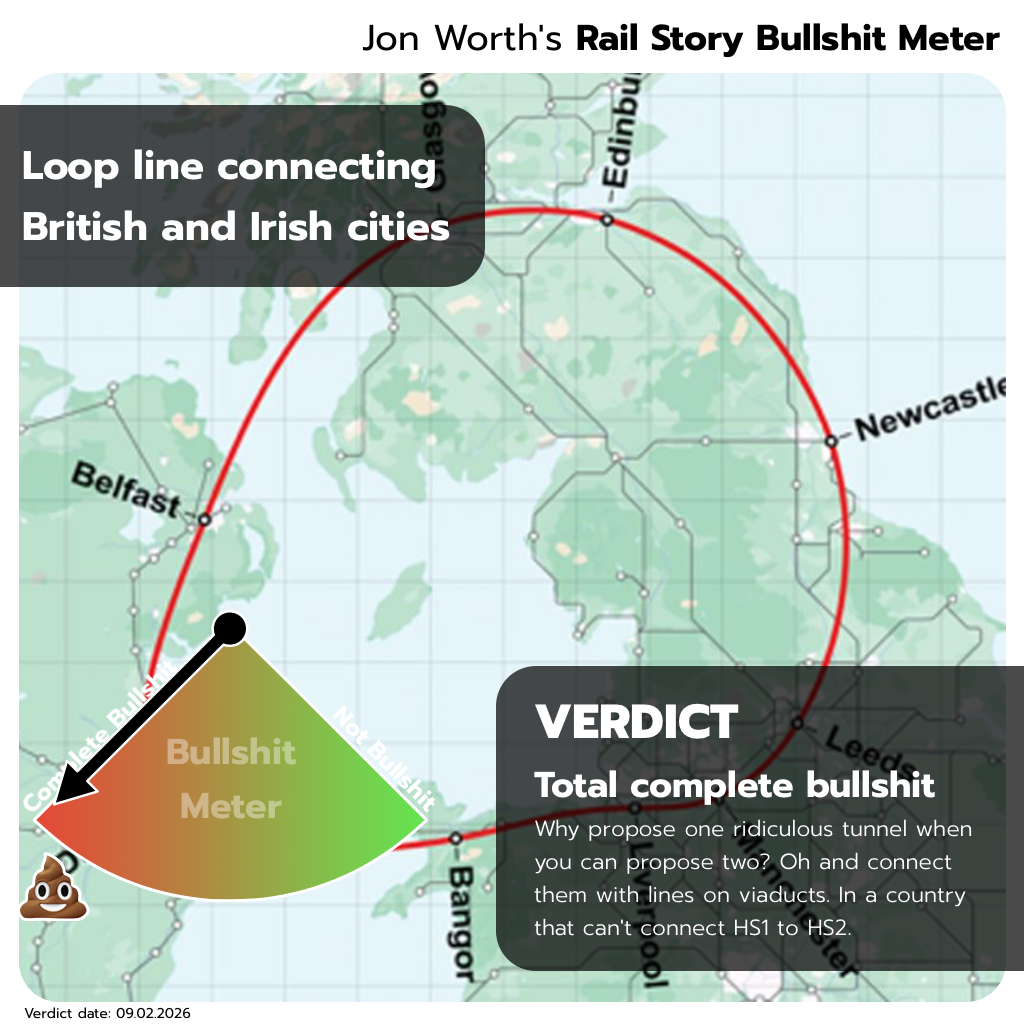
All previous Bullshit Meter posts can be found here.
Good week: A future for the Una line?
The Una line between Novi Grad and Knin is one of the most stunning places I went to during my #CrossBorderRail project. Full photo album here. The line was the fastest connection between Zagreb and Split, and was even electrified in the 1980s, before the breakup of Yugoslavia.
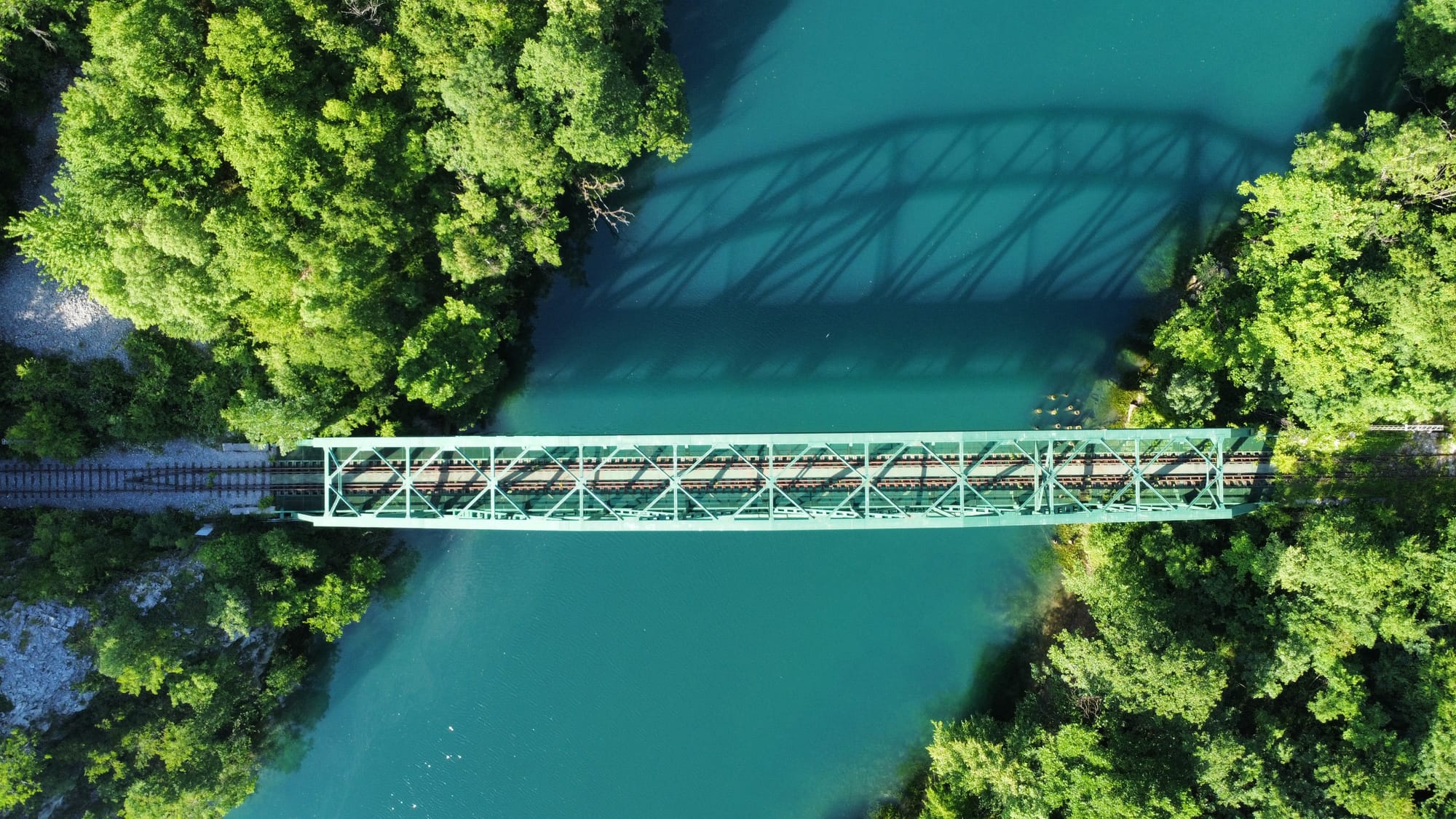
The problem is that the line crosses the Bosnia - Croatia border 7 times, and that makes it also an external border of the EU. The bridge pictured above is the first international border crossing south of Bihać. The line also crosses the internal border within Bosnia between the Federation and Republika Srpska.
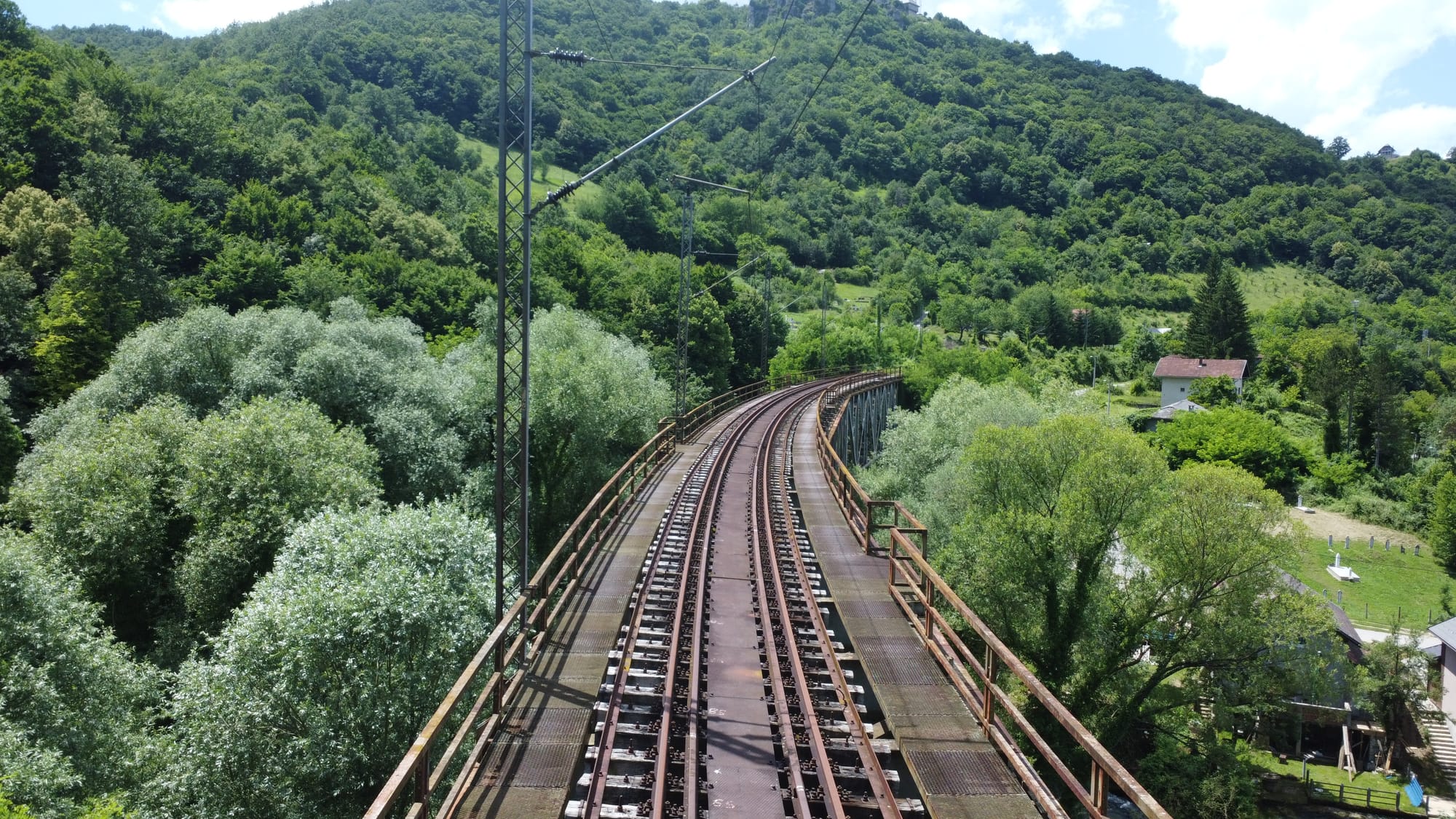
Now - despite the political and financial complexity of the line - at least conversations are happening about re-opening the line - with a meeting of transport ministers of Croatia and the Bosnian Federation putting re-opening on the agenda. Given the tourist potential of the Una national park, and horribly slow alternative route from Zagreb to Split via Ogulin, the opportunities for the Una line are obvious!
Bad week: Bane NOR seems to have caused its own landslide
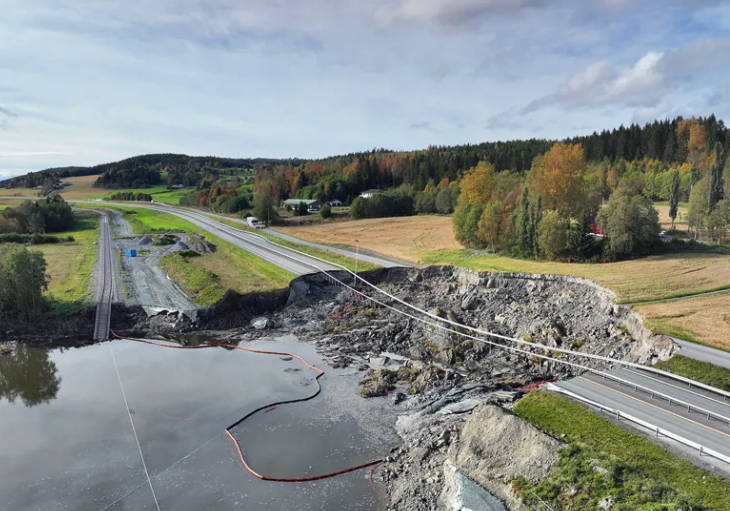
On 30th August 2025 at Nesvatnet in Norway a major landslide led to the collapse of the railway line and the road running parallel to it. One person lost their life, and the railway line from Trondheim to Bodø in northern Norway was severed.
Now Bane NOR has released some of the preliminary findings about what happened, and it turns out that renovation works on the line, and specifically ground reinforcement with lime cement piles weakened the ground temporarily during the installation of the piles themselves, and that caused the landslide.
More from Bane NOR in Norwegian, and LOK Report in German.
Photo from the archive: the end of the old Berlin-Wrocław
Each week I am going to include a photo from my archive in the newsletter. These are going to be places that remind me of the joy of this railway work, or are simply good picture or beautiful places. But each time there will be a reason.
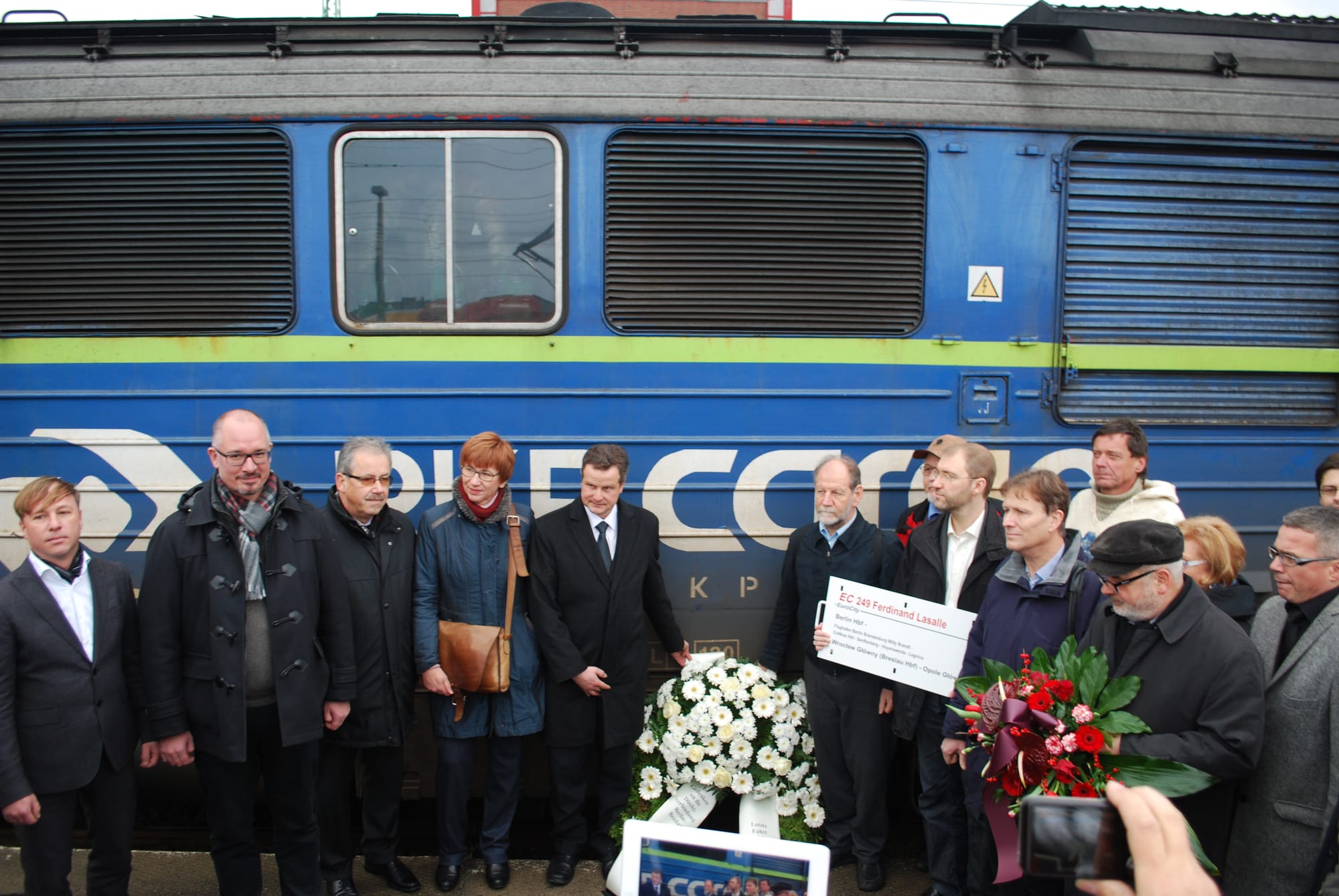
2014 was really the low point for Germany-Poland passenger rail. This picture taken on 13 December that year marks the closure of the Berlin-Wrocław-Kraków EuroCity, via Cottbus (that necessitated switching in Cottbus to a diesel locomotive - as shown). Since then a lot has changed, with more and more trains between Germany and Poland being added each year, although all the long distance ones to Berlin use the Frankfurt (Oder) - Słubice border crossing instead.
Calendar: Provisional date for passenger trains to start running between Budapest and Beograd
Further to the main story from this week's newsletter, the date for your diary is Monday 16th March. On this day the first passenger trains are supposed to start running on the whole of the new line from Budapest via Kelebia, Subotica and Novi Sad to Beograd.
If you would like to stay up to date with what I am doing, there are public calendars to which you can subscribe: Jon Worth - Speeches and Events ICS | Jon Worth - Travel ICS | Jon Worth - Other Rail Dates ICS And if you'd like me to speak at an event or run a workshop, contact me about that.
Photo Rights
All photos in this edition are taken by Jon Worth. Bullshit Meter images always have photo rights listed directly on the image.