All about 2 metres? The importance of the difference between a 200m and a 202m train is scarcely plausible

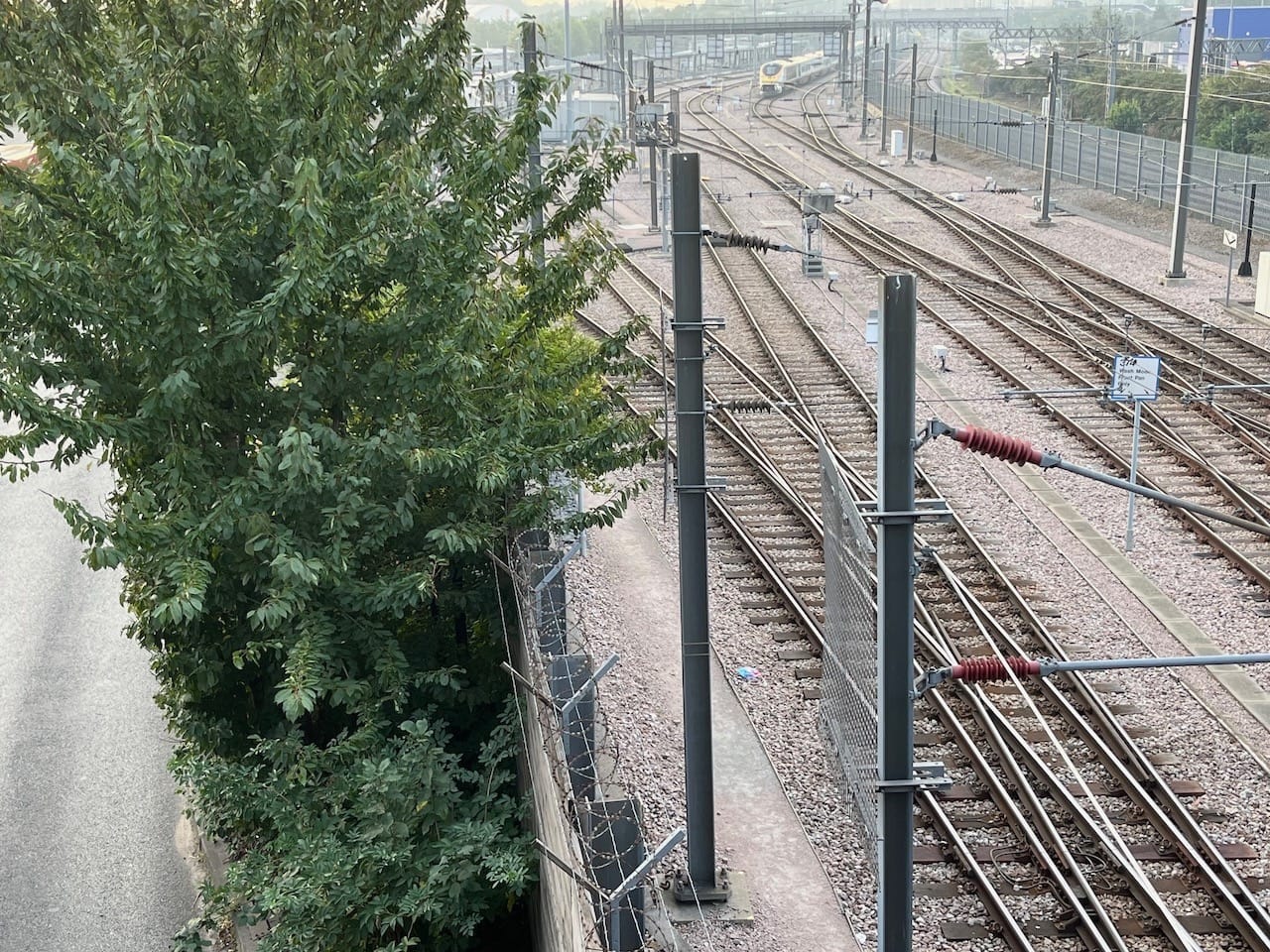
When discussing the future of long distance services through the Channel Tunnel, we generally talk of 400 metre long trains composed of one unit, and 2x 200m trains composed of two units coupled together.
But when you drill down to the detail, these numbers are approximations. Eurostar's original Class 373 e300 TMST trains are actually 394m long, and the newer Siemens e320 Velaro trains I think 399.4m (based on extrapolation from Velaro trains from DB). But it is not single 400m trains that concern us here, it is coupled 200m long trains.
The roughly 200m long types considered for Channel Tunnel operations are:
- Alstom Avelia Horizon (Eurostar, Evolyn): 202m(length known from SNCF's order of this type, and Eurostar and Evolyn confirming they wanted the same 2 power cars and 9 carriages layout)
- Siemens Velaro Novo (Gemini): 202m(length known from page 18 of today's Temple Mills decision PDF)
- Hitachi ETR 1000 (Trenitalia): 202m(length known from trains of the same type already in service with Trenitalia)
- Alstom Avelia Stream (Virgin): 200m(length known from page 40 of Virgin's submission to ORR PDF)
Coupling two trains together shortens the overall length a little (as you can see in this picture of mine of two Velaro trains coupled) as the coupling covers are longer than the couplings themselves, but let's not get hung up on that point, and assume - for the rest of this post - that 2 Avelia Horizon, Velaro Novo or ETR 1000 coupled are 404m in length, and 2 Avelia Stream are 400m.
Where can this length be a problem?
In stations, and in depots (Temple Mills in this case, the subject of today's ORR decision).
The length issue can be eliminated straight away at stations.
It is the terminus stations - London St Pancras, Paris Gare du Nord and Bruxelles Midi - that concern us here, as there is little scope for a train to overhang the one open end of a platform, and at Nord and Midi the platforms can also be gated for security purposes. But in all three cases there is no concern - Eurostar platforms at St Pancras are 433m long (see here), at Paris Gare du Nord at least 413m long (see here, you might need to zoom in on the map), and at Midi 411m (plough through the RIEI Annexes here, platform is 417m long but you need to leave 6m to the signal, so 411m).
So the problem - if there is one - is at Temple Mills depot.
Here are the relevant excerpts from the ORR decision letter (PDF here):
Page 4:
In the case of Trenitalia and Gemini, who also both provided evidence of progress with a rolling stock manufacturer, we also identified a technical compatibility constraint (concerning the length of their proposed trains). While this constraint may be resolvable, and was not decisive in our consideration, neither of the applicants had identified or addressed it.
Page 13:
EIL has already planned (and now announced) £80 million worth of investment focused on delivering a new 4 x 415m road maintenance shed at TMI capable of handling the Alstom double-deck trains. (Note: EIL is Eurostar, and double deck trains here means 2x Avelia Horizon, so 404m length)
Page 14:
Evolyn has proposed a fleet of 12 x 200m units, yet inconsistencies in its documentation - specifically references to 202m units - raise questions about infrastructure compatibility. Although Evolyn asserts that it has developed detailed maintenance plans and has engaged with Alstom as a potential manufacturer, no supporting evidence has been provided to confirm that the fleet can be maintained within the potentially available 1.6 roads at TMI.
Page 16:
ORR concluded that maintaining a fleet of 12 x 200m units within the 1.6 available roads of shed space at TMI as proposed by VTE appears feasible. (Note: VTE is Virgin)
Page 18:
From a technical perspective, Gemini states that only one 400m road is required for maintenance, which falls within the 1.6 roads identified as available in the IPEX report. However, the proposed Siemens fleet consists of 10 x 202m trains, forming 404m when coupled together exceeding the 400m road length available at TMI. This would present a clear operational constraint if it meant that two of Gemini’s trains could not be maintained on the same road at the same time. While this compatibility issue may be resolvable and was not decisive in our assessment of Gemini’s operational viability, it was not identified or addressed in Gemini’s submissions.
Page 20:
The proposed fleet consists of 10 x 202m Hitachi units, forming 404m in dual configuration, exceeding the advised 400m road length available at TMI. This would present a clear operational constraint if it meant that two of Trenitalia’s trains could not be maintained on the same road at the same time.
So - in summary: Eurostar identified the 202m/404m problem and addressed it with the proposal for depot expansion. Virgin doesn't have the problem. Trenitalia, Gemini and Evolyn have the problem, and have not addressed it.
However reading all of that leaves me with a conflicted impression. ORR states that the issue was "not decisive", but for an issue that is not decisive they do spend a lot of time on the point, and also do not explain how it could be overcome.
Interesting all this is, I have to ultimately conclude this is nothing more than a technical loose end. Virgin won out because their bid was economically more convincing and plausible, not because their trains were 2m shorter.
[Update 30.10.2025, 14:45]
Link added to confirm 411m de facto platform length at Bruxelles Midi.